


When examining any complex system, I focus on the foundational decisions that shape everything that follows. Hugging Face's acquisition of Pollen Robotics doesn't just represent a company buying a company. It's about the evolution of intelligence, the eventual access to our physical spaces, and engaging in a trusted partnership.
The Foundation Supports the Architecture
Hugging Face has built its reputation as the central repository for open-source AI models. Their platform hosts thousands of models that developers can download, modify, and improve. What they've created isn't just a collection of algorithms — it's an ecosystem that has fundamentally changed how AI models are developed and deployed.
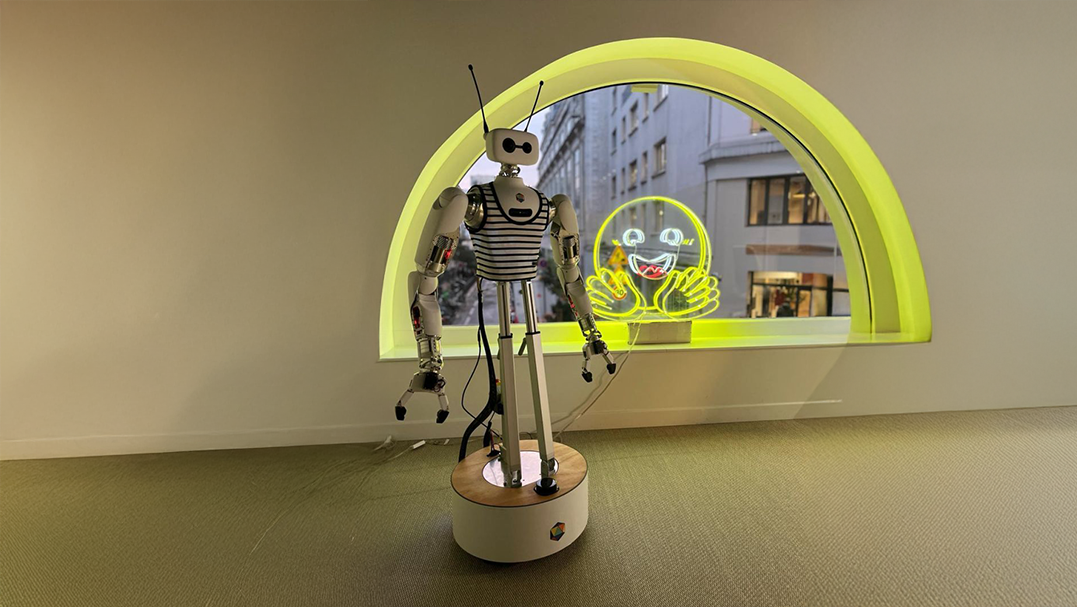
Pollen Robotics, meanwhile, built Reachy 2 — a humanoid robot with expressive capabilities, stereo vision, and dexterous manipulation. But what makes Reachy 2 special isn't just its technical specifications. It's the fact that Pollen designed it as an open platform, where developers can access, modify, and improve every aspect of the system.
This partnership marks the convergence of three cornerstones in tech: open-source development, AI, and robotics.
Factors in Predicting the Three-Body Problem

Trust Through Transparency
At Agility and Daimler, safety was never an afterthought — it was a development pillar that both supported and ran parallel to every objective we had. What became clear through that work was this: a piece of technology can be safe by design, but unless we trust it, we won't feel safe.
The open-source approach embraced by both Hugging Face and Pollen Robotics represents a measured investment in the future of robotic development. Rather than relying solely on standards yet to be developed, this approach fast-tracks trust through collective scrutiny.
As Hugging Face's CEO noted: "You can't cheat; you can't hide with open source." This matters profoundly for physical systems operating in h
…
Free with a Signal + Noise account
Create a free account to read the full field report. No credit card required.
Sign up free to read the full field report →