
Yesterday's signals, distilled, A look back at June 4, 2026.
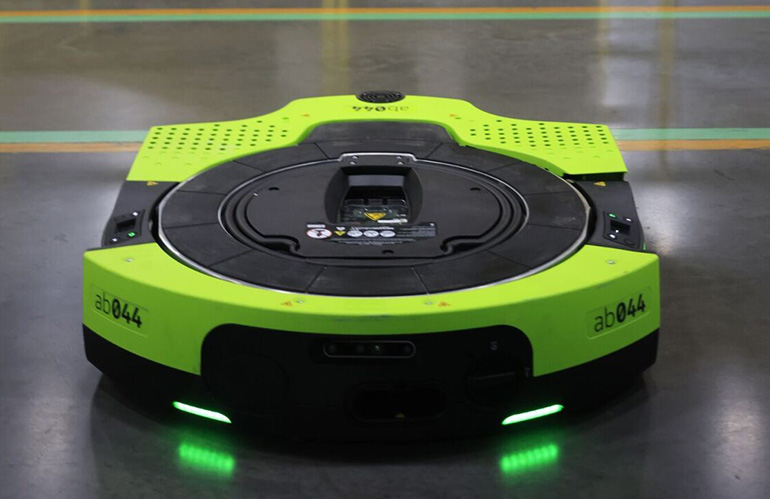
Amazon put natural language into a warehouse robot.
Microsoft put unit economics into the open, and said the quiet part out loud about external model spend.
Anthropic put AI-generated code velocity on the scoreboard, and, separately, put offensive cyber enablement in the national security stack.
And a 40,000-acre data center plan in Utah got cut roughly in half after political backlash.
The throughline isn’t “AI progress.” It’s control surfaces moving to language while the underlying stack hardens into two constraints: unit cost and permissioning.
Language-native interfaces collapse integration work. But they also expand the blast radius, from warehouse floors to CI pipelines to state cyber operations. Meanwhile, compute is no longer a pure engineering problem. It’s a local politics problem with water, land, and legitimacy as first-class inputs.
If your plan assumes you can pick a model, bolt it into workflows, and scale on cheap land and cheap GPUs, you’re operating on last year’s map.
INFRASTRUCTURE / ENTITLEMENT
Compute buildouts are now negotiated projects, not construction projects
Kevin O’Leary scales back a 40,000-acre Utah data center plan after backlash O’Leary told Utah’s Senate president he will cut the proposed 40,000-acre AI data center project by roughly half following pushback from lawmakers, per Techmeme. Business coverage framed it as a response to local concerns that escalated into a political constraint on the project’s footprint, via Business Insider.
This is the same pattern showing up across North America and Europe: power is necessary, but not sufficient. The gating factor is increasingly “permission to operate”, water, noise, transmission, tax posture, and community narrative.
So What? Data center capacity is becoming a regulated local resource even when it isn’t formally regulated like one. That changes timelines, financing terms, and vendor commitments, your “site selection” is now a stakeholder strategy with a construction appendix. Operators should treat entitlement risk as a core dependency for AI roadmaps, not an externality handled by real estate.
The Risk: Projects that clear chip and power procurement can still fail on legitimacy. The failure mode isn’t a missed milestone, it’s a forced redesign after capital is committed, which cascades into customer contract risk and stranded interconnect work.
Action:
- Map permitting, water, and community opposition risk alongside power and fiber for every planned capacity expansion.
- Build a local stakeholder plan before you announce footprint, assume the announcement itself triggers the negotiation.
- Rewrite customer delivery commitments with entitlement contingencies, and price the risk explicitly.
ROBOTICS / OPERATIONS
Natural language becomes the new warehouse integration layer
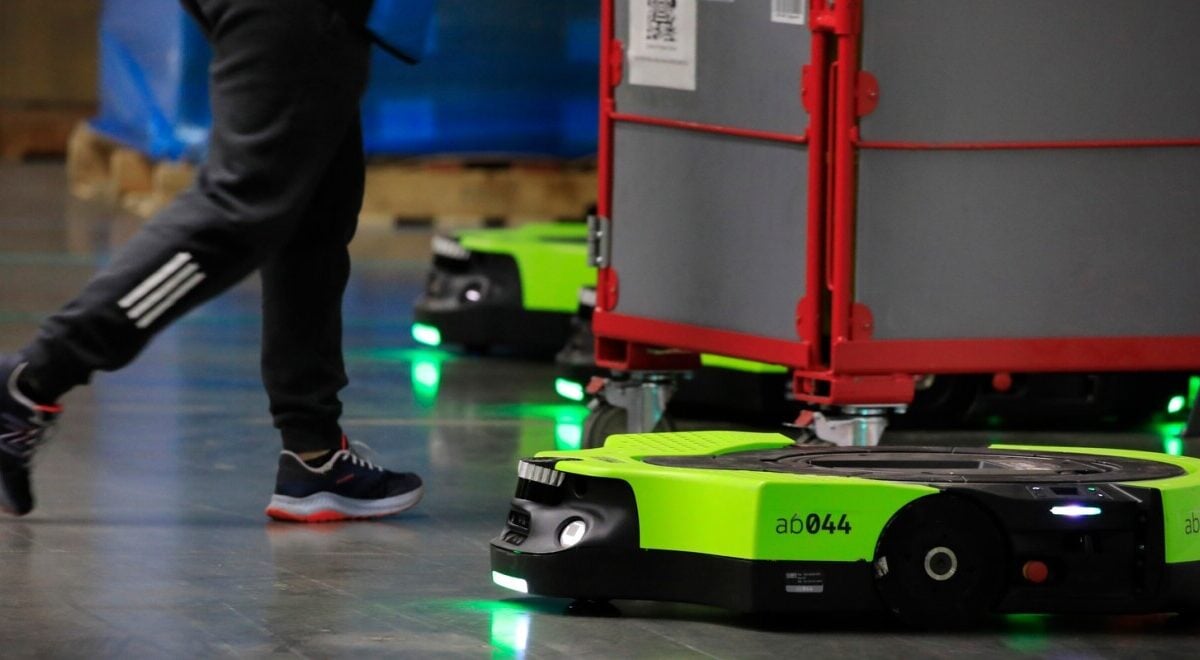
Amazon’s Proteus warehouse robot adds plain-language tasking, Europe rollout set for H1 2027 Amazon unveiled an updated Proteus robot with AI-powered language capabilities that let workers assign tasks in plain language, with deployments in Europe planned for H1 2027, per Gizmodo. Additional detail on the European expansion and fleet context (including other systems) was covered by Robotics Business Review.
The key shift isn’t the robot. It’s who can program it. When “tell it what to do” becomes the interface, automation stops being a controls engineering backlog and becomes an operations design problem.
The Bet: Language is stable enough as an instruction layer that the marginal cost of retasking robots drops toward zero.
So What? Warehouse automation is repricing around changeover speed. The competitive advantage moves from “who has robots” to “who can safely reconfigure behavior daily without specialists.” That will compress the value of bespoke integration vendors and elevate process owners, the floor manager becomes the orchestrator of autonomy.
The Risk: Natural language increases ambiguity. If you don’t harden constraints, you get brittle behavior, safety incidents, or silent throughput degradation, the worst kind of operational failure because it looks like “variance” until it becomes a miss.
Action:
- Inventory warehouse tasks where instructions can be expressed as constrained language, then tag which require hard guardrails.
- Redesign SOPs as “robot-readable” procedures with explicit constraints, escalation paths, and stop conditions.
- Stand up an ops-owned evaluation loop, measure throughput, error rates, and near-misses per instruction template, not per robot.

MODEL ECONOMICS / PLATFORM CONTROL
Hyperscalers are treating external frontier models as a temporary bridge
Microsoft’s AI chief calls Anthropic models too expensive and targets eliminating that spend Microsoft’s AI chief said Anthropic’s models are too expensive and emphasized a push toward cheaper in-house options, per Bloomberg Technology. A separate report captured the more explicit intent, “eliminate” what Microsoft pays Anthropic, via The Next Web.
This isn’t a partner dispute story. It’s the platform playbook: own the unit economics, own the roadmap, own the default distribution.
So What? “Best model” is losing to “best cost curve.” As model quality converges, the hyperscaler advantage is procurement, inference optimization, and bundling, and the buyer’s risk is lock-in to a pricing committee. If you’re building product margins on proprietary API spreads, you’re underwriting someone else’s cost-down roadmap.
The Risk: Portability theater. Many teams claim they can swap models, but their prompts, evals, tool schemas, and safety layers are coupled to one provider’s quirks. When pricing or policy changes, “we can switch” becomes a quarter-long rewrite.
Action:
- Implement a cost-aware routing layer across at least two model providers, and prove swap time in days, not quarters.
- Rebuild evals around outcomes and failure modes, not “model X feels better”, make cost/performance a first-class metric.
- Renegotiate enterprise contracts with explicit price-change protections and migration support language.
SECURITY / SOFTWARE PRODUCTION
AI accelerates code output and expands the attack surface in the same motion
Anthropic says 80% of its new production code is authored by Claude Anthropic reported that 80% of its new production code is now authored by Claude, per VentureBeat.
The operational constraint shifts from writing to verifying. Review bandwidth, test coverage, and release discipline become the limiting factors, not headcount.
So What? Software orgs are bifurcating into two types: those that can absorb AI-generated throughput safely, and those that drown in it. The winners won’t be the teams with the most generation. They’ll be the teams with the tightest verification loops, deterministic tests, strong staging, and fast rollback.
The Risk: Velocity without control turns into latent defects and compliance drift. If your audit posture assumes human authorship, your evidence trail breaks the moment AI becomes the primary producer.
Action:
- Raise the bar on automated testing coverage for the codepaths you touch weekly, make “merge” contingent on it.
- Shift senior engineers from feature output to review systems, eval harnesses, linting, policy checks, and release gates.
- Update compliance evidence collection to capture AI-assisted changes, prompts, diffs, approvals, and test artifacts.
Anthropic forward-deployed engineers reportedly embedded with the NSA for offensive cyber operations Sources said Anthropic embedded around half a dozen forward-deployed engineers within the NSA to help deploy “Mythos” for offensive cyber operations, per Techmeme citing the Financial Times.
This is frontier AI moving from “security tooling” into state capability enablement, with operators on-site to make it real.
So What? AI-augmented offensive operations are no longer hypothetical. That changes baseline assumptions for every enterprise with valuable IP or critical uptime, your adversary’s recon, exploit development, and social engineering loops are faster. The defensive posture that mattered in 2024, periodic pen tests and ticket queues, is structurally behind.
The Risk: Overreaction and misallocation. Teams will buy “AI security” products without fixing fundamentals, segmentation, secrets hygiene, and incident response muscle.
Action:
- Lock down secrets exposure in CI/CD this week, rotate high-value tokens and audit GitHub Actions permissions.
- Tighten network segmentation around crown-jewel systems, assume faster lateral movement attempts.
- Run an incident-response tabletop that assumes AI-assisted phishing and exploit chaining, measure time-to-containment, not time-to-detection.
CONTRARIAN SIGNAL
The real bottleneck isn’t model capability. It’s governance of language as an interface.
Everyone is watching benchmarks and model releases.
But June 4 was about language becoming the control plane for physical work, software production, and cyber operations, and about the institutions that will govern that control plane: hyperscalers through pricing, local governments through entitlement, and security orgs through policy and response.
Language interfaces feel like usability wins. They are also policy surfaces. Every prompt is a procedure. Every procedure is a potential exploit. Every exploit is now cheaper to generate.
The Takeaway: Treat natural language like code, spec it, constrain it, test it, and monitor it. The teams that do will move faster and break less.
THE QUESTION FOR TODAY
Language is becoming the interface to your operations. Unit cost is becoming the interface to your model choices. Local politics is becoming the interface to your compute roadmap. And security is becoming the interface to your software velocity.
Where are you still acting like these are separate problems?
Signal + Noise is strategic intelligence, not engagement-specific advice. For guidance calibrated to your org, start with Advisory.
See exactly how this impacts your specific industry and function. Upgrade to PRO to get bespoke tactical breakdowns generated instantly for your operating model.
Go deeper with the Weekly Signal
This is the daily take. The Weekly goes further — full strategic analysis across 8–10 sections, each with a signal read and operator action items. Source panel included.
Sign up free → then upgrade