

Yesterday's signals, distilled, A look back at May 21, 2026.
SpaceX put its internal plumbing on paper. Cursor put a number on the new developer stack. Spotify and Universal put a price tag on derivative culture. California put a subsidy-shaped thumb on the automation scale.
Different sectors. Same throughline.
We’re watching the economy reorganize around control points: who owns the interface, who owns the workflow, who owns the rights, who owns the policy lever.
The old assumption was that “AI adoption” is a tooling decision inside a function.
It’s not.
It’s a capital structure decision, a licensing decision, and a hiring decision that will get audited by regulators, investors, and counterparties. If your plan treats these as separate workstreams, you’re building a brittle company.
INFRASTRUCTURE / CAPITAL STRUCTURE
SpaceX disclosed more than $660M in related-party transactions over a year, showing payments and intercompany relationships across the Musk ecosystem, per Business Insider.
This is less about any single transaction and more about the pattern: cash, IP, procurement, and risk are being recycled across a multi-entity stack that behaves like a vertically integrated conglomerate without being one on paper.
So What? Counterparty risk is now networked. If you sell into, buy from, or integrate with one entity in a tightly coupled ecosystem, you inherit exposure to the financing cadence, legal posture, and strategic pivots of the others. For operators, this changes how you underwrite “customer concentration” and “vendor lock-in”, the unit of analysis is no longer the company, it’s the constellation.
The Risk: Procurement and legal teams still diligence entities in isolation. That’s how you end up with a contract that looks clean while your operational dependency sits upstream in a different balance sheet.
Action:
- Map related-party exposure for your top 10 customers and vendors, treat ecosystems as a single risk object.
- Add cross-entity change-of-control and service-continuity clauses to new MSAs where feasible.
- Stress-test revenue and delivery plans against a single-ecosystem shock, financing freeze, export restriction, litigation event.
CAPABILITY / DEVTOOLS
The developer inner loop is now a revenue line, not a feature
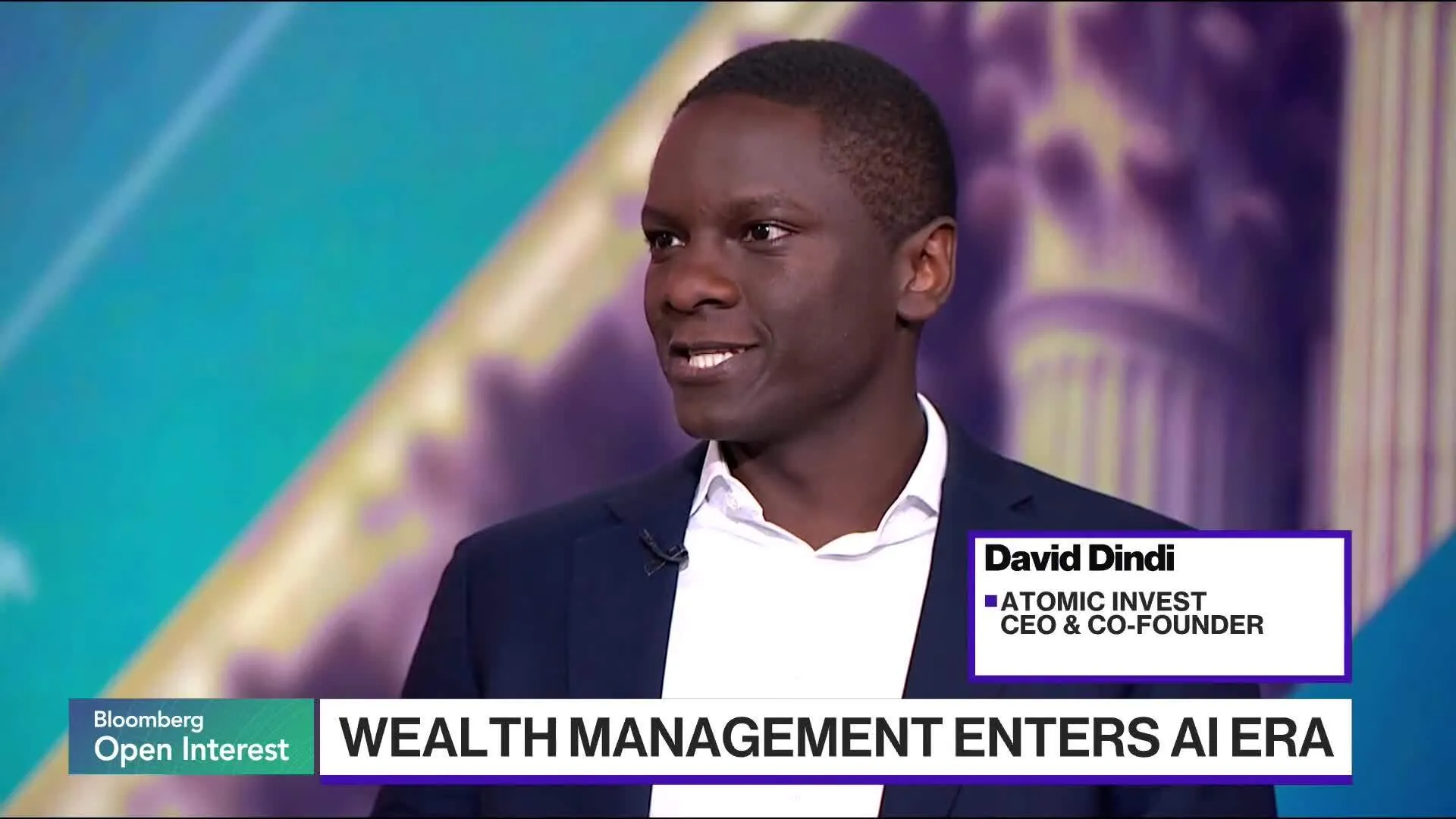
Cursor hits a $3B annualized sales rate ahead of an expected SpaceX deal
Cursor reached a $3B annual sales rate for AI coding, ahead of an expected SpaceX acquisition, per Bloomberg.
That number matters because it prices the new control surface: the IDE layer where code gets proposed, accepted, and shipped.
So What? Software procurement is shifting from “platforms we standardize on” to “workflows we can’t live without.” If an AI coding environment becomes the default interface for engineering, it starts dictating frameworks, cloud primitives, observability hooks, and security posture, quietly. The strategic fight moves upstream: whoever owns the inner loop gets to tax the roadmap of everyone downstream.
The Risk: Security and compliance lag the workflow. AI coding tools become de facto code authors while policies still assume humans are the primary producers, that’s how you get provenance gaps, license contamination, and review theater.
Action:
- Instrument acceptance: measure what % of shipped code originates from AI suggestions across repos this week.
- Update SDLC controls: require provenance logging for AI-generated code in regulated or high-risk services.
- Renegotiate leverage: if a tool is becoming mandatory, lock pricing and data terms before renewal season.

MEDIA / RIGHTS
Generative derivatives are moving from takedown risk to paid product
Spotify and Universal agree a deal to let subscribers create AI remixes
Spotify and Universal Music Group agreed a licensing deal that allows subscribers to create AI remixes, per The Guardian.
This is the rights stack catching up to behavior that already exists, and choosing monetization over prohibition.
The Bet: Rights holders can turn derivative creation into an upsell surface without collapsing the value of the underlying catalog.
So What? The platform is becoming the “legal sandbox.” If you want to create with premium IP, you’ll do it inside a controlled toolchain with tracking, watermarking, and rev share. That’s a template that will generalize beyond music, to video, sports highlights, news clips, and even enterprise content libraries. Operators should assume the next licensing negotiation is not about streaming rights, it’s about model rights, derivative rights, and distribution rights inside creation tools.
The Risk: If the sandbox is too restrictive, creators route around it with open tools and offshore distribution. If it’s too permissive, rights holders see cannibalization and pull back. The equilibrium is fragile, and will be tested in the first revenue split disputes.
Action:
- Draft your derivative policy: define what “allowed remix” means for your IP and products, in writing.
- Build attribution and rev-share plumbing now, don’t wait for a partner to dictate the schema.
- Treat creation tools as distribution: model attach rates and churn impact if derivatives become a paid tier.

POLICY / LABOR
Automation is becoming a regulated balance sheet choice
California orders agencies to study subsidies for companies that don’t replace workers with AI
California Governor Gavin Newsom signed an executive order directing state agencies to work with industry to study subsidies for companies that don’t replace workers with AI, per Techmeme.
This is an early signal of a broader mechanism: governments paying for “labor retention” the way they’ve historically subsidized capex, training, and clean energy transitions.
So What? Automation ROI is no longer just labor savings versus tooling cost. In major jurisdictions, it’s about incentives, reporting, and political optics, and those will hit procurement and HR before they hit the model layer. If you operate in California, your workforce strategy is now entangled with potential subsidy eligibility, auditability of “replacement,” and public narrative risk.
The Risk: Companies will optimize for the subsidy definition rather than operational reality, keeping headcount nominally flat while hollowing roles into low-leverage oversight. That creates brittle operations and employee distrust.
Action:
- Classify roles by “replacement risk” versus “augmentation leverage”, tie it to a headcount plan you can defend.
- Stand up an internal automation ledger: where AI is deployed, what tasks changed, what roles shifted.
- Engage policy early: assign an owner to track California guidance and shape your compliance posture before it hardens.
CONTRARIAN SIGNAL
The real AI moat is paperwork
Everyone is chasing model quality and agent workflows.
The durable advantage is the ability to contract, audit, and govern the new surfaces: developer inner loops, derivative creation rights, and workforce displacement claims.
The companies that win the next 12 months won’t be the ones with the flashiest demos. They’ll be the ones whose legal, security, and finance stacks can move at product speed, because the market is turning governance into a product constraint.
The Takeaway: If your AI strategy lives in engineering, you’re late. It belongs in the operating system of the company, contracts, controls, and capital planning.
THE QUESTION FOR TODAY
Your workflows are being captured by new interfaces. Your IP is being renegotiated as a remixable substrate. Your hiring plan is being rewritten around “AI people.” Your automation roadmap is drifting into policy territory.
What part of your business becomes non-optional, and non-negotiable, once someone else owns the control surface?
Signal + Noise is strategic intelligence, not engagement-specific advice. For guidance calibrated to your org, start with Advisory.
See exactly how this impacts your specific industry and function. Upgrade to PRO to get bespoke tactical breakdowns generated instantly for your operating model.
Go deeper with the Weekly Signal
This is the daily take. The Weekly goes further — full strategic analysis across 8–10 sections, each with a signal read and operator action items. Source panel included.
Sign up free → then upgrade