
Yesterday's signals, distilled, A look back at May 19, 2026.
Search became an agent surface.
Compute became a contract.
Power delivery became an acquisition target.
And autonomy kept moving from “demo” to “duty cycle.”
Google didn’t just ship features at I/O. It tightened the loop between discovery, creation, and execution, Search as the front door, YouTube as the generative workbench, and multimodal models as the default substrate.
At the same time, the infrastructure layer hardened. OpenAI is selling guaranteed compute like a utility. Analog Devices paid $1.5B for voltage regulation IP, because dense inference isn’t constrained by model weights, it’s constrained by electrons.
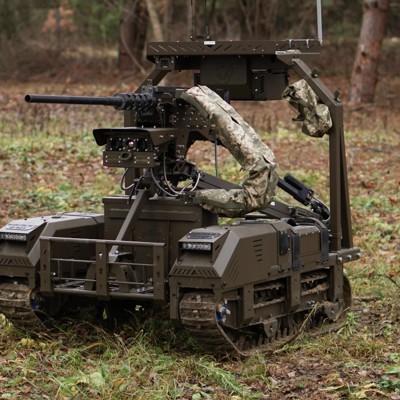
Then the reminder from Ukraine: reliability beats novelty. A ground robot held a position for six weeks under assault. That’s not a robotics story. It’s an operations story, maintenance, resupply, comms, and failure modes under pressure.
If your plan assumes “models are the moat” and “APIs are infinite,” you’re optimizing the wrong layer. The stack is reorganizing around surfaces, contracts, and physical constraints.
⸻
CAPABILITY / DISTRIBUTION
Google collapses discovery + creation into a single AI surface
Google Search AI Mode and “intelligent” search box expansion
Google rolled out its biggest Search overhaul, an “intelligent” Search box and AI Mode that orchestrate Gemini, agents, and vertical tools, per Business Insider.
This is a product shift: Search is less “index → links” and more “intent → workflow,” with Google owning the handoff from question to action.
So What?
Traffic is about to get harder to attribute and easier to lose. When the answer, the next step, and the transaction live inside the search surface, your “top-of-funnel” becomes someone else’s UI state. Operators should treat this as a CAC regime change, especially if you’ve been buying growth with SEO and informational content.
The Risk:
If AI Mode answers are wrong or biased, the blast radius is bigger than a bad snippet, because the system is now executing workflows, not just ranking pages. Expect faster policy and quality iteration that can whipsaw publishers and brands.
Action:
- Re-forecast acquisition assuming lower organic click-through on high-intent queries.
- Build “answer-native” assets, structured data, feeds, and integrations that can be invoked inside agent flows.
- Instrument brand demand (direct, email, app opens) as a hedge against search UI volatility.
- Read our Field Report deep diving further into what really happened at IO yesterday
⸻
INFRASTRUCTURE / COMPUTE
Compute is being sold like capacity, not consumption
OpenAI Guaranteed Capacity for 1–3 year commitments
OpenAI introduced Guaranteed Capacity, customers can guarantee access to compute through one- to three-year commitments, per Techmeme.
This is a pricing and planning shift: reserved inference becomes a procurement decision, not an engineering convenience.
The Bet: Demand spikes and model launches will keep creating “have vs have-not” access tiers, and customers will pay to avoid being rate-limited at the worst moment.
So What?
The API era’s implicit promise, elasticity, just got repriced. If you’re shipping a product with hard uptime and latency expectations, you now need a capacity strategy the way you need a cloud strategy. The winners won’t be the teams with the best prompts. They’ll be the teams with guaranteed throughput, fallback models, and contractual leverage.
The Risk:
Locking into multi-year capacity can freeze your architecture around a vendor’s roadmap and pricing. If model quality or unit economics shift, you’re holding a contract built for last quarter’s assumptions.
Action:
- Quantify your “inference SLO” in dollars, what an hour of throttling costs you in churn, refunds, and pipeline.
- Negotiate capacity with explicit burst clauses and penalties for non-delivery.
- Stand up a real fallback path this week, second provider or self-hosted open-weight model for degraded mode.
⸻
INFRASTRUCTURE / POWER
AI bottlenecks are moving from chips to power delivery
Analog Devices to acquire Empower Semiconductor for $1.5B cash
Analog Devices agreed to buy Empower Semiconductor, focused on voltage regulation, for $1.5B in cash, per Techmeme.
Voltage regulation isn’t glamorous. It’s also where dense compute deployments fail, heat, stability, and efficiency at the rack level.
So What?
The market is pricing power management as strategic IP, not commodity components. For operators planning on-prem inference, edge clusters, or high-density training, “power architecture” is now a design constraint that can dominate timelines and cost. This also changes vendor selection, hardware roadmaps that ignore power delivery are incomplete roadmaps.
The Risk:
M&A can slow integration and product availability in the near term, exactly when demand for power-efficient designs is accelerating. If you’re betting on a specific component path, supply and lead times can become your hidden critical path.
Action:
- Map your next 12 months of deployments against power delivery limits, rack density, cooling, and voltage regulation assumptions.
- Pull power engineering into model deployment planning, don’t leave it to facilities after the architecture is set.
- Pressure-test vendor BOMs for power constraints before you sign long-lead hardware orders.
⸻
ROBOTICS / DEFENSE-TO-CIVILIAN TRANSFER
Autonomy is being measured in weeks of uptime, not demos
Ukrainian ground robot held a position for six weeks under assault
A Ukrainian ground robot defended a position from Russian assault for six weeks, per Defense One Tech.
The headline isn’t “robot fights.” It’s “robot persists”, sustained operations in a contested environment.
So What?
Embodied autonomy is crossing the threshold that matters for civilian infrastructure: duty cycle. Once platforms prove they can operate for weeks with real maintenance rhythms, they move from “pilot” to “security and labor planning.” Expect perimeter security, inspection, and remote operations to adopt defense-derived patterns, redundant comms, modular repair, and human oversight as exception handling.
The Risk:
The same reliability that makes these systems useful also expands the safety, liability, and misuse surface area. Civilian deployments will trigger regulatory attention fast, especially around use-of-force adjacency and surveillance.
Action:
- Identify one perimeter or inspection workflow where uptime matters more than dexterity, then spec it like a reliability program.
- Build an oversight model now, who can intervene, how logs are stored, what “stop” means operationally.
- Treat comms and maintenance as first-class requirements, budget for spares, field repair, and degraded-mode operation.
⸻
CONTRARIAN SIGNAL
The real platform war isn’t models. It’s who owns the queue.
Everyone is watching model releases and benchmark deltas. The more durable advantage is upstream: who controls the user’s intent surface (Search), who controls the creator’s workflow (YouTube), and who controls the compute queue (guaranteed capacity).
When compute becomes reservable, the market stops pretending inference is infinite. When Search becomes an orchestrator, the market stops pretending traffic is neutral. When power delivery becomes strategic M&A, the market stops pretending deployment is just software.
The Takeaway:
Your competitive edge is increasingly a procurement and distribution problem. If you’re only investing in model selection and prompt craft, you’re building on sand.
⸻
THE QUESTION FOR TODAY
Search is becoming an agent interface.
Compute is becoming a contract.
Power is becoming a gating factor.
Autonomy is being judged by uptime.
Where in your plan are you still assuming the stack is elastic, when the market is clearly moving to allocation?
⸻
Signal + Noise is strategic intelligence, not engagement-specific advice. For guidance calibrated to your org, start with Advisory.
See exactly how this impacts your specific industry and function. Upgrade to PRO to get bespoke tactical breakdowns generated instantly for your operating model.
Go deeper with the Weekly Signal
This is the daily take. The Weekly goes further — full strategic analysis across 8–10 sections, each with a signal read and operator action items. Source panel included.
Sign up free → then upgrade