

Tesla laid out a 10M-unit humanoid roadmap and admitted its cars need hardware upgrades for real autonomy. SpaceX put $60B on the table for a coding assistant. OpenAI quietly turned PII scrubbing into a commodity. Disney employees started tracking “tokenmaxxing” like a performance metric. And OpenAI’s health lead made it clear they want the clinician interface, not just the model evals.
The throughline: control of interfaces, not just models or chips, is where power is consolidating.
Developer environments. Clinical workflows. Fleet software. Internal dashboards that turn “AI adoption” into a leaderboard.
If your plan treats AI as an API you bolt into existing surfaces, you’re misreading the shift. The real game is owning the surfaces where humans and systems meet, and wiring them so behavior is observable, billable, and defensible.
Your current roadmap probably underweights that.
BLUF
At Neue Alchemy, we support leaders navigating inflection points, when tech, capital, and policy converge. If your roadmap is already in motion and you're pressure-testing execution, we're open to conversations.
We also reserve capacity for education, SMBs, and mid-market leaders, those starting, mid-flight, or seeking outside perspective before systems harden.
ROBOTICS / EMBODIED AI
Tesla is repositioning from car company to labor platform
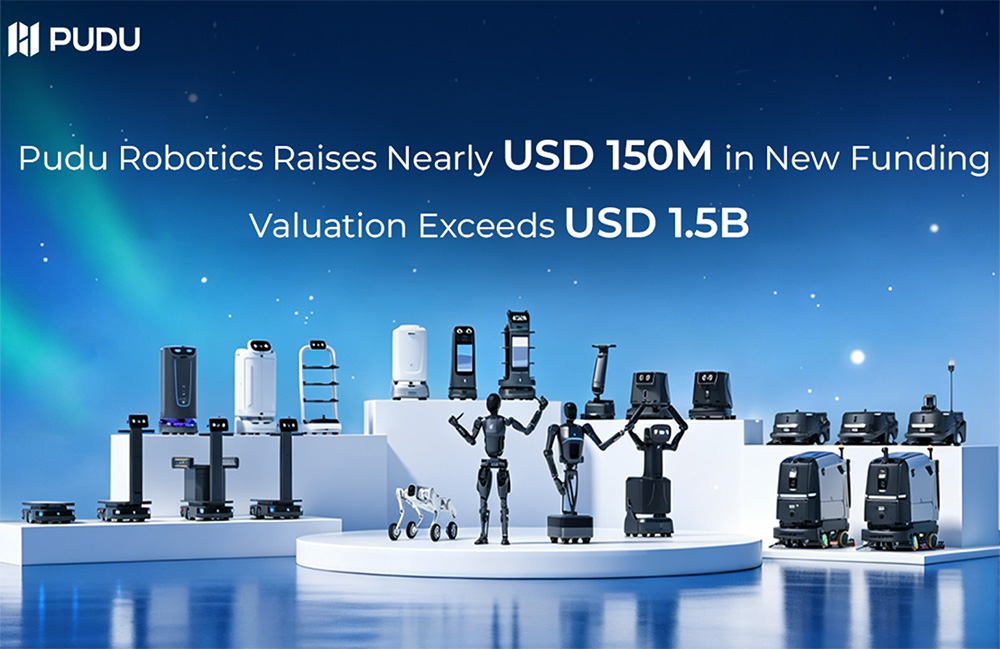
Tesla is targeting production of up to 10M Optimus humanoid robots and is building a new plant in Texas while repurposing parts of its Fremont factory for robot manufacturing, per The Robot Report. The company is explicitly framing Optimus as its next major growth vector, shifting capacity and narrative from EVs to general-purpose labor.
The Bet: Labor is the next smartphone, a multi‑billion unit hardware+software category, and Tesla’s manufacturing and autonomy stack can be repurposed faster than incumbents can stand up humanoid lines.
So What? This is not a “cool robot” demo, it’s a capex signal that large-scale humanoid deployment is being treated as a 3–7 year manufacturing problem, not a 15-year research project. If even a fraction of that 10M-unit target materializes, the cost curve for repetitive physical work in warehouses, factories, and back-of-house operations resets downward, permanently. Your labor, facilities, and automation plans are now implicitly benchmarked against a world where humanoids are a line item, not a science project.
The Risk: Most operators will either overreact, chasing humanoids before workflows, safety, and maintenance models are ready, or underreact and lock in long-lived assets that assume human labor costs stay flat. Regulatory, union, and insurance responses are still undefined at scale, those frictions can delay deployment even if the hardware ships.
Action: Audit your top 10 repetitive, semi-structured physical workflows and tag which ones could be humanoid-addressable by 2030; start a watchlist, not a purchase order. Renegotiate long-term automation and 3PL contracts to preserve flexibility, explicit clauses that allow you to introduce humanoids without penalty. Stand up a small internal “embodied AI” working group, operations, safety, HR, finance, tasked with producing a first-pass humanoid integration playbook by year-end.

AUTONOMY / TRANSPORT
Autonomy is now a hardware upgrade business
Elon Musk acknowledged that millions of Tesla vehicles will require hardware upgrades, including cameras and potentially compute, to achieve “true Full Self-Driving,” per TechCrunch. This comes as Tesla’s Q1 results show growing contribution from FSD subscriptions alongside EV sales, per TechCrunch.
The Bet: The path to autonomy is iterative hardware+software co-evolution, and customers will tolerate retrofit cycles if the perceived software upside is large enough.
So What? Autonomy is resolving into a recurring revenue stack layered on top of a rolling hardware refresh cycle, more like smartphones than traditional vehicles. For any physical system you sell, cars, equipment, devices, “software-only” roadmaps that ignore sensor and compute constraints are now visibly mispriced. If you’re an OEM without a clear upgrade path and subscription model, you’re training your customers to wait for someone else’s platform.
The Risk: Customers and regulators may push back on paying repeatedly for capabilities they were implicitly promised at purchase, especially where safety claims were aggressive. If upgrade logistics and downtime aren’t tightly managed, you risk stranded assets and eroded trust in your entire autonomy narrative.
Action: Map your installed base against hardware constraints, where are you already boxed in by sensors, compute, or connectivity for your next-gen software promises. Design explicit upgrade SKUs and service motions, pricing, logistics, loaners, before you announce any step-change capability. If you’re a fleet operator, demand written upgrade and support commitments for any autonomy features, including timelines and hardware dependencies, before signing multi-year deals.
DEVELOPER STACK / CONTROL OF SOFTWARE PRODUCTION
$60B for Cursor says the IDE is now a strategic asset
SpaceX is reportedly pursuing a $60B deal for Cursor, the AI coding assistant, per Business Insider. In parallel, reporting indicates xAI has explored a three-way partnership with Mistral and Cursor to align frontier models, European open-weight credibility, and dev tooling distribution, per Techmeme.
The Bet: Whoever owns the coding environment owns the demand funnel for models, infra, and downstream apps, and that surface is worth tens of billions.
So What? The center of gravity is shifting from “who has the best model” to “who owns the surfaces where code gets written and reviewed.” If Cursor or similar tools become tightly coupled to a specific model ecosystem, your developers’ day-to-day environment becomes a de facto distribution channel for that lab’s stack, and a lock-in vector. Assuming you’ll just “pick the cheapest copilot” ignores the reality that integration depth, telemetry, and ecosystem gravity will drive actual adoption.
The Risk: Standardizing on a single AI IDE without a multi-model escape hatch can quietly centralize power, pricing, data exhaust, roadmap influence, in one vendor’s hands. Regulatory and IP questions around code suggestions, licensing, provenance, security, are still unsettled; a misstep here can contaminate your codebase.
Action: Inventory your current and planned AI dev tools, IDEs, copilots, code review, and score them on vendor concentration risk and model flexibility. Negotiate for explicit multi-model support and data governance terms in any AI IDE contract, including rights around telemetry and training on your code. Run a 90-day bake-off: benchmark at least one open-weight coding model, e.g., Qwen3.6-27B, against your current premium APIs for core workflows, per Techmeme.
ORG BEHAVIOR / INTERNAL AI ADOPTION
Disney turned AI usage into a visible metric
Disney has rolled out an internal “AI Adoption Dashboard” that tracks individual token usage across tools like Claude and Cursor, including one employee logging ~460,000 calls in nine days, per Business Insider. Employees are informally using the term “tokenmaxxing” to describe heavy AI usage, and leadership is using the dashboard to spotlight adoption patterns.
The Bet: AI impact is a behavior change problem, and you can’t manage what you don’t instrument at the individual level.
So What? This is the first clear example of a large enterprise treating AI usage like a performance-adjacent metric, visible, comparable, and narratively important. Once usage is quantified per person and per team, AI stops being a vague transformation story and becomes a measurable input to productivity, training, and even promotion decisions. If you’re rolling out AI without this level of instrumentation, your “adoption” story is anecdote, not management.
The Risk: Over-rotating on raw token counts risks rewarding volume over value, spamming prompts instead of redesigning workflows. There’s also a privacy and culture line, if employees feel surveilled rather than empowered, they’ll route around the tools or under-report usage.
Action: Stand up a basic AI usage telemetry stack this quarter, per user, per team, per tool, even if you don’t yet tie it to performance. Define 3–5 quality-adjusted metrics, tasks completed, time saved, error rates, to sit alongside raw token counts so you don’t incentivize noise. Communicate clearly how usage data will and will not be used, and give teams dashboards of their own data so they can self-optimize.
DATA / PRIVACY INFRASTRUCTURE
PII scrubbing just became a commodity building block
OpenAI released Privacy Filter, an open-weight model with 1.5B total and 50M active parameters designed to detect and mask PII in text, per Techmeme. The model is available for local deployment and is tuned specifically for anonymization workflows.
The Bet: Standardized, high-quality PII filtering will unlock more enterprise AI use by lowering compliance friction, and OpenAI wants to own that default primitive.
So What? Data anonymization is no longer a bespoke regex pipeline or a consulting project, it’s a downloadable model you can drop into your ingestion path. This compresses the moat for vendors whose main value prop is “we scrub your data for AI” and shifts differentiation to governance, auditability, and domain-specific policies. For operators, the barrier to safely experimenting with AI on sensitive text, support logs, clinical notes, legal docs, just dropped.
The Risk: Treating a generic PII filter as a silver bullet can create false confidence, domain-specific edge cases, re-identification risk, and cross-dataset linkages still matter. If you don’t log and audit what was masked and when, you’ll struggle to reconstruct events for regulators or courts.
Action: Integrate a dedicated PII filter, whether OpenAI’s or equivalent, at the earliest possible point in your data pipelines that feed AI systems. Run a red-team exercise: attempt to re-identify individuals from “anonymized” outputs across your datasets to understand residual risk. Update your data governance docs and DPIAs to explicitly cover model-based anonymization, including where models run, who can change configs, and how you monitor drift.

HEALTHCARE INTERFACE
OpenAI is going after the clinician front door
OpenAI’s head of health outlined plans including a free “ChatGPT for Clinicians” targeted at doctors, nurse practitioners, physician assistants, and pharmacists, per Endpoints News. The focus is on becoming the default assistant for clinical reasoning and documentation, with integration into workflows ahead of deep EHR embedding.
The Bet: If you own the clinician’s daily interface, notes, orders, questions, you can negotiate from strength with EHR vendors, payers, and health systems later.
So What? This reframes the health AI race: the scarce asset isn’t the model, it’s the clinician’s attention and trust during the 10–15 minutes around each patient encounter. EHR vendors and incumbent health IT players now face a credible external assistant layer that can sit on top of, or alongside, their systems and siphon workflow gravity. If you’re building in health, your differentiation has to move to liability allocation, integration depth, and data rights around prompts and outputs, not just “better accuracy.”
The Risk: Regulatory scrutiny around clinical decision support, documentation bias, and data use is intensifying, a misaligned deployment can trigger both legal and reputational damage. Health systems that let multiple assistants proliferate without governance will end up with fragmented workflows and unclear responsibility when something goes wrong.
Action: If you’re a provider org, define a single, governed entry point for AI assistants in clinical workflows, and decide now whether you’ll allow external tools like ChatGPT for Clinicians. Negotiate explicit terms on data rights, logging, and indemnification with any AI health vendor, including how clinician prompts and outputs can be used for training. If you’re a health tech startup, reposition your product narrative around specific workflow outcomes and risk-sharing, not generic “AI for doctors.”
IN PRACTICE
The pattern across these rails is simple: whoever owns the interface owns the leverage.
At Neue Alchemy, we’ve been working with teams to map “control points”, the specific surfaces where humans and AI systems interact and where data, trust, and billing converge. It’s rarely more than 5–7 surfaces per business that actually matter.
The exercise is mechanical: list your core workflows, identify the tools where work actually happens, then score each surface on observability, substitutability, and vendor dependence. The result is a heatmap of where you must own, where you can partner, and where you’re already overexposed.
Most teams discover the same thing: their strategic plan talks about models and infra, but their real risk, and opportunity, sits in unexamined interfaces they’ve outsourced or ignored.
For the full breakdown, reach out for a Field Report.
CONTRARIAN SIGNAL
AI “adoption” is not the goal, interface standardization is
The consensus story is that the winners will be the companies that “adopt AI fastest”, more copilots, more dashboards, more assistants.
The structural story is different: the winners will be the ones that standardize on a small number of high-leverage interfaces and then wire everything, models, data, metrics, billing, through them.
Disney’s token dashboard, Tesla’s FSD subscription UI, Cursor as a $60B coding surface, ChatGPT for Clinicians, these are not random tools. They are attempts to collapse messy, fragmented work into a few controllable gateways.
If you chase “AI everywhere,” you end up with AI nowhere in particular, scattered pilots, inconsistent behavior change, and no real leverage.
The Takeaway: Stop optimizing for more AI tools. Start optimizing for fewer, more powerful interfaces that you either own or can walk away from.
THE QUESTION FOR TODAY
Tesla is planning for 10M humanoids while your automation roadmap still assumes fixed robots and temp labor. SpaceX is treating the coding assistant as a $60B strategic asset while your dev tools are an afterthought in procurement. Disney is turning AI usage into a visible metric while your “adoption” story lives in slideware. OpenAI is quietly standardizing primitives like PII filtering and clinician assistants while you’re still debating which model to use.
Are you designing your organization around the interfaces that will matter, or around the tools that are easiest to buy this quarter?
⸻
See exactly how this impacts your specific industry and function. Upgrade to PRO to get bespoke tactical breakdowns generated instantly for your operating model.
Go deeper with the Weekly Signal
This is the daily take. The Weekly goes further — full strategic analysis across 8–10 sections, each with a signal read and operator action items. Source panel included.
Sign up free → then upgrade