


AI agents were treated as billable “seats.” Banks quietly tested offensive models. A PE giant securitized data centers. A recycler in a “de-risked” climate niche went bankrupt. And regulators in Europe greenlit a controversial autonomy stack.
The connective tissue: surfaces that used to be “IT” or “infra” are now priced, regulated, and securitized as core financial infrastructure.
Agents are not free labor, they are licensed entities and attack surfaces. Data centers are not sheds, they are yield products with Wall Street time horizons. Models are not tools, they are now part of cyber and financial stability planning at the VP and Treasury level.
If your 2026 plan treats AI, compute, and autonomy as cost centers or “innovation,” you’re mis-framing the problem. The right frame is balance sheet and risk book. Your vendors, regulators, and landlords are already there.
BLUF
At Neue Alchemy, we support leaders navigating inflection points, when tech, capital, and policy converge. If your roadmap is already in motion and you're pressure-testing execution, we're open to conversations.
We also reserve capacity for education, SMBs, and mid-market leaders, those starting, mid-flight, or seeking outside perspective before systems harden.
AGENTS / ENTERPRISE SOFTWARE
Agents are becoming billable entities and security subjects
Microsoft exec suggests AI agents will need to buy software licenses, just like employees, per Business Insider.
The framing was explicit: treat AI agents as “digital employees” that require their own seats across productivity and line-of-business SaaS.
The Bet: Vendors are assuming enterprises will accept per-agent pricing instead of expecting “free” automation on top of existing licenses.
So What? This turns agent deployment into a headcount-like decision, not a marginal-cost automation story. Your “digital workforce” will show up in both your SaaS bill and your attack surface map. The unit economics of agents now depend as much on license stacking and security overhead as on productivity gains.
The Risk: If you don’t model license and security costs per agent, you will over-deploy and get hammered at renewal. And if you treat agents as “just another user” in IAM without dedicated monitoring, you’re opening a privileged, always-on identity with no HR constraints.
Action: • Build a per-agent P&L: licenses, infra, security tooling, and supervision time versus output. • Cap pilot deployments by “licensed agent seats” and require business owners to justify each one like a hire. • Ask your top 3 SaaS vendors this week how they plan to price and secure agents, and bake their answers into your 2026 budget.

SECURITY / FINANCIAL SYSTEM
Offensive AI moves from lab curiosity to board-grade risk
Sources say Goldman Sachs, Citigroup, and other banks are testing Anthropic's Mythos model internally, while JPMorgan Chase is the only bank named in Project Glasswing, per Techmeme/Bloomberg.
In parallel, a week before Mythos’ release, Vice President JD Vance and Treasury Secretary Scott Bessent questioned Dario Amodei, Sam Altman, and others about AI model security and cyber response, per Techmeme/CNBC.
The Bet: Systemically important institutions are assuming offensive-grade models will be part of both attack and defense, and are moving to understand them before regulators force their hand.
So What? When GS, Citi, and JPM are hands-on with the same offensive model, your lenders and counterparties are upgrading their threat models faster than most enterprises. AI risk is now being framed as financial-system risk, which means examiners, not just CISOs, will care how you govern models and respond to AI-enabled incidents. The bar for “reasonable security” just moved to whatever these banks normalize internally.
The Risk: If regulators anchor on big-bank practices, mid-market and non-financial enterprises will be held to standards they didn’t help shape. And if you ignore offensive models while your adversaries and partners don’t, your red team will be blind to realistic attack paths.
Action: • Task your CISO and head of risk to brief the board on offensive-model implications using Mythos as the reference point. • Stand up a small, controlled offensive-AI pilot in your red team or with a trusted partner, with strict data and access boundaries. • Start drafting an AI incident response annex to your cyber playbook that assumes model compromise, prompt injection, and AI-assisted fraud.
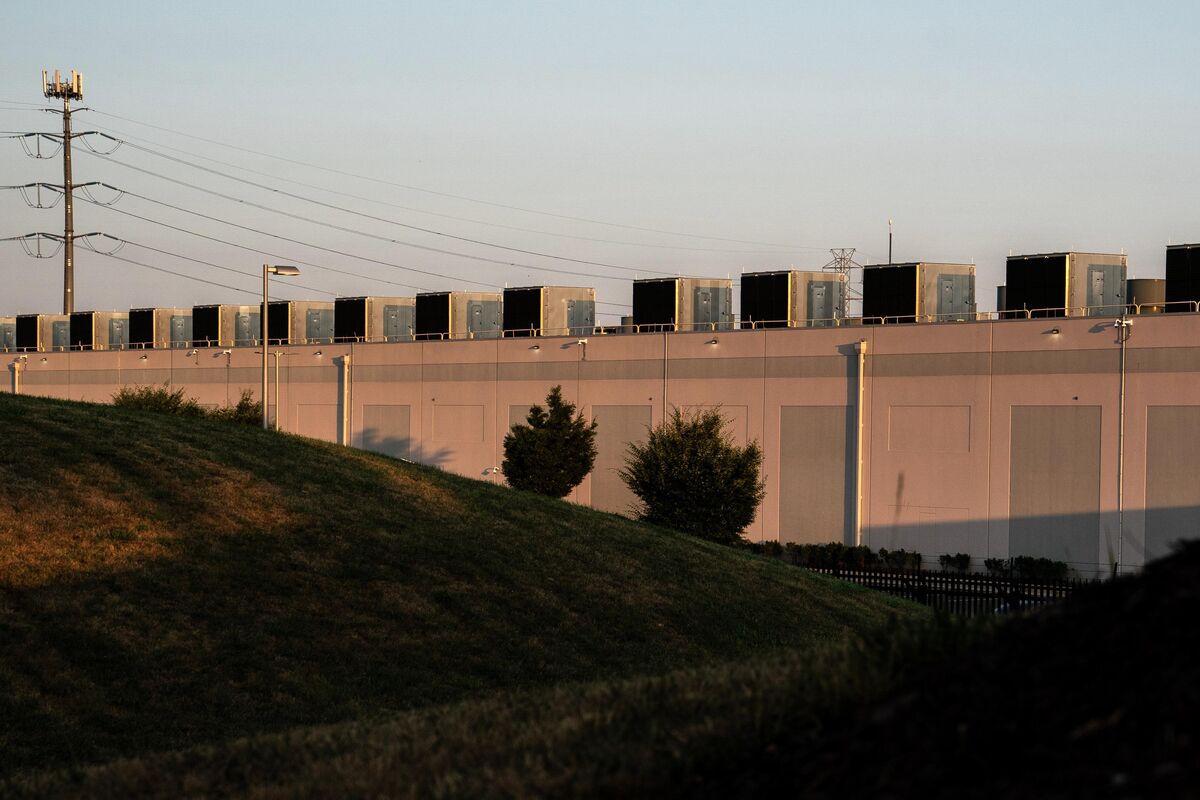
INFRASTRUCTURE / CAPITAL FLOWS
Data centers are now securitized yield, not just capex
Blackstone filed for an IPO of a new data center acquisition vehicle to buy already-built and leased properties, planning to raise around $2B, per Techmeme/Bloomberg.
The vehicle targets fully leased, AI-exposed facilities, turning long-term compute contracts into predictable cash flows for public investors.
The Bet: There is durable, bond-like demand for AI compute, and the best risk-adjusted return is in stabilized, not speculative, capacity.
So What? Your landlord is turning into a financial product manager. That means more capital available to build and acquire capacity, but also less tolerance for underutilization, renegotiation, or delayed ramps. Compute is being financialized like real estate and renewables: long-dated contracts, covenants, and yield expectations. If your AI roadmap depends on flexible, cheap capacity, you’re misaligned with how your landlord’s CFO is thinking.
The Risk: If demand softens or your usage lags contracted ramps, you’re not just disappointing a colo provider, you’re impairing a securitized asset. Expect tighter terms, higher penalties, and less willingness to accommodate experimentation that doesn’t translate into committed MW.
Action: • Map your top 3–5 data center relationships and identify which are owned or financed by yield-focused vehicles. • Re-negotiate or structure future contracts with realistic ramp curves and explicit flexibility clauses, before the IPO closes and terms harden. • Treat long-term compute commitments like debt: run them through treasury and risk, not just IT procurement.

AUTONOMY / REGULATION
Regulatory precedent for high-autonomy systems just landed in Europe
Tesla says Dutch regulators approved the use of its Full Self-Driving software, the first regulatory sign-off for the feature in Europe, per Techmeme/Reuters.
The Netherlands becomes the wedge jurisdiction, creating a reference point for other EU regulators and for competitors’ ADAS and AV systems.
The Bet: Once one EU authority accepts Tesla’s safety case and governance model, others will converge around that baseline rather than inventing their own from scratch.
So What? Regulation of autonomy in Europe just shifted from hypothetical to comparative. If you’re in mobility, logistics, or any safety-critical autonomy, your compliance narrative will be judged against “what’s already on Dutch roads.” The conversation moves from “is this safe?” to “is this safer or better governed than Tesla’s implementation?”, with implications for data logging, driver monitoring, OTA update controls, and incident reporting.
The Risk: If Tesla’s approval becomes the de facto floor, regulators may either over-index on that template, constraining alternative architectures, or overcorrect later if incidents occur, tightening rules across the board. Either way, your room to negotiate bespoke frameworks shrinks.
Action: • Have your regulatory and safety teams dissect the Dutch approval terms and map gaps against your own autonomy stack. • Update your EU go-to-market and compliance roadmap to assume comparative scrutiny, build explicit “better than Tesla on X” claims backed by data. • For non-mobility autonomy (warehouses, industrial, drones), anticipate regulators borrowing elements of this framework and preemptively align your logging and governance.

CLIMATE / SUPPLY CHAIN / ROBOTICS
Battery circularity is not de-risked, grants didn’t save Ascend
Battery recycler Ascend Elements filed for bankruptcy, per TechCrunch.
The company had been a high-profile recipient of government support in the EV supply chain, positioned as a key player in lithium-ion recycling.
The Bet: Policymakers and investors assumed that demand for recycled materials plus subsidies would be enough to carry capital-intensive recyclers through commodity and policy cycles.
So What? Battery circularity just proved it is still a commodity and policy business, not a guaranteed green-growth story. If your decarbonization or EV roadmap assumes cheap, abundant recycled feedstock, your cost curves are fragile. The upstream risk is not just mining, it’s the financial viability of recyclers whose economics depend on metal prices, policy stability, and OEM contract discipline.
The Risk: If more recyclers stumble, OEMs will scramble for virgin supply, pushing prices and geopolitical exposure up. Your “sustainable sourcing” commitments could collide with physical scarcity and higher costs, forcing uncomfortable tradeoffs in pricing and product mix.
Action: • Re-run your 3–5 year battery and materials cost models under scenarios with constrained recycled supply and higher virgin prices. • Stress-test your supplier map: identify single points of failure in recyclers and negotiate contingency capacity with alternates. • For hardware and robotics teams, design for chemistry and form-factor flexibility where possible, don’t lock into a supply chain that assumes recycling scale that isn’t there yet.

TOKENIZATION / GOVERNANCE
Circular leverage in token economies is now a mainstream risk case study
Trump-linked World Liberty Financial used 5B of its WLFI tokens to borrow $75M from a platform its adviser co-founded; WLFI then fell to an all-time low, per Techmeme/CoinDesk.
The structure combined self-referential collateral, related-party lending, and market drawdown, a classic governance and leverage failure, now in a politically exposed token.
The Bet: Sponsors assumed that narrative and political capital would sustain token value long enough to support on-chain borrowing without triggering a confidence spiral.
So What? This is the playbook regulators and counterparties will now have in mind when they look at any tokenized treasury, rewards, or infra asset. If your business touches tokens, even as a sidecar to a “real” product, you will be underwritten like a leveraged credit, not a growth equity story. Collateral quality, related-party exposure, and unwind mechanics are no longer crypto-native concerns; they’re board and regulator questions.
The Risk: If you treat token design as marketing and ignore capital structure, you risk a liquidity crunch that spills into your core business. And if you’re a counterparty to token-backed entities, you may be exposed to hidden circular leverage you didn’t price.
Action: • Inventory every token exposure in your business, issued, held, or accepted, and classify them by collateral quality and related-party risk. • Rewrite treasury and governance policies to ban or tightly constrain using your own token as primary collateral. • If you partner with tokenized platforms, demand full transparency on their capital stack and stress-test their unwind scenarios.
IN PRACTICE
Most teams still treat “AI risk” and “AI economics” as separate workstreams. Yesterday’s moves show they’re the same problem.
When we work with clients on agent deployment, we start with a simple discipline: treat each agent as a hire and each long-term compute contract as debt.
That forces the right questions: What is this agent’s job description? Who supervises it? What’s the fully loaded cost, licenses, infra, security, and human oversight, versus output? On the infra side: what are the covenants, ramp obligations, and exit options on your compute commitments?
Once you model agents and compute this way, security and governance stop being “compliance overhead” and become part of the unit economics. A breach, a misaligned agent, or an underutilized rack isn’t just a PR event, it’s a hit to your effective ROI per agent and per MW.
For the full breakdown, reach out for a Field Report.
CONTRARIAN SIGNAL
AI agents are not your productivity story, they’re your new labor and risk class
The dominant narrative is that agents are the next step-change in productivity, digital workers that scale without headcount.
The structural reality emerging this week is different: vendors are pricing agents like employees, security vendors are treating them as a new attack surface, and regulators are starting to see advanced models as part of systemic risk. Your “digital workforce” is converging toward the same constraints as your human workforce, cost per seat, supervision, liability, and regulatory scrutiny.
If you chase agent deployment as a free lunch, you’ll recreate your worst organizational patterns in software: bloated “staff,” unclear accountability, and opaque risk. The teams that win will be the ones that treat agents as a scarce, expensive class of labor and design lean, auditable workflows around them.
The Takeaway: Stop asking “Where can we add agents?” and start asking “Where can we justify a new, expensive, always-on identity that regulators and attackers will both care about?”
THE QUESTION FOR TODAY
Agents are becoming billable seats with security overhead. Your data centers are turning into securitized yield products. Offensive models are in the hands of your banks and on the radar of the Vice President and Treasury. Regulators are setting autonomy baselines you didn’t write. Token governance failures are now mainstream political stories.
Are you still treating AI and infra as IT line items, or are you managing them like balance sheet and risk exposures that can move your valuation?
⸻
See exactly how this impacts your specific industry and function. Upgrade to PRO to get bespoke tactical breakdowns generated instantly for your operating model.
Go deeper with the Weekly Signal
This is the daily take. The Weekly goes further — full strategic analysis across 8–10 sections, each with a signal read and operator action items. Source panel included.
Sign up free → then upgrade