
A frontier lab said a model is “too powerful to release.” Another launched a “new frontier model” specifically for cyber defense. The FBI put a ~$21B price tag on cybercrime. Ukraine quietly logged 21,000 ground-robot missions in a single quarter.
At the same time, 78,557 tech workers were cut in Q1, nearly half explicitly tied to AI and automation, while a major US agency acknowledged using commercial-grade spyware on domestic targets.
The connective tissue isn’t “AI progress.” It’s that autonomy, in software, in robots, in capital allocation, is now being gated by security, not just capability.
If your 2026 plan treats security, governance, and workforce design as support functions around “the AI strategy,” you have it backwards. Security and org design are now the primary constraints that will determine what you’re actually allowed, and able, to deploy.
BLUF
At Neue Alchemy, we support leaders navigating inflection points, when tech, capital, and policy converge. If your roadmap is already in motion and you're pressure-testing execution, we're open to conversations.
We also reserve capacity for education, SMBs, and mid-market leaders, those starting, mid-flight, or seeking outside perspective before systems harden.

FRONTIER MODELS / GOVERNANCE
Frontier capability is now a security asset, not a product SKU
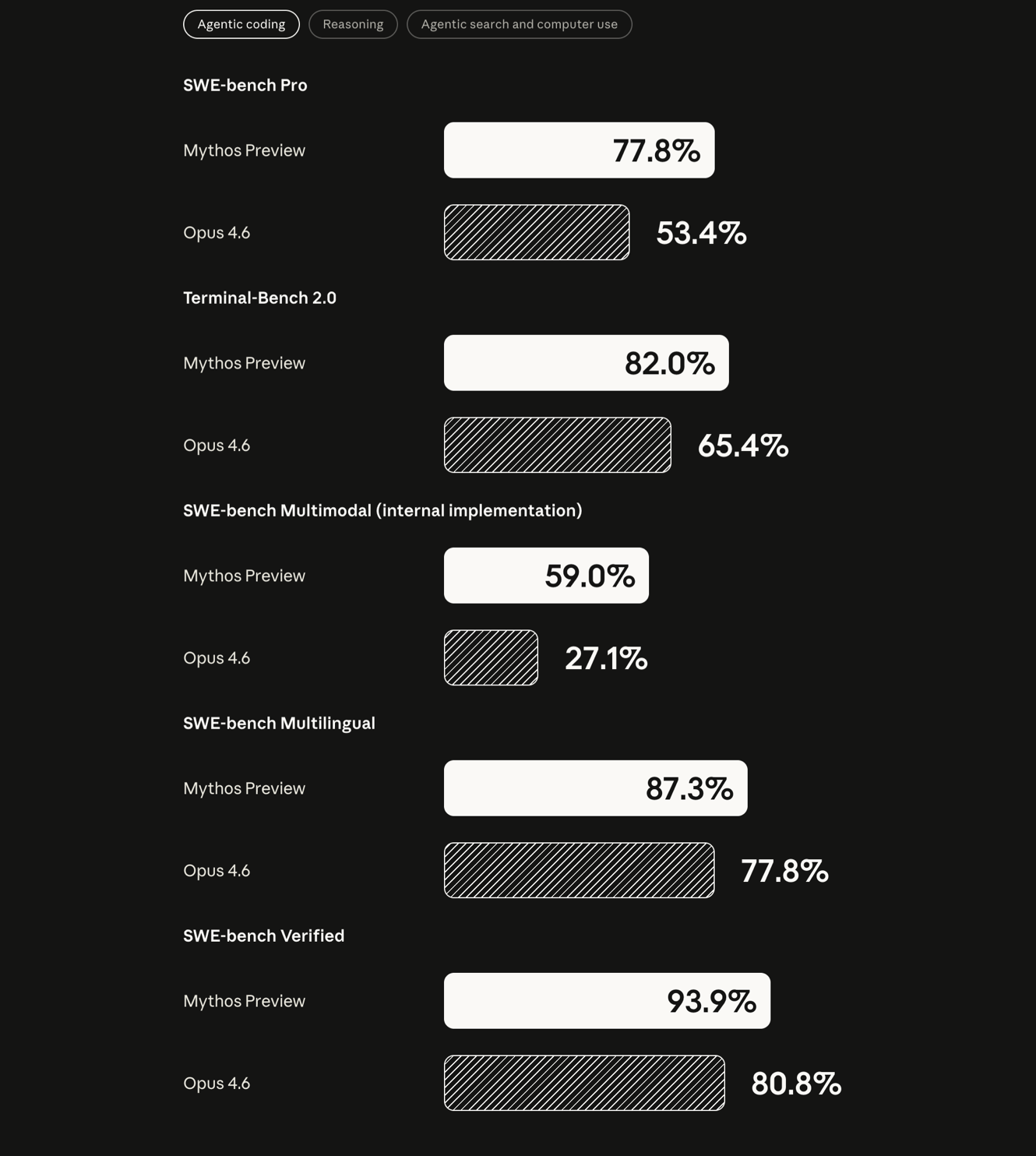
Anthropic, too powerful to release Anthropic confirmed it has trained a new frontier model it considers “so scarily powerful” that it will not be broadly released, per Gizmodo. The model exists, has been evaluated, and will inform products and research, but access will be tightly governed.
In parallel, detailed analysis of Anthropic’s Mythos Wolf and related work framed this as a shift toward models that are treated as national security–relevant assets, not just commercial offerings, per Stratechery.
The Bet: Frontier capability will be monetized indirectly, via derivative products, partnerships, and policy leverage, without ever being fully exposed.
So What? Frontier access is now a policy surface first, a developer surface second. If your roadmap assumes “we’ll just plug into the best model,” you’re building on ground that labs and regulators are actively shrinking. The competitive edge shifts from raw access to how well you can operationalize “good enough” models under tight governance, plus your own data, workflows, and guardrails. This also formalizes a two-tier world: a small circle with deep, negotiated access to frontier capability, and everyone else living on rate-limited, policy-constrained APIs.
The Risk: You over-rotate into a single lab’s stack and wake up on the wrong side of a policy change or access restriction. Or you wait for “open” frontier access that never comes, and your internal teams stall instead of building on the models they actually have.
Action: • Map your dependencies: list every initiative that implicitly assumes access to “the best model” and re-baseline them against models you can reliably contract for today. • Start designing for portability: abstract your model layer so you can swap between at least two providers without rewriting your product. • Build internal governance now, access controls, logging, review, so when higher-capability APIs are offered under stricter terms, you can credibly say “we’re ready.”

CYBER / SECURITY
AI vs AI is now the baseline threat model
Project Glasswing, AI defending against AI Project Glasswing is building a “new frontier model trained by Anthropic” to reshape cybersecurity by using AI to detect and prevent AI-driven cyberattacks, per TechRadar Pro. The system leans on Anthropic’s Claude Mythos models for autonomous analysis and response.
This explicitly frames cyber as an AI-on-AI contest, offensive-quality models on both sides of the wire.
The Bet: Defensive teams will accept higher autonomy, and some false positives, in exchange for keeping pace with AI-augmented attackers.
So What? Security is no longer “add AI to your SIEM.” The bar is now: do your defenders have access to tools at least as capable as what attackers can rent by the hour. Budgeting “AI for cyber” as an experiment is now mispriced risk, it belongs in core controls alongside identity, network, and endpoint. Vendors that can credibly show AI-native detection and response, not just LLM-powered dashboards, will start to displace legacy tools in RFPs.
The Risk: Over-eager autonomous responses can cause their own outages, blocking legitimate traffic, locking users out, or corrupting data, and erode trust in the system. If you treat AI defense as a silver bullet, you underinvest in basic hygiene, MFA, least privilege, patching, and attackers walk around your shiny new model.
Action: • Ask your CISO this week: where, concretely, are we using AI in detection and response today, and where are attackers already using it against us. • Run a tabletop exercise assuming AI-generated phishing, deepfake voice, and automated lateral movement, then identify the specific controls that fail. • In your next security vendor review, require a clear roadmap for AI-native capabilities and how they’re evaluated against AI-augmented threats.
FBI, cybercrime is a $21B P&L drag The FBI reported that US victims lost roughly $21B to cybercrime in 2025, up 26% year-over-year, driven by investment scams, business email compromise, tech support fraud, and data breaches, per BleepingComputer.
This is before the full impact of AI-generated scams and synthetic identities is priced in.
So What? Cyber is now a line item in your income statement, not just your IT budget. A 26% YoY growth curve in losses is the same shape you expect from a successful product, attackers are scaling. If your AI roadmap is all “productivity” and no “fraud and abuse,” you’re effectively subsidizing attacker R&D by leaving your revenue and customers exposed. Boards will increasingly ask not “are we using AI?” but “are we using AI to reduce our exposure to this $21B problem?”
The Risk: You chase shiny AI features while your payments, identity, and support channels remain easy to exploit, and you only see the risk when a regulator or insurer forces the issue. Or you overreact with blunt controls that add friction and drive away legitimate customers.
Action: • Put a dollar estimate on your own cyber exposure: fraud write-offs, chargebacks, downtime, incident response, then set a target to reduce it with AI-enhanced controls. • Prioritize AI in identity verification, anomaly detection in payments, and comms monitoring for social engineering, these are where attackers are already using automation. • Align incentives: tie a portion of exec comp or business unit targets to measurable reductions in fraud and cyber losses.
ICE / Graphite, state-grade spyware is normalized US Immigration and Customs Enforcement reportedly acknowledged using the Graphite spyware platform, previously linked to controversial surveillance, framing it as a tool in the fight against fentanyl, per Gizmodo.
This is another data point that device-level compromise is now a normalized instrument of domestic law enforcement, not just foreign intelligence.
So What? If you handle sensitive communications, executive, legal, dealmaking, R&D, you have to assume that endpoint compromise is on the table, not a movie-plot risk. Security posture that focuses on network perimeters and cloud configs while ignoring phones and laptops is structurally misaligned with how modern surveillance actually works. For AI-heavy orgs, compromised endpoints mean compromised prompts, training data, and model outputs, your “secret sauce” is only as safe as the devices touching it.
The Risk: You treat this as a civil liberties story instead of an operational one and fail to harden your own endpoints and comms. Or you lock everything down so hard that executives and teams route around controls with personal devices and consumer apps.
Action: • Audit executive and key staff devices this quarter, but start this week by inventorying which roles handle the most sensitive comms and data. • Move high-sensitivity conversations to hardened channels with hardware-backed security, and train those users on basic OPSEC. • Treat AI tooling on endpoints as part of your threat model: review which local apps and browser extensions have access to sensitive content.
AUTONOMY / EMBODIED AI
Robots are leaving the lab, at wartime scale
Ukraine, 21,000 ground-robot missions in Q1 Ukraine reported using uncrewed ground vehicles to replace human soldiers in over 21,000 missions in Q1 2026, per Business Insider. These UGVs are being deployed under live fire for logistics, reconnaissance, and potentially combat roles.
That’s not a pilot, it’s industrialized deployment of ground robots in one of the harshest operating environments on earth.
The Bet: Wartime learning loops will compress autonomy, reliability, and logistics maturity from “decade” timelines into a few years.
So What? The reference bar for “field-proven autonomy” just jumped from a few hundred test runs to tens of thousands of missions under extreme stress. Industrial and logistics buyers can now benchmark against that. Vendors who can credibly say “our stack has seen thousands of real-world missions” will have a structural advantage over slideware and warehouse-only pilots. If you run physical operations, mining, ports, warehouses, energy, the question is no longer “if” robots can handle harsh conditions, but when you start capturing that learning curve for your own environment.
The Risk: You assume military-grade deployment is irrelevant to your civilian use case and miss the window to partner with vendors who are battle-testing their platforms. Or you import tech without adapting for your regulatory, safety, and labor context, triggering backlash and delays.
Action: • Identify 2–3 workflows in your physical operations that are dangerous, repetitive, or remote, and start a vendor scan for UGV or mobile robotics that could address them. • In RFPs, ask for mission counts, failure modes, and recovery procedures, not just demo videos. • Assign a single owner for “embodied autonomy” in your org, someone accountable for tracking this curve and running at least one serious pilot in the next 6–12 months.

LABOR / ORG DESIGN
AI is now explicitly on the layoff memo, and on the career ladder
RationalFX / Q1 layoffs, AI is named in the redundancy A RationalFX analysis found tech layoffs totaled 78,557 in Q1 2026, with the US accounting for 76.7% of cuts, and nearly half attributed to AI implementation and workflow automation, per Nikkei Asia via Techmeme.
AI is no longer a vague “efficiency” story, it’s explicitly cited as the reason roles are disappearing.
The Bet: Enterprises can resize and reshape teams quickly enough to capture AI leverage before competitors do, and before internal resistance hardens.
So What? “Augmentation” as a political shield is over. Boards and CFOs now have cover to ask: if we’ve invested in AI, where are the headcount savings. If you’re not proactively redesigning workflows and roles around a smaller, more AI-levered team, you’re effectively volunteering to be the next case study. Talent will respond rationally: high performers will either lean into AI fluency or exit to environments where they can own more with less bureaucracy.
The Risk: You let finance drive a blunt-force RIF without redesigning processes, so remaining staff inherit broken workflows and burnout, and the AI investment never pays off. Or you delay hard decisions, trying to “protect culture,” and end up doing reactive cuts under worse conditions later.
Action: • Pick one major function, support, ops, or back office, and map the top 10 workflows by time spent; mark which steps are automatable with current tools. • Design a target org chart for that function assuming 20–30% fewer seats and heavy AI assistance, then start moving in that direction with attrition and reassignments. • Be explicit with your team: AI fluency is now a promotion and retention criterion, and back it with training and tools, not just slogans.
Roblox’s Peter Yang, skip college, bootstrap with AI Roblox executive Peter Yang said he wants his kids to skip college and corporate life to bootstrap businesses using AI, arguing that AI will erode the value of “safe corporate jobs,” per Business Insider.
The subtext: AI lowers the cost of starting and running a micro-business enough that a 4-year credential looks like opportunity cost.
So What? Your talent funnel is no longer just competing with other employers, it’s competing with AI-leveraged solo entrepreneurship that offers autonomy and upside. If your value proposition is “stability and benefits,” you’re selling into a shrinking segment of the next generation’s ambitions. The best junior talent will expect to own products, P&L slices, or at least meaningful scope, or they’ll build on their own.
The Risk: You keep designing entry-level roles as ticket-taking and slide-making, assuming prestige will carry you, and watch your highest-upside candidates churn or never apply. Or you overcorrect and promise “founder-like” experiences you can’t deliver inside a large org.
Action: • Redesign at least one early-career role this quarter to own a measurable business outcome, revenue, cost, or user metric, not just tasks. • Offer internal “micro-ventures”: small, AI-heavy projects where junior staff can ship and see direct impact within 90 days. • In recruiting, stop selling “safety” and start selling “leverage”, the chance to use capital, data, and distribution they can’t access solo.

CAPITAL / PRICING POWER
Model economics are shifting, up, not down
Z.ai, raising prices on GLM-5.1 Z.ai increased prices for its most advanced AI model, GLM-5.1, by at least 8% compared to GLM-5 Turbo, citing surging demand for agentic AI, per Bloomberg via Techmeme. This follows similar moves by Alibaba and Tencent.
Chinese foundation models are testing, and finding, real pricing power at the high end.
The Bet: Customers will pay a premium for higher-autonomy, higher-quality tokens where they see direct business impact.
So What? The comfortable assumption that API costs trend down over time is breaking. For agentic workloads, “smarter” tokens are starting to cost more, not less. If your product economics assume flat or falling unit costs, you’re short optionality in a world where your COGS can rise with every capability upgrade. Vendors who can show ROI per token, not just lower prices, will win budget, while those selling “cheap LLM access” get squeezed.
The Risk: You lock in pricing to customers on the assumption of cheap upstream APIs and get caught in a margin vise when your model provider raises rates. Or you underinvest in higher-capability models to save on COGS and ship a worse product that loses the market.
Action: • Run a sensitivity analysis this week: what happens to your gross margin if your model costs go up 25–50% for key workloads. • Segment workloads by value: reserve higher-cost, higher-capability models for high-ROI paths; push low-stakes tasks to cheaper models. • Negotiate volume and term commitments with providers now, while you still have leverage, and keep at least one alternative model in active testing.
IN PRACTICE
Designing for AI-era org shrink without breaking the machine
Most teams are reacting to AI-linked layoffs as a cost story. The structural move is to treat it as an org design story.
The pattern we see work:
Start with workflows, not headcount. Map the actual work, tickets, approvals, content, analysis, and mark where AI can remove steps entirely versus assist humans. Then design the target workflow first, and only then ask “how many people do we need to run this.”
Shift managers from schedulers to system owners. Their job becomes tuning prompts, guardrails, and routing logic, not just assigning tasks. The managers who can’t or won’t make that jump are your real constraint.
Finally, build a “shadow org chart” for 18 months out, smaller, more AI-levered, and use attrition, redeployment, and targeted hiring to move toward it deliberately instead of via emergency RIFs.
For the full breakdown, reach out for a Field Report.
CONTRARIAN SIGNAL
“AI strategy” is now a security strategy with a revenue side effect
Most boards are still treating AI as a growth lever, new products, higher productivity, better margins. Security and governance are the “risks to manage.”
Yesterday’s moves invert that logic.
Frontier models are being held back not because they’re unprofitable, but because they’re considered too sensitive to release. Cybercrime is growing like a successful SaaS business. State agencies are normalizing device-level surveillance. And the most credible new AI product in cyber is explicitly framed as defense against AI attackers.
The real story: your AI strategy is now a security strategy that happens to generate revenue. The primary constraint on what you can deploy, and keep deployed, will be whether you can secure it, govern it, and survive the adversaries it attracts.
The Takeaway: If your AI roadmap doesn’t start with “what does this do to our attack surface and control surface,” you’re not early, you’re already behind.
THE QUESTION FOR TODAY
Frontier capability is being gated by security, not demand. Cybercrime is compounding faster than your top line. Robots are logging tens of thousands of missions under live fire. AI is explicitly on the layoff memo, and on the career ladder. Model providers are testing real pricing power at the high end.
Are you designing your AI plans around what’s exciting, or around what you can actually secure, afford, and staff over the next 24 months?
⸻
See exactly how this impacts your specific industry and function. Upgrade to PRO to get bespoke tactical breakdowns generated instantly for your operating model.
Go deeper with the Weekly Signal
This is the daily take. The Weekly goes further — full strategic analysis across 8–10 sections, each with a signal read and operator action items. Source panel included.
Sign up free → then upgrade