
Space data centers. Quantum-safe Bitcoin. Quantum interconnects. AI taxes framed as sovereign wealth. A union win forcing Amazon to the table.
On the surface, these are disconnected: rockets, qubits, tokens, and warehouses.
Underneath, they’re all the same story, control of the rails.
Compute rails. Labor rails. Capital rails. Governance rails.
The pattern: every high-leverage layer that used to be “someone else’s problem” is now strategic. If you’re still treating infra, labor relations, or protocol risk as background noise, you’re building on sand.
The uncomfortable reframe: your real moat over the next decade is not your model or your app, it’s which rails you choose to own, which you rent, and which you assume will never change.
BLUF
At Neue Alchemy, we support leaders navigating inflection points, when tech, capital, and policy converge. If your roadmap is already in motion and you're pressure-testing execution, we're open to conversations.
We also reserve capacity for education, SMBs, and mid-market leaders, those starting, mid-flight, or seeking outside perspective before systems harden.
INFRASTRUCTURE / COMPUTE
Space data centers are a distraction from the real constraint: terrestrial power and siting
Tech billionaires want to put data centers in orbit, pitching “infinite” scale and cooling, per Business Insider. Researchers are pushing back, launch costs, radiation shielding, maintenance, and latency turn every watt and bit into a rocket equation problem, not a standard capex line.
The Bet: Visionary narratives about orbital compute will keep capital and public attention flowing toward the firms that already dominate launch and cloud.
So What? The real constraint for the next decade is not “running out of space on Earth”, it’s power, cooling, water, and permitting in a handful of geographies. While the narrative drifts to space, the operators who quietly lock in cheap, reliable terrestrial capacity will own the margin stack for AI workloads.
If you’re planning infra, the risk is misallocating attention, chasing exotic architectures while your competitors are signing 10–20 year PPAs, securing substation upgrades, and cutting deals with local regulators. The winners will look boring on the outside and ruthless in their site selection spreadsheets.
The Risk: Policy or ESG pressure could make certain regions effectively off-limits, compressing siting options faster than expected. If that happens while you’re still in “wait and see” mode, you’ll be buying capacity at a premium from those who moved earlier.
Action: • Map your next 5–10 years of compute demand against specific power markets, not generic “cloud regions.” • Start conversations this week with your cloud and colo vendors about long-term power-backed commitments, not just instance pricing. • Add siting risk, water, grid stability, local politics, as a standing item in your infra steering committee, not an annual offsite topic.
NATIONAL COMPUTE / SOVEREIGNTY
AI token taxes are the opening move in the surplus capture fight
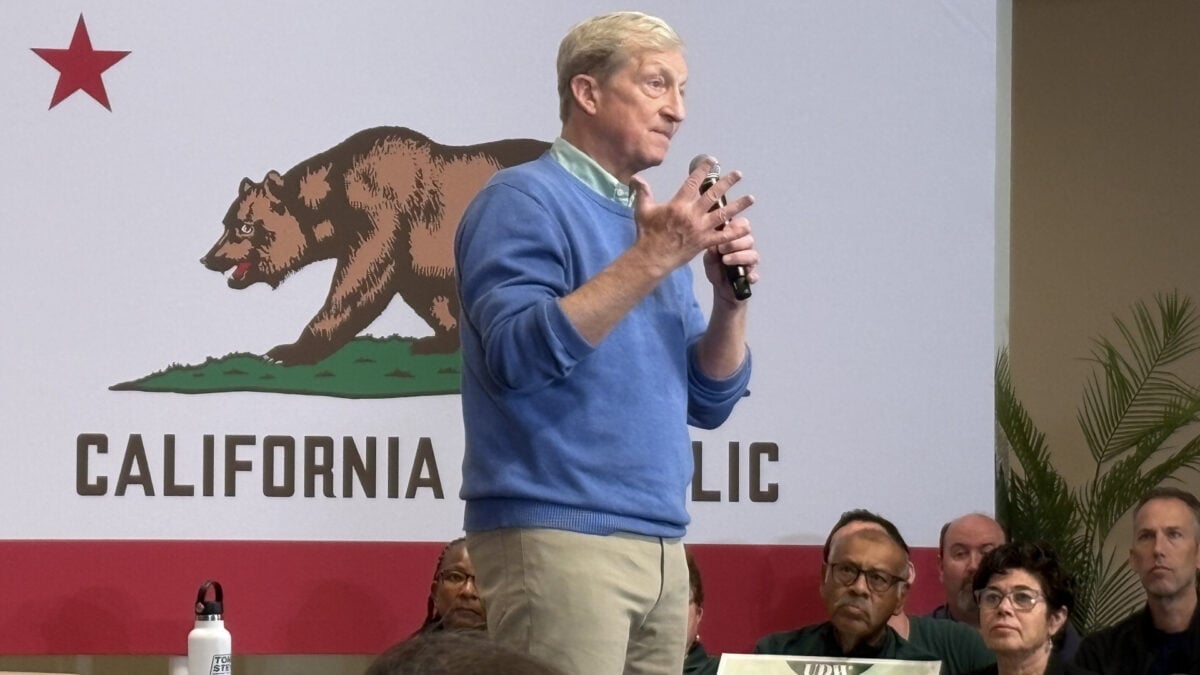
A California billionaire is pushing a proposal to tax “AI tokens”, the usage units for AI models, to fund a state-level sovereign wealth fund, per Gizmodo. The idea is simple: as AI productivity compounds, a slice of the usage gets diverted into a public asset base.
The Bet: Governments won’t just regulate AI safety, they’ll claim a direct share of AI economic rents, using metered usage as the collection point.
So What? If your business model is built on tokenized AI usage, API calls, per-token pricing, or embedded metering, you’re now in the same category as carbon, telecom, and payments: a taxable, observable flow. The margin you think you own is already being eyed as public revenue.
This changes pricing strategy. You can’t assume “we’ll compress prices later” if a statutory levy gets baked into the stack. It also changes where you deploy, jurisdictions that move first on AI taxes become structurally more expensive surfaces for high-intensity workloads.
The Risk: Patchwork regulation creates arbitrage. You could end up with a balkanized cost base, some regions with AI levies, others without, forcing you into complex routing and compliance gymnastics that erode the simplicity of your current architecture.
Action: • Ask your finance lead this week to model a 1–3% “AI usage levy” on your token or API-based revenue, what does it do to gross margin and pricing power. • Tag your AI workloads by geography and regulatory exposure so you can re-route or re-price quickly if a jurisdiction moves first. • If you’re lobbying or in trade groups, push for clarity on whether AI taxes will hit providers, integrators, or end customers, don’t wait for the bill to define your role.

LABOR / OPERATIONS
Amazon’s forced bargaining is a template for logistics labor risk
The US NLRB ruled that Amazon must negotiate with the Amazon Labor Union, which represents roughly 5,000 workers at its Staten Island warehouse, per Techmeme / Reuters. Amazon plans to appeal, but the precedent is clear: large, high-throughput facilities are now central battlegrounds for labor governance.
The Bet: High-density logistics and fulfillment nodes are too visible and too critical to remain non-union indefinitely.
So What? If your network depends on mega-facilities, warehouses, data centers, manufacturing hubs, labor relations are now as strategic as automation roadmaps. You can’t treat unionization as a PR issue; it’s a throughput, cost, and resilience variable.
This also reframes automation. It’s not just about efficiency, it’s a bargaining chip. The more credible your automation path, the more leverage you have in negotiations, but also the more scrutiny you’ll face on job displacement and safety.
The Risk: Ignoring early organizing signals at smaller sites leaves you exposed to sudden, large-scale disruptions when a single flagship facility becomes the focal point. Negotiation timelines can stretch quarters, not weeks, misjudging that duration can break SLAs and customer trust.
Action: • Ask your ops and HR leads for a map of facilities by headcount, union activity, and automation level, on one page. • Build a scenario where your highest-throughput site faces a 10–20% productivity hit for 3–6 months due to bargaining or action, what breaks, and where do you reroute. • If you’re piloting automation, explicitly model how it plays into labor negotiations, don’t let the narrative be written for you.
CRYPTO / QUANTUM RISK
Quantum risk to crypto just moved from theory to board agenda
Coinbase’s CEO publicly addressed the “quantum threat” to cryptocurrencies and is pushing to make Bitcoin quantum-resistant, per The Quantum Insider. The message: post-quantum migration is no longer an academic exercise, it’s a strategic priority.
The Bet: The timeline for practical quantum attacks on current cryptography is uncertain, but the reputational risk of being unprepared is immediate.
So What? If you hold assets, build products, or run infrastructure on crypto rails, your risk model just changed. The threat is not “all keys get broken overnight”, it’s that confidence erodes as soon as a credible quantum roadmap intersects with your asset duration.
This is a governance and migration problem, not just a cryptography problem. You’ll need to rotate keys, upgrade protocols, and communicate to users and regulators that your stack is on a path to post-quantum safety. That’s multi-year work.
The Risk: Waiting for a “final standard” is the comfortable mistake. By the time standards are locked, the migration window for long-lived assets, cold storage, institutional holdings, tokenized real-world assets, will already be tight.
Action: • Ask your security or protocol team for a one-page inventory of where classical public-key crypto underpins value in your stack, wallets, custody, signatures, consensus. • Set a 5–10 year horizon in your risk register for quantum migration and assign an owner, not a committee. • If you’re a board member or exec with material crypto exposure, put “post-quantum roadmap” on the next agenda and demand a concrete plan, not a reassurance.
QUANTUM STACK / TOOLING
Quantum is quietly industrializing, from simulation tools to interconnects
QuEra launched an open-source, GPU-accelerated package, Tsim, to simulate logical quantum circuits with T-gates at scale, per The Quantum Insider. It targets non-Clifford circuits and aims to standardize how teams design and test logical-level algorithms.
Separately, CavilinQ raised $8.8M in seed funding to build quantum interconnects, the communication layer between quantum processors and components, per The Quantum Insider. The thesis is that the bottleneck is shifting from individual qubits to how they talk to each other, echoing classical HPC’s InfiniBand moment.
The Bet: The quantum stack is maturing along the same lines as classical compute, standardized tooling at the top, specialized interconnect at the bottom, with algorithmic IP as the real prize.
So What? If you’re in a quantum-adjacent industry, finance, pharma, materials, energy, CFD-heavy sectors, the excuse that “the tools aren’t there yet” is eroding. Open-source simulators like Tsim mean your team can start designing and benchmarking logical circuits now, even before hardware catches up.
On the hardware side, interconnect startups like CavilinQ signal that the ecosystem is thinking in systems, not devices. The value will concentrate in those who understand how to orchestrate heterogeneous quantum-classical clusters, not just those who buy time on a single vendor’s machine.
The Risk: Outsourcing all quantum thinking to vendors or academic partners leaves you flat-footed when the first commercially relevant workloads appear. You’ll be a price-taker on both tooling and capacity, with no internal intuition about tradeoffs.
Action: • Identify one person, or a very small team, to own “quantum readiness” for your org and give them a mandate to experiment with tools like Tsim this quarter. • If you’re already running HPC, ask your infra team how they’d integrate a quantum interconnect layer conceptually, where would it plug into your current workflows. • Start a simple registry of potential quantum-relevant problems in your business, optimization, simulation, pricing, so you’re ready to map them to emerging capabilities instead of starting from zero later.
ORG / TALENT
AI-pilled engineers are burning out, your bottleneck is now human stamina
Django co-creator Simon Willison described “AI-pilled” engineers working harder, shipping more, and burning out faster as they chase 10x productivity with AI tools, per Business Insider. The constraint has shifted from code generation to human review, context-switching, and cognitive load.
The Bet: Organizations will quietly assume AI-augmented engineers can sustain permanently higher throughput without redesigning workflows or expectations.
So What? If you’re leading teams, your productivity model is probably wrong. You’re counting the extra output from AI assistance but not the extra fatigue from constant review and integration. The risk is subtle: quality drifts, incident rates climb, and your best people quietly check out.
This is not a “wellness” issue, it’s an operational one. Sustainable AI leverage requires new cadences, review practices, and staffing ratios. The teams that treat AI as a force multiplier for thinking time, not just ticket throughput, will retain talent and ship more reliable systems.
The Risk: If you don’t cap expectations, AI becomes a treadmill. Engineers self-optimize into unsustainable patterns to keep up with perceived norms, and by the time you see the attrition data, your core architecture knowledge has already walked out the door.
Action: • Audit one team’s workflow this week: how many hours are spent reviewing AI-generated code, prompts, and outputs versus writing net-new logic. • Explicitly set throughput and review expectations in your sprint planning, don’t let “AI will help” be an unspoken assumption. • Add a simple question to your 1:1s and retros: “Is AI making your work feel more manageable or more chaotic?” and adjust process, not just tooling.
CONTRARIAN SIGNAL
Quantum isn’t “far future”, it’s governance and tooling risk today
The dominant narrative: quantum computing is a decade away, so outside of specialized labs, you can safely ignore it. Focus on AI, cloud, and automation; quantum will show up when it’s ready.
The structural reality is different. The Coinbase move, Tsim’s release, and interconnect funding show that quantum is already reshaping how we think about security, tooling, and architecture, before it reshapes raw compute.
The real risk is not that quantum arrives suddenly and breaks everything. It’s that your governance, contracts, and product roadmaps quietly bake in assumptions about cryptography, simulation, and optimization that age out faster than your assets do.
The Takeaway: Treat quantum like you treated cloud in 2008, not yet dominant, but already rewriting the assumptions under your long-lived bets.
THE QUESTION FOR TODAY
Space data centers are grabbing headlines while the real fight is over terrestrial power and siting. Governments are starting to treat AI usage like a taxable flow, not a neutral utility. Labor at mega-facilities is asserting formal power just as automation ramps. Crypto and quantum teams are quietly rewriting the security and tooling stack under your assets. Your engineers are running hotter on AI assistance than your org design can safely absorb.
Are you still planning as if the rails you depend on, compute, labor, cryptography, tax, will look the same in 10 years, or are you actively choosing which ones you’re willing to have rewritten under you?
⸻
See exactly how this impacts your specific industry and function. Upgrade to PRO to get bespoke tactical breakdowns generated instantly for your operating model.
Go deeper with the Weekly Signal
This is the daily take. The Weekly goes further — full strategic analysis across 8–10 sections, each with a signal read and operator action items. Source panel included.
Sign up free → then upgrade