


OpenAI put a hard number on the LLM economy. Microsoft put a hard number on where the next wave of compute lands. Courts put a hard line between "speech" and "product design." And SaaS CEOs started saying the quiet part out loud: the fight is for the orchestration layer, not the feature list.
The throughline: control planes are consolidating.
For models, it's who owns the spend and the feedback loops. For infrastructure, it's who owns the regions that matter for the next billion users. For software, it's who owns the graph of work and the agent router. For platforms, it's who owns the legal risk of "nudging" users, not just hosting their content.
If your 2026 plan assumes "we'll bolt AI on and keep our current stack and margins," you're misreading the shift. The question is no longer "how do we use AI", it's "what do we still own once the control planes harden."
BLUF
At Neue Alchemy, we support leaders navigating inflection points, when tech, capital, and policy converge. If your roadmap is already in motion and you're pressure-testing execution, we're open to conversations.
We also reserve capacity for education, SMBs, and mid-market leaders, those starting, mid-flight, or seeking outside perspective before systems harden.
CAPITAL FLOWS / BUSINESS MODELS
LLMs are now a line of business, not a line item
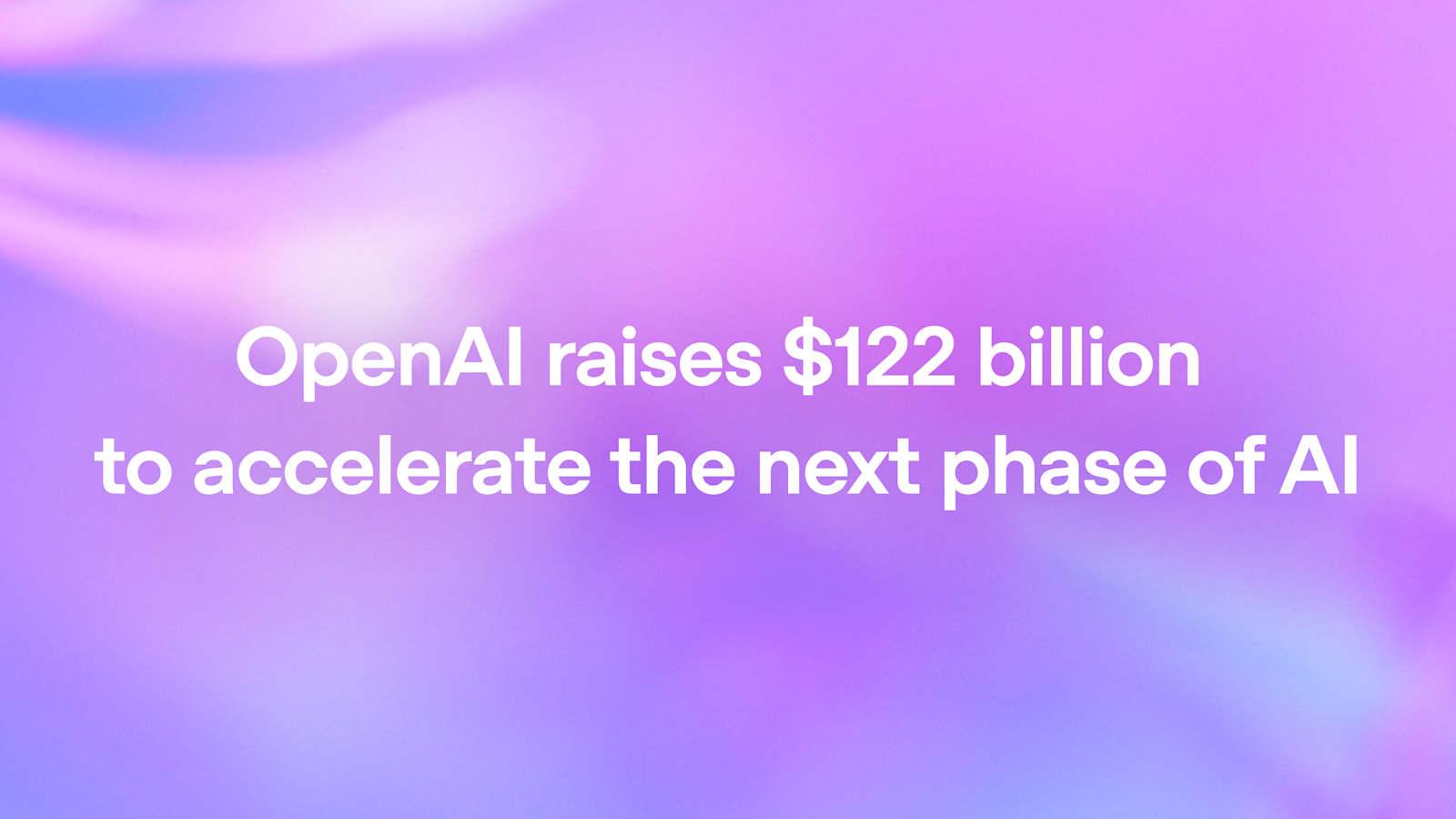
OpenAI said it is generating $2B in monthly revenue, with 40%+ from enterprise, and expects consumer and enterprise revenue to reach parity by the end of 2026, per Techmeme.
That implies a $24B annualized run rate today, with enterprise already a multi‑billion‑dollar book and growing toward a 50/50 split with consumer within ~24 months.
The Bet: LLM usage will be durable and expand fast enough that enterprises normalize eight‑ and nine‑figure AI opex as a core spend category, not a temporary experiment.
So What? LLM spend has crossed from "innovation budget" into "board‑visible cost center." Your CFO is going to benchmark your AI line against this scale and ask what you're getting for it.
It also clarifies the power dynamic: the model provider is not a vendor you can casually swap, they are becoming a platform with their own enterprise motion, usage data, and roadmap that will shape your margins and product velocity.
The Risk: If you build too tightly on a single provider's stack, you inherit their pricing, rate limits, and roadmap shocks, with little leverage.
On the flip side, over‑rotating to "provider neutrality" without usage concentration can leave you with higher integration cost and weaker performance, just as your competitors lean into the best‑in‑class stack.
Action: • Quantify your current and projected AI opex through 2027, by provider, by product, by unit economics, and put it in front of finance this week. • Decide where you want deep integration versus abstraction: pick 1–2 "strategic" model providers you'll go deep with, and where you'll enforce portability. • Tie every major AI feature on your roadmap to a revenue or gross margin lever, if it doesn't move those, it's a science project in a world where the platform is already printing $24B a year.

INFRASTRUCTURE / SOVEREIGN COMPUTE
Southeast Asia just became a first‑tier compute region
Microsoft said it is on track to invest $5.5B in cloud and AI infrastructure in Singapore through 2029, after announcing plans to invest $1B+ in Thailand, per Techmeme.
This stacks on top of prior regional investments and signals a multi‑region, multi‑billion‑dollar bet on ASEAN as a core cloud and AI demand center.
The Bet: Latency‑sensitive AI workloads, data‑sovereign industries, and regional digitalization will justify hyperscale build‑out in Southeast Asia at near‑tier‑one levels, not as overflow from US/EU.
So What? If you operate in or serve ASEAN, your default region and provider choices just changed from "whatever is closest" to "where the serious AI capacity and compliance posture will be."
This also shifts the center of gravity for regional startups and enterprises, the cheapest and most compliant place to run heavy AI workloads will increasingly be in‑region, not backhauled to US or EU data centers.
The Risk: Regulatory fragmentation across ASEAN is real, data residency, sectoral rules, and political shifts can undercut the value of regional capacity if your architecture assumes uniform treatment.
There's also execution risk: power, water, and grid constraints can slow actual usable capacity versus headline capex.
Action: • If you have users or operations in ASEAN, map your current workload placement and latency, then model what moving AI‑heavy services into Singapore or Thailand would do to performance and cost. • Start a conversation with your hyperscaler rep this week about their 2026–2028 AI roadmap in these regions, GPU/TPU availability, managed services, and compliance certifications. • For regional startups, bake "in‑region AI" into your pitch and architecture now, don't design a US‑centric stack you'll have to painfully repatriate later.

PLATFORMS / PRODUCT LIABILITY
Design is now a legal risk surface, not just a UX choice
Recent jury verdicts against Meta and YouTube recognized some platform design features as defective, distinct from what Section 230 was created to protect, per Platformer.
The rulings treated recommendation loops, engagement mechanics, and certain UX patterns as product defects, separating them from user‑generated content protections.
The Bet: Courts and regulators will increasingly treat engagement‑driving design choices as products subject to defect and safety standards, not as neutral conduits for speech.
So What? Your growth hacks, streaks, infinite scroll, autoplay, dark patterns, are now potential exhibits in litigation, not just A/B test variants.
For AI‑driven products, this extends to how agents suggest actions, rank content, or nudge behavior. "The model did it" will not be a defense if the system's design is framed as inherently harmful.
The Risk: If your design review process is optimized only for conversion and retention, you're flying blind on legal exposure.
There's also a coordination risk: legal, product, and data science often sit in silos, by the time counsel sees a feature, it's already shipped and scaled.
Action: • Stand up a "litigation‑aware" design review this week for any feature that affects engagement loops, recommendations, or behavioral nudges, include legal, policy, and data science. • Inventory your highest‑impact UX patterns and ranking systems and document the safety rationale and mitigations, assume discovery will ask for this. • For AI features, explicitly log and label when the system is making recommendations versus executing user‑directed actions, provenance will matter in court.
SOFTWARE / ORCHESTRATION
SaaS is racing to become the agent control plane
Asana's CEO framed the company as the orchestration layer for AI agents at work, betting that owning the graph of work makes Asana the router rather than the replaced app, per Business Insider.
This comes as Wall Street questions SaaS durability in an agentic world, and as multiple vendors reposition from "workflow tool" to "coordination fabric."
The Bet: In an environment where agents can call any API, the defensible position is to own the canonical model of tasks, dependencies, and permissions, not just a UI for humans.
So What? If you're a horizontal SaaS provider, your risk is not "someone builds a better feature", it's "agents wire around you entirely and treat you as a dumb datastore."
Conversely, if you own a rich, up‑to‑date graph of work, who does what, when, with what dependencies, you can become the default router for agents, humans, and other systems. That's a different power position than "project management tool."
The Risk: Declaring yourself the orchestration layer without actually exposing robust APIs, events, and policy controls is theater. Customers will test this claim quickly.
There's also a UX risk: if your orchestration story adds friction for human users in the name of agent coordination, you can lose the very adoption that makes your graph valuable.
Action: • Map your product's "graph of work" this week, what entities, relationships, and permissions do you actually know that others don't? Be honest. • Audit your APIs and webhooks from an agent's perspective: can an external agent observe state, act, and get feedback cleanly, or are you forcing brittle hacks? • If you're a buyer, start asking every SaaS vendor for their 12–24 month agent orchestration roadmap, and adjust renewals based on who has a credible story versus who will be bypassed.
IDENTITY / SAFETY
The agent kill switch is becoming non‑negotiable
Okta's CEO argued that all AI agents need a kill switch, framing identity providers as the control plane for agent permissions and revocation, per Business Insider.
The core idea: as agents gain autonomy and access to systems, you need hard off‑switches and scoped permissions at the identity layer, not just logging and prompt controls.
The Bet: Agentic AI will be integrated deeply enough into enterprise systems that traditional app‑level controls are insufficient, identity and access management will be the primary enforcement point.
So What? If agents can trigger payments, modify records, or change infrastructure, "we'll monitor and roll back" is not a safety strategy, you need the ability to instantly revoke credentials, constrain scopes, and freeze behavior.
This also redefines where value accrues in the stack: identity providers and policy engines become central to safe agent deployment, not peripheral IT plumbing.
The Risk: Most current agent experiments run with over‑broad permissions and weak separation between test and production, a recipe for incidents once usage scales.
There's also organizational risk: if security and IAM teams are not in the loop on agent deployments, you end up with shadow agents operating outside your control plane.
Action: • Inventory every agent in your environment this week, internal and vendor‑provided, and document what systems they can access and under which identities. • Implement scoped service accounts and role‑based access for agents, with explicit kill switches, if you can't revoke an agent's access in seconds, fix that. • Pull your IAM and security leads into your AI steering group, treat agent deployment as a security architecture decision, not just a product experiment.
SECURITY / AI SUPPLY CHAIN
Anthropic accidentally shipped Claude Code's entire source code to npm
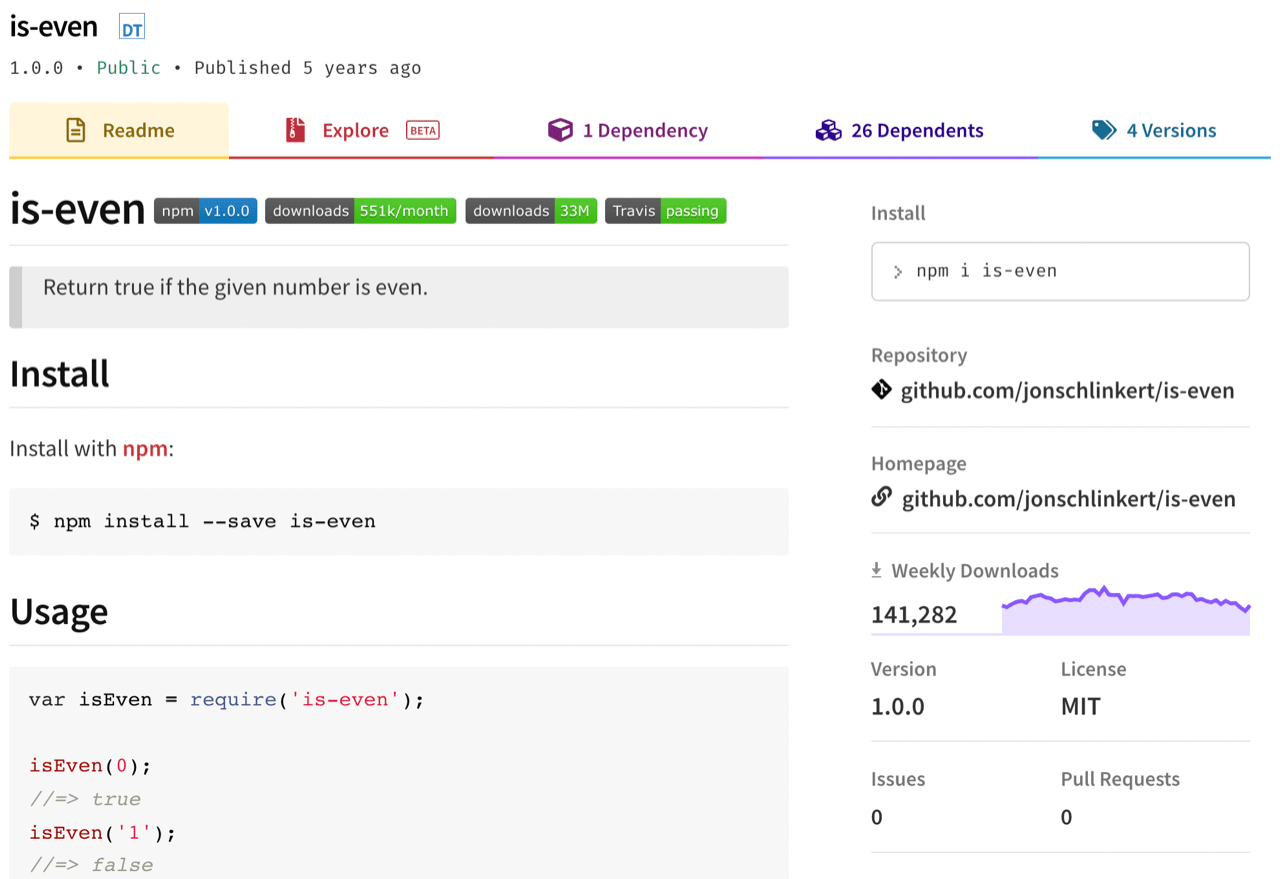
A 59.8 MB source map file intended for internal debugging was included in version 2.1.88 of the @anthropic-ai/claude-code npm package, exposing roughly 512,000 lines of TypeScript across approximately 1,900 files, per VentureBeat. Security researcher Chaofan Shou spotted the exposure and posted about it on X, after which the codebase was mirrored across GitHub, accumulating tens of thousands of forks. This was Anthropic's second accidental disclosure in less than a week, following a separate incident where internal files about an upcoming model were left publicly accessible, per Fortune.
The Bet: A "safety-first" AI company's release pipeline is robust enough to prevent basic packaging errors from exposing core IP.
So What? This isn't a model weights leak or a customer data breach, it's the full client-side agent harness: tool orchestration, permission logic, multi-agent coordination, memory architecture, and unreleased feature flags. The leaked code revealed a three-layer "self-healing memory" system, an unreleased autonomous daemon mode called KAIROS with over 150 references in the codebase, and internal model codenames including Capybara, Fennec, and Numbat. The code also exposed anti-distillation mechanisms that inject fake tool definitions into API responses to corrupt training data from competitors attempting to scrape Claude Code's outputs, per The Hacker News.
For enterprise users, the immediate risk isn't the leak itself, it's that threat actors with full source visibility can now craft precise attacks targeting Claude Code's hook and permission logic, making silent exploitation more reliable, per Zscaler ThreatLabz. The timing was compounded by a separate, unrelated supply chain attack on the axios npm package that occurred hours before, meaning users who updated Claude Code via npm during a specific window may have also pulled in a remote access trojan.
For builders and competitors, the leaked feature flags may be more damaging than the source code itself, because Anthropic can refactor the code but cannot retract a product roadmap that has already been read by every competitor in the space.
The Risk: The code is permanently in the wild, Anthropic's DMCA takedown initially hit approximately 8,100 repositories, many of them legitimate public forks unrelated to the leak, before being scaled back. Clean-room rewrites in Python and Rust appeared the same day. The architectural patterns are now public knowledge, and the competitive moat around "how to build a good agent" just narrowed.
Action: • If you use Claude Code, update past v2.1.88 immediately and check your lockfiles for the malicious axios versions (1.14.1 / 0.30.4) if you updated via npm on March 31 between 00:21 and 03:29 UTC. • Rotate any keys or tokens that may have been referenced in agent configurations and audit your permission scopes. • Add "AI agent supply chain incident" as an explicit trigger in your vendor risk register, this class of leak will recur as agentic tooling becomes infrastructure. • If you build developer tools or AI agents, study the architectural patterns (modular tools, tiered memory, skeptical self-verification) but re-implement with your own abstractions, the legal lines around derivative work are still being drawn.
Your AI stack is now a primary espionage target
Stratechery analyzed the Axios supply chain attack and the Claude Code leak, highlighting that model code and AI supply chains are now first‑tier targets, with more attack surface than defenses today, per Stratechery.
The pattern: attackers are going after the code, dependencies, and distribution channels of AI systems, not just the data they process.
The Bet: As AI becomes central to products and operations, compromising models and their pipelines will be as strategically valuable as compromising core application code or infrastructure.
So What? If you're treating your AI stack like an experiment, loose access controls, ad‑hoc pipelines, unclear provenance, you're under‑securing what is quickly becoming your most sensitive IP.
Model weights, training data, fine‑tuning scripts, and inference services are now part of your critical infrastructure. A compromise here can silently alter behavior across your product surface.
The Risk: Most organizations don't have clear ownership for AI security, it falls between ML teams, DevOps, and security, which means nobody is fully accountable.
Supply chain risk is also non‑obvious: pre‑trained models, open‑source libraries, and third‑party tools can introduce vulnerabilities you're not scanning for.
Action: • Designate an explicit owner for AI security this week, someone who can cut across ML, infra, and security teams. • Lock down access to model weights, training data, and pipelines, enforce least privilege, audit logs, and code review on any changes to model behavior. • Start treating your AI dependencies like you treat software supply chain risk: SBOMs for models and libraries, provenance tracking, and vendor risk assessments.
IN PRACTICE
How to stop being a feature and start being a control plane
Most teams we work with are still thinking in "feature" terms: add AI to search, add AI to support, add AI to analytics.
The structural shift in yesterday's moves is about control planes, who routes work, who enforces policy, who owns the graph that everyone else has to plug into.
The practical pattern we see working: • Identify your graph, users, assets, workflows, permissions, and make it explicit. • Expose it, APIs, events, and policy hooks that agents and other systems can rely on. • Govern it, clear rules for who can change what, and how you observe and intervene.
Once you do that, AI features stop being bolt‑ons and start being clients of your control plane.
For the full breakdown, reach out for a Field Report.
CONTRARIAN SIGNAL
The real AI moat isn't your model, it's your revocation story
Everyone is still talking about model quality, context windows, and clever prompts.
Yesterday's more important story was about off‑switches, identity, and legal exposure. The entities moving fastest are not just shipping smarter models, they're defining how those models are controlled, audited, and shut down.
If you own the kill switch, the policy engine, and the graph of work, you don't have to win the model race to own the customer relationship. You become the arbiter of what's allowed to happen, and who is accountable when it goes wrong.
The Takeaway: Stop asking "which model gives us the best answers" and start asking "who controls what the agents are allowed to do, and how fast we can stop them when they go off script."
THE QUESTION FOR TODAY
LLMs now represent a $24B‑a‑year business for one provider. Hyperscalers are wiring billions into regions your workloads barely touch. Courts are treating your UX decisions as product defects, not neutral choices. Identity vendors are positioning themselves as the off‑switch for your agents. Your AI stack is becoming a prime target before you've locked it down.
Are you building a product that uses these control planes, or a control plane that others will have to use?
⸻
See exactly how this impacts your specific industry and function. Upgrade to PRO to get bespoke tactical breakdowns generated instantly for your operating model.
Go deeper with the Weekly Signal
This is the daily take. The Weekly goes further — full strategic analysis across 8–10 sections, each with a signal read and operator action items. Source panel included.
Sign up free → then upgrade