
Data center debt syndicates. A $10B Nordic build. Alternative silicon jumping from $15M seed to $200M+ growth rounds. Enterprise agents raising $65M at seed to skip pilots and go straight to workflows.
The throughline isn’t “AI is hot.” It’s that the constraint has moved, from models and features to power, capital structure, and where your agents actually run.
Compute is now an infrastructure asset class with its own debt markets. Silicon is fragmenting just as operators start to hard-code around a single vendor. And on top of that stack, agents are being funded as if they’re the new middleware, the layer that decides whose infra, whose models, and whose data get exercised.
If your 2026 plan assumes “pick a model, pick a cloud, ship some copilots,” you’re playing the wrong game.
The real decisions now are: which capital stack are you indirectly exposed to, how much hardware optionality you preserve, and whether you treat agents as a feature or as the new control plane for your business.
BLUF
At Neue Alchemy, we support leaders navigating inflection points, when tech, capital, and policy converge. If your roadmap is already in motion and you're pressure-testing execution, we're open to conversations.
We also reserve capacity for education, SMBs, and mid-market leaders, those starting, mid-flight, or seeking outside perspective before systems harden.
INFRASTRUCTURE / COMPUTE
Compute is now a power-and-debt business, not a SKU
Business Insider profiled 10 major players, including Apollo, JPMorgan, KKR, SMBC, syndicating large-scale debt into AI data center projects, per Business Insider. These are multi‑billion‑dollar structured financings, not just hyperscalers spending from operating cash.
In parallel, Nebius announced a $10B, 310MW data center build in Lappeenranta, Finland, with developer Polarnode, targeting phased operations starting in 2027, per Techmeme. Location choice optimizes for cold climate, stable grid, and permitting.
The Bet: Compute demand will stay high enough, long enough, to service utility-scale debt and justify siting in power-advantaged geographies.
So What? Compute has crossed into project finance. Your “GPU capacity” is now a function of bond markets, grid politics, and Nordic permitting timelines, not just your cloud rep’s discount. The center of gravity is shifting toward regions that look like power utilities, not tech hubs.
If you’re building AI-native products, your real counterparty is the capital stack behind the megawatts. That affects price stability, reservation risk, and where latency-sensitive workloads can realistically live by 2027–2029.
The Risk: If demand growth underperforms the debt assumptions, you get overbuilt capacity in the wrong geos and repricing shocks in others. And if policy or grid constraints tighten, especially around water and emissions, some of the promised capacity never materializes on your timeline.
Action: • Map your AI roadmap to geography: list which workloads must be low-latency and which can tolerate Nordic‑style round‑trip. • Ask your cloud and colocation vendors explicitly about their power mix, debt exposure, and 2027–2030 build schedule, then bake that into your capacity planning. • Start designing architectures that can arbitrage regions and providers, multi‑region, multi‑vendor, instead of assuming a single hyperscaler will always have spare GPUs where you need them.

SILICON / HARDWARE OPTIONALITY
Alternative accelerators are no longer theoretical, they’re funded assumptions
London-based chip startup Fractile is reportedly in talks to raise over $200M at a $1B valuation, up from a $15M seed in 2024, with Accel and others participating, per Techmeme. The company is building alternative AI silicon at an early stage of tech readiness.
Sifted separately reported Fractile is targeting a $200M raise at a unicorn valuation, reinforcing investor appetite for non‑Nvidia accelerators, per Sifted. This is happening despite Nvidia’s continued dominance in deployed AI workloads.
The Bet: The market is assuming a heterogeneous accelerator landscape in 24–36 months, and that at least some of these bets will be production‑grade and cost‑competitive.
So What? Your infra stack is being built during a hardware regime change. If you hard‑code to a single vendor’s kernels, memory model, and networking assumptions, you’re locking yourself out of future price/performance curves and potential supply relief.
For model builders and infra buyers, this is leverage. You can start writing contracts and roadmaps that assume at least two viable hardware ecosystems, and force vendors to compete on TCO, not just availability.
The Risk: Alternative silicon timelines can slip, and software tooling may lag. If you over‑rotate into unproven accelerators too early, you inherit integration risk and support gaps just as your workloads scale.
Action: • Audit your current stack for vendor lock‑in, frameworks, compilers, and ops tooling that assume a single GPU vendor, and document where portability breaks. • In new infra and model contracts, negotiate explicit language around support for at least one non‑incumbent accelerator family within 24–36 months. • For greenfield workloads, standardize on portable abstractions (e.g., framework and runtime choices) so you can pilot alternative silicon without rewriting everything.

APPLICATION LAYER / AGENTS
Enterprise agents just got a balance sheet, they’re not a feature anymore
A former Coatue partner raised a $65M seed round for an enterprise AI agent startup focused on line‑of‑business workflows, per TechCrunch. The expectation is to go straight into production workflows, not multi‑year pilots.
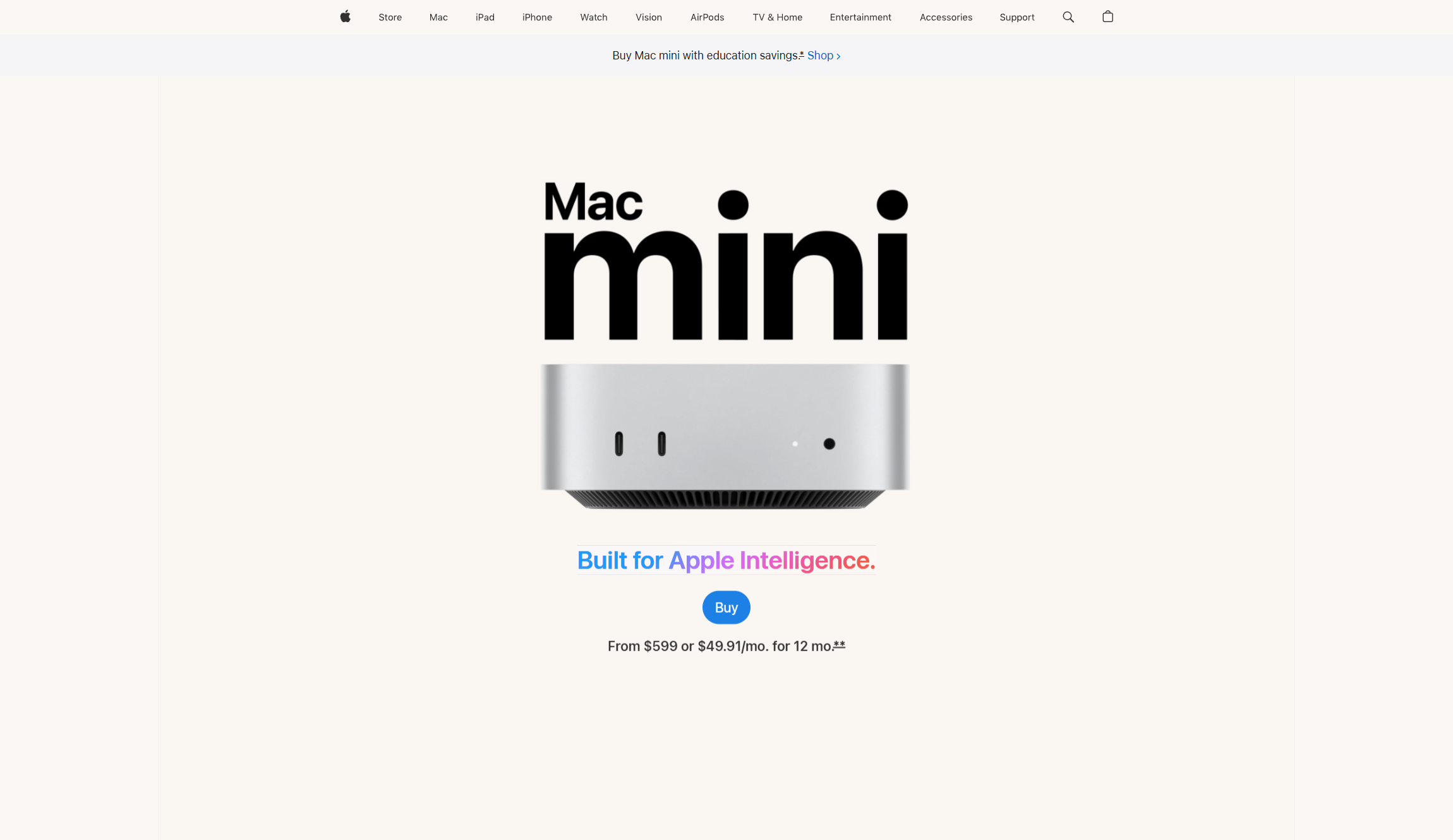
At the same time, TechRadar Pro is publishing buyer’s guides for “best hardware options for deploying OpenClaw,” comparing Mac Minis, VPS instances, and edge boxes for running AI agents, per TechRadar Pro. Agents are now treated as deployment surfaces across heterogeneous hardware, not just API toys.
The Bet: “Agentic AI” will be a primary budget line in enterprise IT, a control layer that orchestrates work across SaaS, not just a UX add‑on.
So What? Agents are becoming the new middleware. Whoever owns the agent layer will intermediate your existing apps, your data, and your workflows, and will be in position to decide which infra and models get exercised underneath.
If you’re selling into the same accounts, you’re now competing, or partnering, with an agent platform that wants to sit in front of your product. If you’re an operator, you’re about to centralize power in whichever agent framework you standardize on.
The Risk: Rushing agents into core workflows without governance, identity, authorization, observability, turns them into opaque automation that’s hard to debug and easy to abuse. And if you let a single vendor’s agent layer sit in front of everything, you’ve just created a new chokepoint.
Action: • Decide this week whether your strategy is to build on top of an external agent platform or to treat agents as a capability inside your own product and stack. • Stand up a small, cross‑functional “agent governance” group, security, ops, and line‑of‑business, to define where agents are allowed to act and how you’ll monitor them. • If you’re a SaaS vendor, ship or spec an integration story for agents now, APIs, events, and controls, so you’re not sidelined when your customers roll out an agent layer.

ENTERPRISE STACK / CLOUD REALITY
Your AI bottleneck is still your cloud mess
TechRadar Pro reports that AI adoption is outpacing enterprise cloud maturity, many organizations are trying to run advanced AI on half‑lifted monoliths and fragmented data lakes, per TechRadar Pro. The result is latency, egress cost, and data access issues that block real deployments.
Separately, Proton is bundling its apps into two Workspace‑style SKUs as a security‑first alternative to Microsoft 365 and Google Workspace, emphasizing privacy‑by‑default collaboration, per TechRadar Pro. Privacy and zero‑knowledge are being positioned as first‑class procurement criteria.
The Bet: Enterprises will pay for AI and collaboration stacks that are opinionated about security and architecture, and will reward vendors who help them clean up underlying cloud and data sprawl.
So What? If your estate is a mix of legacy VMs, ad hoc data lakes, and shadow IT SaaS, your AI roadmap is theater. The real work is consolidating data paths, standardizing access patterns, and aligning collaboration tools with your security posture.
Privacy‑first suites like Proton are a tell: “zero‑knowledge by default” is moving from a niche preference to a line item in RFPs. That changes how you design data flows for AI features, where inference runs, what’s logged, and who can see what.
The Risk: If you bolt AI onto a messy cloud foundation, you amplify existing problems, data leakage, runaway egress, inconsistent latency, and then blame the model. And if you ignore the privacy shift, you’ll find your product disqualified from deals before it’s even evaluated on features.
Action: • Pick one high‑value workflow and trace its full data path, systems, regions, permissions, then ask whether it’s ready for an AI agent to touch end‑to‑end. • Add explicit privacy and data residency questions to every AI vendor evaluation this week, where is training, fine‑tuning, and inference happening, and what’s retained. • Start consolidating collaboration and knowledge tools around a small set of systems that can support both AI features and your security model, instead of letting every team pick their own.

FINANCIAL DATA / KNOWLEDGE SYSTEMS
Owning the structured feed is the new moat
Credit data firm 9fin raised a round valuing it at $1.3B, focused on structured, machine‑readable credit intelligence, per Bloomberg. The product is not “research PDFs”, it’s normalized data and workflow.
In parallel, Perplexity Computer is being framed as a “second brain”, a persistent memory layer with Spaces and connectors that organizes personal and team knowledge, per AI Supremacy. The competition is no longer search vs chat; it’s who owns your ongoing knowledge graph.
The Bet: The real value is in controlling the structured feeds and the memory layer, not in the front‑end interface.
So What? If you’re in any data‑heavy vertical, your moat is shifting from “we have reports” to “we own the raw feeds, normalize them aggressively, and sit inside the workflow where decisions get made.” 9fin’s valuation is the market pricing that in.
Internally, your teams will standardize, formally or informally, on one “second brain” system. That system will become the default context provider for whatever models you use. If you don’t shape that choice, you’ll inherit a knowledge architecture you didn’t design.
The Risk: If you let each team pick their own knowledge tool, you fragment context and make it harder to deploy agents or copilots that see the full picture. And if you’re a data vendor that stays at the PDF/report layer, you’ll get disintermediated by whoever exposes structured feeds into these memory systems.
Action: • Decide which system is allowed to be the “source of truth” for your organization’s memory, and document that choice. • If you sell data, prioritize APIs and schema quality over prettier dashboards; make it trivial for customers to plug your feeds into their second‑brain tools and agents. • Internally, run a 30‑day experiment: route one team’s research and decision‑making through a single memory system and measure how it changes speed and reuse.
IN PRACTICE
How to avoid hard‑coding into the wrong layer
Most teams are making AI decisions at the wrong abstraction level.
They’re picking a favorite app. Or a single model. Or a cloud region.
The structural play is different: define the layers you’re willing to be opinionated about, and the layers where you insist on optionality.
In client work, we’ve found a simple stack framing useful:
• Control plane, where agents, orchestration, and policy live. • Knowledge plane, where memory, data models, and schemas live. • Execution plane, where models run and where compute comes from.
You want strong opinions in the control and knowledge planes, that’s where leverage and differentiation live. You want optionality in the execution plane, that’s where hardware, regions, and vendors will churn the most.
Most organizations invert this. They lock into a single cloud and model, then let knowledge and orchestration fragment across teams.
For the full breakdown, reach out for a Field Report.
CONTRARIAN SIGNAL
Agents aren’t your productivity layer, they’re your new procurement layer
The consensus story is that agents will boost productivity, automate tickets, draft emails, reconcile invoices.
That’s the surface.
Underneath, whoever controls the agent layer will quietly control your spend. Agents will choose which SaaS to call, which infra to hit, which data vendors to query. They’ll be the ones deciding whether to route a task to your incumbent CRM or to a cheaper point solution with a better API.
In other words, agents are becoming the programmable buyer on behalf of your organization.
If you let an external vendor own that layer, you’re outsourcing not just workflow, you’re outsourcing procurement logic. Over time, that’s where margin goes.
The Takeaway: Treat the agent layer as a strategic procurement surface. If you don’t design and govern it, someone else will, and they’ll be the ones deciding where your dollars and data flow.
THE QUESTION FOR TODAY
Compute is being financed like a power plant. Silicon is fragmenting just as your workloads scale. Agents are being funded to sit in front of every app you own. Your cloud and data estate still carry a decade of technical debt.
Are you designing your AI strategy around features, or around who controls the layers that decide where your work, data, and dollars actually go?
⸻
See exactly how this impacts your specific industry and function. Upgrade to PRO to get bespoke tactical breakdowns generated instantly for your operating model.
Go deeper with the Weekly Signal
This is the daily take. The Weekly goes further — full strategic analysis across 8–10 sections, each with a signal read and operator action items. Source panel included.
Sign up free → then upgrade