


Gig platforms turning drivers into data labelers. Senators trying to relabel prediction markets as gambling. Memory makers spending billions on EUV while lawmakers push to freeze GPU exports. A neobank printing £1.7B in profit. And OpenAI asking regulators to treat chatbots as default search engines.
The throughline: distribution and control points are being renegotiated in public.
Labor networks are becoming data infrastructure. Default search is becoming a regulated surface, not a browser setting. The AI stack’s real choke points are shifting from GPUs to memory and export licenses. And in finance, “software with a balance sheet” is no longer a story, it’s a P&L reality.
If your plan assumes the old control points, SEO, cheap gig labor, “GPU scarcity,” or incumbent banks as the only regulated rails, it’s already stale.
BLUF
At Neue Alchemy, we support leaders navigating inflection points, when tech, capital, and policy converge. If your roadmap is already in motion and you're pressure-testing execution, we're open to conversations.
We also reserve capacity for education, SMBs, and mid-market leaders, those starting, mid-flight, or seeking outside perspective before systems harden.
LABOR / DATA NETWORKS
Gig workers are becoming your competitor’s data engine
DoorDash and Uber are using gig workers to collect in-store data, photographing shelves, checking stock, and capturing on-the-ground signals for AI training and retail operations, per Business Insider.
The same network that moves food is now a flexible, city-scale sensor grid for inventory, pricing, and merchandising intelligence.
The Bet: Gig labor is the cheapest way to build a real-world data moat at retail scale.
So What? This turns gig platforms into infrastructure for physical-world data, not just logistics. If you run brick-and-mortar, your “local knowledge” edge is eroding as platforms build richer, fresher views of your shelves than your own systems. The next phase isn’t just delivery competition, it’s who owns the feedback loop between shelf, shopper, and model.
The Risk: Platforms are exposed to fuel volatility and worker churn, the same network they rely on for data is fragile and politically visible. Retailers that feel surveilled or disintermediated will push back, via contracts, data-sharing restrictions, or their own worker apps.
Action: • Audit where platform workers touch your locations today, deliveries, pickups, mystery shops, and map what data they’re already collecting about you. • Stand up your own human-in-the-loop data capture at store level, photos, stock checks, pricing, and wire it into a central model before you’re flying blind against third-party intelligence. • Renegotiate platform relationships to include data access terms, if they’re learning from your shelves, you should see the aggregate signals.

SEARCH / DISTRIBUTION
Default search is now a regulatory battlefield, and chatbots are in the fight
OpenAI has petitioned the UK Competition and Markets Authority to treat AI chatbots with search functions as eligible “default search engines” on Chrome and Android choice screens, per The Telegraph.
The move aims to get assistants listed alongside traditional search engines at the OS/browser level, not just as apps users must discover.
The Bet: The entry point to the web will shift from typed queries in a search box to conversational assistants, and regulators will bless that shift.
So What? If regulators agree, “default search” becomes “default assistant”, and the funnel to your product fragments across multiple conversational surfaces. SEO and paid search stop being the only levers; you now need an “assistant optimization” strategy, how your product, content, and pricing show up in model answers and agent workflows. Distribution power migrates from browser vendors to whoever owns the assistant that users select at setup.
The Risk: Regulators may move slowly or narrowly, limiting assistant defaults to a few players and freezing out smaller models and vertical agents. If assistants are treated as search, they inherit search liability and scrutiny, which could constrain how aggressively they integrate commerce and referrals.
Action: • Instrument where your traffic originates today, search, social, direct, and model a 20–30% shift into assistant-driven referrals over the next 12–24 months. • Start testing assistant-native acquisition: build actions, plugins, or APIs for at least one major assistant so it can transact on your behalf, not just mention you. • Rewrite your core product and pricing narratives into structured, machine-readable docs, FAQs, schemas, API docs, so assistants can reliably surface and reason about you.
COMPUTE / SUPPLY CHAIN
Memory, not just GPUs, is the new choke point, and export risk is rising
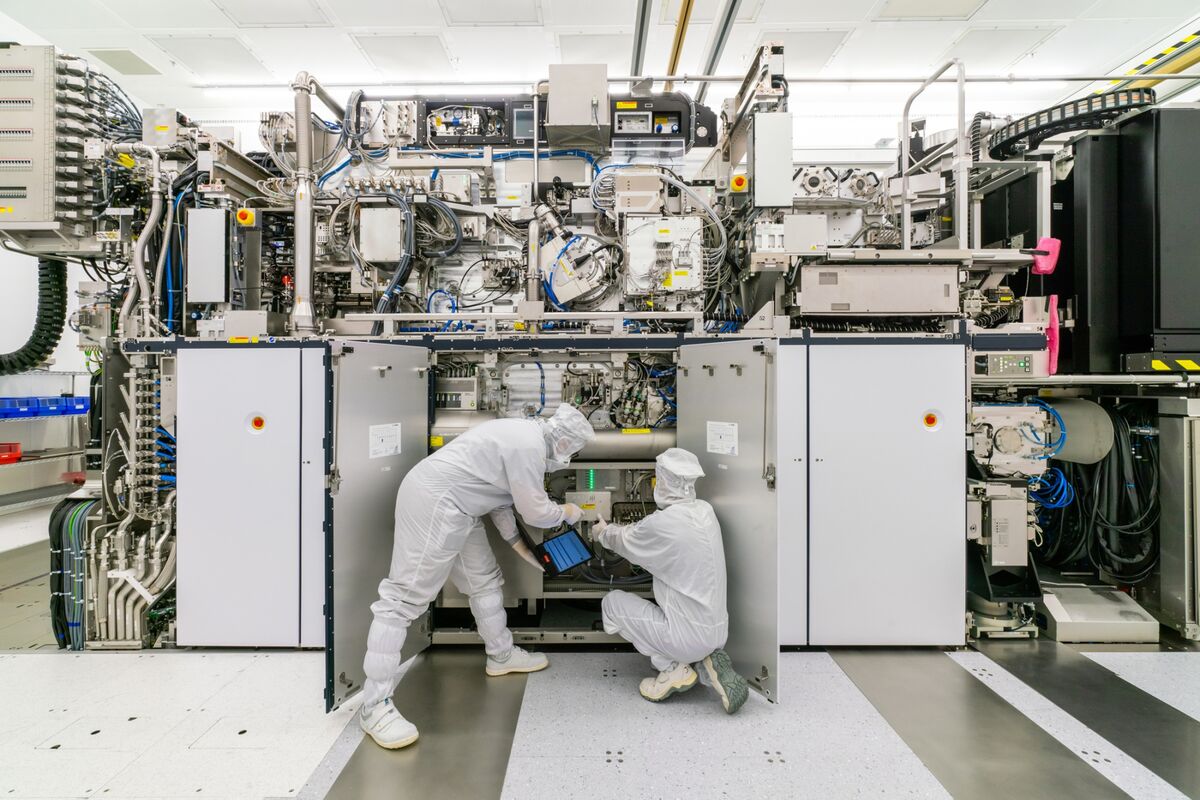
SK Hynix plans to spend about 11.9T won (~$7.9B) on cutting-edge EUV lithography tools from ASML through 2027 to expand DRAM and HBM capacity, competing with Samsung for AI memory supply, per Bloomberg.
At the same time, US Senators Elizabeth Warren and Andy Barr are urging the suspension of Nvidia AI chip export licenses to China and Southeast Asia following an indictment tied to export violations, per the Financial Times.
The Bet: • SK Hynix is betting that HBM and advanced DRAM remain the tightest levers in AI economics, and that demand justifies multi-year EUV capex. • US lawmakers are betting that tightening export controls is a viable tool to shape where AI capacity lives.
So What? Your AI capacity risk is now two-dimensional: physical constraints in memory fabs and political constraints on where accelerators can legally land. Even if you secure GPUs, HBM availability and pricing will dictate real throughput and cost, especially for large-context and multi-modal workloads. If you operate in or rely on China and Southeast Asia, export policy is now as important as your cloud contract.
The Risk: Any delay in EUV tool deliveries or yield ramp at memory fabs will keep HBM prices elevated and constrain model scaling. Export license suspensions, even temporary, can strand planned capacity, delay deployments, and force rushed architectural compromises.
Action: • Ask your cloud and hardware vendors for explicit HBM and DRAM roadmaps, not just GPU counts, and bake those constraints into your scaling plans. • For teams with APAC exposure, map workloads by jurisdiction and sensitivity, identify which can be repatriated or run on alternative accelerators if export rules tighten. • Optimize models and workloads for memory efficiency now, quantization, sparsity, retrieval, so you’re less exposed to HBM price and availability swings.

FINANCIAL INFRASTRUCTURE
Neobanks are now banks, with software margins
Revolut reported 2025 revenue of £4.5B, up 46% year over year, with pre-tax profit of £1.7B, up from £1.1B in 2024, and a 33% increase in customers, as it continues its push to secure a full banking license, per the Wall Street Journal.
This is no longer a “growth at all costs” story, it’s a profitable, scaled financial institution built on a software-native stack.
The Bet: A global, app-first financial platform can run a bank-like balance sheet with tech-company growth and margin profiles.
So What? If you’re an incumbent bank, your competitor isn’t a loss-making fintech, it’s a profitable, global platform with faster shipping cycles and lower unit costs. If you’re a non-financial operator, the bar for “embedded finance” partners just moved, you can expect bank-grade products with software-level UX and iteration speed. Regulators are now dealing with entities that look like banks on the balance sheet but like consumer apps in user behavior, supervision and partnership models will adjust.
The Risk: Regulatory shifts, capital requirements, licensing delays, or new conduct rules, can change the economics quickly and impact partner roadmaps. Concentration risk is real: if too much of your customer payment, FX, or treasury flow runs through a single platform, you inherit its regulatory and operational shocks.
Action: • If you’re an incumbent FI, run a product-by-product margin and speed comparison against leading neobanks, and identify 1–2 areas where you must close the gap in the next 12 months. • If you embed financial services, review your partner mix, diversify across at least two providers and negotiate data portability and exit terms. • For CFOs, reassess treasury and FX exposure to app-first platforms, ensure you have contingency rails if a partner faces regulatory constraints.

RISK / COMPLIANCE STACK
Compliance-as-a-service just lost default trust
Delve, a compliance automation startup, has halted demos and removed materials as investor Insight Partners scrubbed its investment post amid allegations of “fake compliance,” including fabricated audit evidence, per TechCrunch.
The core allegation: the system could generate or present compliance artifacts that didn’t correspond to real underlying controls.
The Bet: Automated compliance dashboards and AI-generated evidence can stand in for traditional, manual audit processes, and buyers won’t look too closely.
So What? This is a category-level credibility hit, not just a single company issue. If compliance tools are seen as “pretty UIs over unverifiable claims,” regulators and enterprise buyers will demand deeper verification, logs, proofs, third-party attestations, before trusting them in regulated workflows. For AI-native compliance products, the burden of proof just went up: you’re guilty until you can demonstrate end-to-end traceability.
The Risk: Overcorrection is likely, buyers may slow-roll or freeze adoption of genuinely useful automation because they can’t distinguish marketing from math. If you’ve built internal processes on top of opaque tools, you may discover gaps only when an external audit or investigation hits.
Action: • Inventory every compliance and governance tool in your stack, for each, identify what evidence it generates and how that evidence is tied to underlying systems. • For any tool that can fabricate or simulate artifacts, require cryptographic logs, immutable storage, or independent attestations before relying on it for regulatory reporting. • If you’re building in this space, prioritize verifiability over features, design your product so an external auditor can reconstruct the chain from control to evidence without trusting your UI.

CAPITAL / TALENT
US startup funding cools, but the real repricing is in expectations
US startup funding slowed sharply in March, driven largely by a drop in AI mega-rounds, per Crunchbase News.
The median startup didn’t suddenly become worse; the outliers just paused or repriced.
The Bet: Investors are recalibrating around fewer, larger, later bets, especially in AI, and waiting for clearer unit economics before writing the next $500M check.
So What? If you’re early-stage, this is a relative advantage moment, hiring is easier, attention is less distorted by mega-round noise, and disciplined experiments matter more than narrative. If you were counting on a mega-round to underwrite a long runway and aggressive burn, that option is now less reliable, you’ll be pushed toward staged, milestone-based capital with sharper expectations. For operators at growth-stage companies, internal capital allocation will tighten, pet AI projects without clear payback will struggle to get funded.
The Risk: Teams that misread this as “no money” will underinvest in genuinely high-leverage bets and lose ground to those who can execute under tighter capital. Bridge rounds and down rounds will increase, creating morale and retention risk if you don’t manage expectations proactively.
Action: • Rebuild your 18–24 month plan assuming smaller, milestone-tied rounds, define the 2–3 concrete proofs (revenue, margin, retention) that unlock your next raise. • Use the quieter hiring market to upgrade talent, especially in staff-level engineering, product, and GTM, while mega-funded competitors slow headcount growth. • As an exec, tighten your internal investment bar: every AI initiative should have a clear owner, a 90-day milestone, and a defined kill switch.
CONTRARIAN SIGNAL
Assistants aren’t killing search, they’re unbundling your funnel
The dominant narrative: AI assistants will “replace search,” so you should worry about losing Google rankings.
The structural reality is different.
Assistants are turning the top of the funnel into a negotiation layer, a place where user constraints, preferences, and context get resolved before any click happens. That doesn’t kill search; it moves the decision-making upstream.
If you keep optimizing for keywords and rankings, you’re optimizing for a world where the user still does the orchestration. In an assistant-first world, the assistant does the orchestration, and your job is to be the easiest, safest choice for the assistant, not just the most visible link.
The Takeaway: Stop thinking about “ranking higher” and start thinking about “reducing assistant risk”, make your product the low-risk, high-confidence option an agent chooses by default.
THE QUESTION FOR TODAY
Gig networks are turning into data collection infrastructure. Regulators are being asked to treat assistants like search engines. Memory fabs and export licenses are now as strategic as GPUs. Compliance tools are under suspicion until they can prove their math. Capital is still flowing, but with sharper expectations and fewer mega-bets.
Does your current roadmap assume you’ll keep playing by the old distribution and trust rules, or are you actively designing for assistants, verifiability, and constrained compute as your new operating environment?
See exactly how this impacts your specific industry and function. Upgrade to PRO to get bespoke tactical breakdowns generated instantly for your operating model.
Go deeper with the Weekly Signal
This is the daily take. The Weekly goes further — full strategic analysis across 8–10 sections, each with a signal read and operator action items. Source panel included.
Sign up free → then upgrade