
OpenAI turned “applications” into a P&L. Nvidia paid $20B for a low-revenue inference stack. China put 140 humanoid startups on state rails. CoreWeave talked less about GPUs and more about getting workloads live.
The common thread isn’t models.
It’s that the AI stack is hardening into business units, national programs, and vertically tuned infra, while most operators are still treating this as a tooling choice.
Revenue targets at the application layer, industrial policy in robotics, and hardware–software consolidation in inference all point to the same shift: AI is no longer a sidecar to your product. It’s becoming the market structure you operate inside.
If your 2026 plan assumes “we’ll pick a model and bolt on some agents,” you’re underestimating how fast your suppliers, competitors, and regulators are turning this into a game of P&Ls, capex, and workflow control.
BLUF
At Neue Alchemy, we support leaders navigating inflection points, when tech, capital, and policy converge. If your roadmap is already in motion and you're pressure-testing execution, we're open to conversations.
We also reserve capacity for education, SMBs, and mid-market leaders, those starting, mid-flight, or seeking outside perspective before systems harden.
APPLICATIONS / BUSINESS MODELS
OpenAI turns “applications” into a business line, not a demo
OpenAI is elevating its “Applications” group, ChatGPT, enterprise, and consumer surfaces, into a dedicated P&L with Fidji Simo as a CEO-level operator, per Business Insider.
That means the assistant, enterprise, and consumer products now have explicit revenue and margin targets, not just usage or research goals.
The Bet: The consumer and enterprise assistant can sustain a scaled, high-margin business on top of OpenAI’s own models before infra costs compress.
So What? Your core infra provider is now also your most aggressive application competitor, with a mandate to monetize the exact workflows you’re trying to own.
Expect faster product iteration, more bundled features, and more aggressive upsell into enterprise accounts that today buy “just the API.” The line between “platform” and “vertical app” is gone; OpenAI is choosing to play both.
If your product is “ChatGPT, but for X,” your differentiation window just shortened. The bar moves from “we use GPT” to “we own the data, workflow, and trust in X.”
The Risk: If infra costs, regulatory constraints, or user trust issues outpace revenue growth, the pressure to monetize surfaces, ads, commerce, data leverage, will increase, potentially misaligning incentives with ecosystem partners.
For builders on their stack, over-reliance on a single vendor whose priorities can swing with P&L pressure is now a strategic risk, not just a pricing concern.
Action: • Map every feature where your UX overlaps with OpenAI’s assistant or enterprise offerings; assume those will be native in 6–12 months. • Shift your moat narrative from “we use frontier models” to “we own proprietary data, workflow depth, and domain-specific outcomes.” • Negotiate contracts that protect your customer relationships, branding, data ownership, and migration rights, before renewals happen under the new P&L regime.

INFRASTRUCTURE / INFERENCE CONSOLIDATION
Nvidia pays $20B for latency and compilers, the stack is collapsing
Nvidia’s $20B acquisition of Groq, on roughly $100M in annual revenue, was unpacked by Nvidia Chief Software Architect Jonathan Ross, who emphasized Groq’s compiler and low-latency inference stack, via Forbes.
A 200x revenue multiple is not about current cash flow. It’s a statement that control over the inference software stack, compilers, schedulers, and latency-optimized runtimes, is now as strategic as the silicon itself.
The Bet: The winning AI infra play is end-to-end, from chip to compiler to cloud, and customers will pay for integrated performance, not mix-and-match components.
So What? If your product depends on inference speed, cost, or determinism, the performance bar is being set at the hardware–software boundary, not at the model API.
This compresses room for independent inference-optimization vendors and raises the expectation that your infra partners will deliver tuned, workload-specific performance out of the box. “We’ll optimize later” is no longer credible in investor or customer conversations.
For operators, this is also a concentration story: more of the critical path for your AI workloads now sits inside a small number of vertically integrated stacks.
The Risk: Vendor concentration at the hardware–compiler layer increases systemic risk, pricing power, export controls, and supply shocks all hit harder when the optimization stack is captive.
If you architect tightly around a single vendor’s compiler/runtime, your switching costs, and outage blast radius, go up materially.
Action: • Audit where your latency and cost constraints actually come from, model choice, infra, or compiler/runtime, and benchmark against Nvidia–Groq style integrated stacks. • Design your next-gen architecture with at least one credible alternative path, different cloud, different accelerator, or an abstraction layer that keeps you from hardwiring to a single compiler. • In vendor negotiations, push for transparent performance metrics and portability guarantees, not just list-price discounts.

NATIONAL SYSTEMS / ROBOTICS
China turns humanoids into industrial policy
China now has roughly 140 companies building humanoid robots, heavily fueled by state-backed investment, per The Guardian.
This isn’t a handful of research labs, it’s a coordinated push to make humanoids a lever for manufacturing, logistics, and demographic pressure.
The Bet: Scale manufacturing and state-backed demand will drive humanoid hardware costs down fast enough to make them viable in real industrial workflows this decade.
So What? If your manufacturing or logistics roadmap assumes “no viable humanoids this decade,” you’re implicitly betting against a nation-state that is subsidizing the opposite outcome.
This changes your dependency map. Even if you never buy a Chinese robot, your competitors might, and your own cost structure, labor strategy, and supply chain resilience will be benchmarked against plants that can flex labor with hardware.
It also reframes “robotics” from point automation to full-body, general-purpose labor, which has implications for safety, standards, and union negotiations.
The Risk: Geopolitical tension, export controls, and standards fragmentation could create a bifurcated robotics ecosystem, one set of vendors and protocols in China-aligned markets, another in the West.
If you lock into one side’s hardware and software stack, cross-border operations and sourcing flexibility become harder just as your dependency on embodied automation increases.
Action: • Add “humanoid-capable tasks” to your next operations review, identify line items where a general-purpose robot could replace or augment human labor in 3–5 years. • Start a vendor landscape map that explicitly tracks Chinese vs non-Chinese robotics suppliers, their funding sources, and where they’re piloting. • Engage your legal and HR teams now on what humanoid deployment would mean for safety, labor agreements, and cross-border compliance.

CLOUD / MLOPS PLATFORMS
Databricks and CoreWeave show the new center of gravity: opinionated, production-first stacks
Databricks published a “complete guide” to MLOps frameworks and tools, framing production ML around integrated, opinionated platforms rather than bespoke pipelines, per the Databricks Blog.
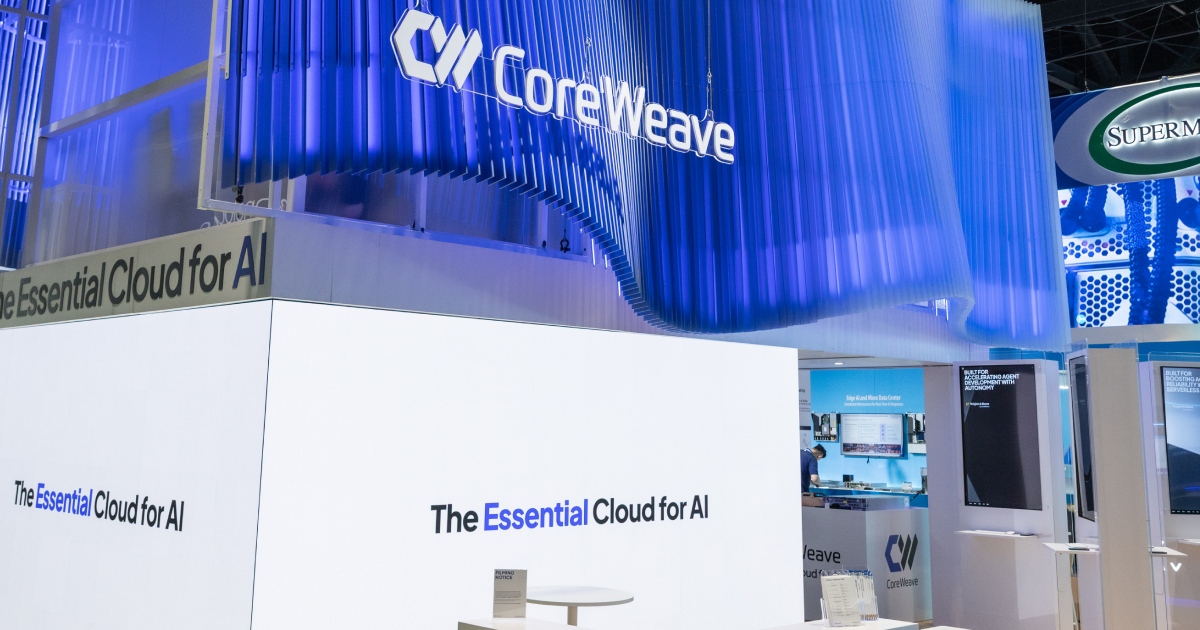
In parallel, CoreWeave’s GTC recap focused less on raw GPU counts and more on how quickly complex, multi-model workloads move from experiment to production on their stack, via the CoreWeave Blog.
The Bet: The winning infra play is not “we have GPUs” or “we have notebooks,” but “we own the path from prototype to production for your AI workloads.”
So What? The build-vs-buy line for ML infra is shifting. “Roll your own MLOps” is starting to look like “build your own data center” did a decade ago, possible, but increasingly unjustified unless infra is your core product.
Vendors are racing to make their opinionated stacks the default. Once your teams are habituated to a particular platform’s way of doing experiments, deployments, and monitoring, your switching costs spike, not just technically, but culturally.
For operators, the risk is subtle: you think you’re choosing a tool; you’re actually choosing an operating model for how your org does ML.
The Risk: Locking into a single platform’s MLOps and infra patterns can constrain future model choices, deployment targets, and data governance approaches, especially as regulatory expectations harden.
If you let each team pick their own stack ad hoc, you’ll end up with a fragmented estate that’s impossible to secure, govern, or cost-manage.
Action: • Decide explicitly whether ML infra is a core competency or a utility, and align your hiring and vendor strategy accordingly. • Standardize on 1–2 primary platforms for experiment-to-production workflows, and enforce them, with clear exceptions only where there’s a proven business case. • Tie infra adoption to governance: define how model lineage, approvals, and monitoring will work inside your chosen stack before teams scale usage.
CAPITAL / RISK SURFACE
Compliance and politics become first-class infra risks
Super Micro named VP DeAnna Luna as acting chief compliance officer after its stock closed down 33% on March 20 amid a chip smuggling scandal, per Bloomberg.
Separately, reporting on lobbyist Mike Davis detailed how political ties were used to push the DOJ to approve major tech and infra deals, including HPE’s Juniper acquisition, via the Wall Street Journal.
The Bet: Hardware and infra markets will keep growing faster than regulators can build clean, rules-based processes, and players who navigate the gray zones will capture outsized value.
So What? AI hardware supply now carries a new systemic risk vector: export control and compliance failures can erase a third of a key supplier’s market cap overnight, and with it, their ability to deliver on your roadmap.
At the same time, large M&A and infra deals are being shaped as much by political networks as by antitrust doctrine. If your exit, partnership, or consolidation plan assumes a neutral, predictable regulatory process, you’re missing the real gating factor: who is in the room when your deal is reviewed.
For operators, this means infra and M&A strategy now require political and compliance underwriting, not just technical and financial diligence.
The Risk: If you anchor your stack on niche OEMs or on deals that depend on favorable regulatory outcomes, you’re exposed to shocks you don’t control, sanctions, investigations, or political turnover.
Ignoring this because “we’re just a software company” is how you wake up to a 12-month delay on critical hardware or a blocked acquisition that your board was counting on.
Action: • Add compliance and export-control posture to your vendor scorecards for any hardware or infra supplier, and demand transparency on investigations and regulatory exposure. • If M&A is on your roadmap, map the political and regulatory stakeholders early, including potential opposition, and build a strategy that doesn’t assume a purely technocratic review. • Develop contingency plans for your top 2–3 hardware dependencies, alternative suppliers, design tweaks, or workload rebalancing, in case a key OEM’s risk profile changes overnight.
LABOR / COST STRUCTURE
AI’s first labor shock is wage compression, not mass layoffs
Companies investing heavily in AI are often funding that capex by freezing raises rather than cutting headcount, leading to wage compression even when jobs remain, per Business Insider.
The result: employees feel the cost of AI before they see the upside, in slower wage growth and rising expectations for output.
The Bet: Management believes they can push through a period where AI-driven productivity gains accrue to the P&L first and to employees later, without breaking morale or retention.
So What? If you’re treating AI as a capex line item and a margin story, your people are doing a different math: “You’re investing in machines instead of me.”
That’s a retention and culture problem before it’s a productivity win. The teams you most need to adopt and extend AI, high-skill operators, data owners, domain experts, are also the ones with the most outside options.
If you don’t have a credible narrative and mechanism for how AI gains flow back to employees, in compensation, equity, or reduced drudgery, you’re training your best people for your competitors.
The Risk: Silent disengagement is worse than explicit resistance. You can hit your AI adoption milestones on paper while your real experts quietly sandbag, underutilize tools, or leave, taking institutional knowledge and clean training data with them.
Once that trust is broken, no amount of “AI upskilling” programming fixes it quickly.
Action: • Quantify, even roughly, where AI is saving time or money in your org, and decide what percentage of that value you’re willing to share with the teams creating it. • Communicate a concrete AI value-sharing mechanism, bonuses tied to automation wins, equity pools, or reduced workload targets, not just “this will free you up for higher-value work.” • Train managers to talk about AI as a tool their teams control, not a threat, and give them scripts and examples this quarter, not next year.
IN PRACTICE
When we work with operators on AI roadmaps, the failure mode is rarely “wrong model choice.”
It’s misalignment between three layers: infra commitments, workflow ownership, and people economics.
A typical pattern: the CTO signs a multi-year deal with a cloud or MLOps vendor, product teams start shipping features that overlap with their infra provider’s roadmap, and finance funds the whole thing by squeezing comp growth, without a story for employees or a contingency for vendor concentration.
The fix is structural, not tactical. You need a single view that ties: • Which workflows you intend to own vs rent. • Which infra partners you’re willing to be dependent on for 3–5 years. • How AI-driven gains will be shared with the people doing the work.
For the full breakdown, reach out for a Field Report.
CONTRARIAN SIGNAL
The real AI moat isn’t your model, it’s your dependency map
The dominant narrative is still about “picking the right model” or “building the best agent.”
Yesterday’s moves say something different: OpenAI is turning applications into a P&L, Nvidia is collapsing the inference stack, China is nationalizing humanoid risk, and infra vendors are racing to own the experiment-to-production path.
In that world, your edge is less about what you build and more about what you choose not to depend on, which layers you treat as interchangeable commodities versus strategic chokepoints you refuse to outsource.
If your strategy deck doesn’t include an explicit dependency map, vendors, regulators, political actors, labor, you’re not playing the same game your suppliers and competitors are.
The Takeaway: Stop obsessing over which model to use. Start designing which dependencies you’re willing to live with when the stack, and the politics around it, harden.
THE QUESTION FOR TODAY
Your infra providers are turning into application competitors. Your hardware vendors are now compliance and political risk vectors. Your potential labor savings are showing up first as wage pressure, not headcount cuts. Your geopolitical exposure is creeping into robots, chips, and M&A approvals.
Have you explicitly chosen the dependencies your AI strategy is willing to accept, or are you inheriting them by default?
See exactly how this impacts your specific industry and function. Upgrade to PRO to get bespoke tactical breakdowns generated instantly for your operating model.
Go deeper with the Weekly Signal
This is the daily take. The Weekly goes further — full strategic analysis across 8–10 sections, each with a signal read and operator action items. Source panel included.
Sign up free → then upgrade