
Compute as comp. World models funded like a late‑stage IPO. Sovereign and city governments underwriting entire ecosystems. GPU vendors moving up into assistants and orchestration.
The common thread isn’t “more AI.” It’s who owns the levers: capacity, capital, and coordination.
Compute is turning into a budget line for talent, not just workloads. Frontier labs are no longer the only gravity wells, cities, sovereigns, and new foundations are building parallel stacks. And the integration layer, assistants, orchestration, “OS for work”, is where lock‑in will actually live.
If your plan still assumes you’re choosing “a model” or “a cloud,” you’re behind. The real decision now is: which stack do you want to be structurally dependent on, and what, if anything, do you own outright?
BLUF
At Neue Alchemy, we support leaders navigating inflection points, when tech, capital, and policy converge. If your roadmap is already in motion and you're pressure-testing execution, we're open to conversations.
We also reserve capacity for education, SMBs, and mid-market leaders, those starting, mid-flight, or seeking outside perspective before systems harden.
TALENT / COMPUTE
Compute is becoming compensation, and governance.
Business Insider reports that Silicon Valley leaders are actively exploring “AI compute as compensation”, giving top engineers dedicated inference capacity as part of their pay package, per Business Insider.
The idea is simple: instead of only cash and equity, you grant access to a slice of GPU time or tokens on internal models that engineers can use for side projects, research, or internal experiments.
The Bet: Top technical talent values privileged access to frontier‑grade compute as much as incremental cash, and will optimize their employer choice accordingly.
So What? This turns headcount planning into capacity planning. You’re no longer just budgeting salary and options, you’re allocating scarce inference capacity as a talent retention tool. That forces a real answer to “who controls our GPUs?”, HR, infra, or product. It also blurs the line between corporate and personal R&D: if an engineer builds something valuable on “their” compute, IP ownership and upside participation become live issues, not hypotheticals.
The Risk: If you treat compute as a perk without clear governance, you invite IP disputes, shadow products, and security exposure. Over‑allocating to talent also risks starving core product teams of capacity in crunch periods, turning a recruiting advantage into an execution bottleneck.
Action: • Quantify your real, fungible compute budget per FTE and decide what, if any, slice you’re willing to earmark as “personal R&D” capacity. • Draft a one‑pager this week on IP, data, and commercialization rights for anything built on employer‑provided compute, and run it past legal before you promise anything in offers. • If you’re competing for frontier‑caliber engineers, decide your stance now: “no personal compute,” “sandboxed internal only,” or “true portable allowance”, and price offers accordingly.
STACK / INTEGRATION
The fight is shifting from models to the integration surface.
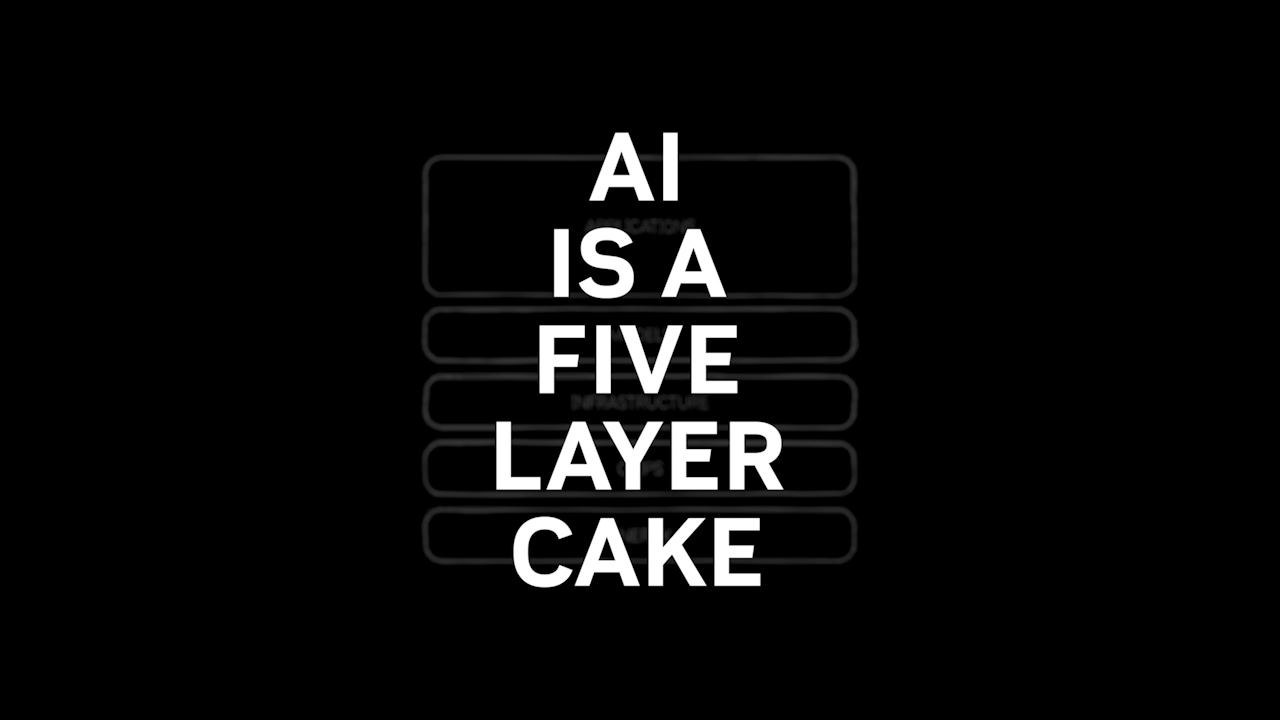
NVIDIA laid out an “AI as 5‑layer cake” view, hardware, systems software, models, data/AI workflows, and applications, arguing that value will accrue to those who can integrate across layers over time, per NVIDIA.
In parallel, Stratechery dissected Microsoft’s Copilot Cowork, its integration with Anthropic, and a new bundle that effectively makes “Copilot + partner models” the default operating layer for enterprise work, per Stratechery.
The Bet: The durable moat isn’t a single model, it’s owning the orchestration and integration layer that sits between users, data, and a rotating cast of models and tools.
So What? If you accept the 5‑layer frame, your vendor decisions stop being point choices and become stack bets: whose hardware, whose runtime, whose orchestration, whose UX. Microsoft bundling Anthropic into Copilot is a tell, they’re comfortable commoditizing underlying models as long as they own the surface where work happens. For operators, that means your “AI strategy” is actually an “OS for work” strategy: which integration layer gets to standardize your schemas, workflows, and security posture.
The Risk: If you let a single vendor define your integration layer by default, you’re locking in not just to their models but to their pace of change, pricing power, and ecosystem. Swapping models later is easy; unwinding a deeply embedded orchestration and UX layer is not. Conversely, trying to own every layer yourself is a good way to burn capital and ship nothing.
Action: • Map your current and planned AI stack against the 5 layers this week, circle which 1–2 layers you intend to own versus rent over the next 5–10 years. • For any assistant / Copilot‑style deployment, require an explicit answer: what happens if we want to swap the underlying model or vendor in 18 months, what breaks. • Start treating “integration surface” vendors, Copilot, Notion, Salesforce, ServiceNow, etc., as strategic OS choices, not just apps; run them through architecture review, not just SaaS procurement.

FRONTIER LABS / SOVEREIGN DEMAND
World models and the state: parallel stacks are getting funded at scale.
Yann LeCun’s Advanced Machine Intelligence Labs raised a $1.03B seed round at a $3.5B pre‑money valuation to build world models, Europe’s largest seed round to date, per Financial Times.
At the same time, a Pentagon official described Anthropic’s lawsuit over a disputed contract as an “expected reaction” and downplayed the likelihood of resolution on Anthropic’s terms, underscoring how central frontier AI has become to US defense planning, per Bloomberg via Techmeme.
The Bet: The market is willing to fund a non‑LLM‑first, world‑model‑centric stack at frontier scale, and governments will continue to be anchor customers whose needs shape roadmaps more than commercial buyers.
So What? This is a fork in the road. If you’ve assumed language‑only models are the endpoint, a $1B+ seed for world models says otherwise: spatial, temporal, and causal reasoning over simulated and physical environments is getting its own dedicated capital stack. For operators, that means your 3–5 year roadmap should assume two parallel capabilities: text‑centric assistants and world‑aware agents. On the policy side, the Pentagon’s posture makes clear that state demand is now a structural force, labs will optimize for compliance, security, and classified use cases, and commercial customers will live downstream of those constraints.
The Risk: If you build deeply on a single lab’s APIs without understanding their government exposure, you’re underwriting their policy and legal risk, as the $5B exposure Anthropic flagged in its Pentagon dispute already hinted, per Business Insider. On the flip side, betting heavily on a world‑model stack too early can strand you on immature tooling and limited ecosystem support.
Action: • Ask your current model vendors, in writing, how government and defense contracts influence their roadmap, release cadence, and deprecation policies, and factor that into your dependency risk. • Start a small, contained exploration of world‑model‑style capabilities in your domain, simulation for logistics, digital twins for manufacturing, environment‑aware agents, so you’re not starting from zero when these stacks mature. • Avoid single‑lab dependency: design your architecture so you can route workloads across at least two major providers without rewriting your entire product.
GEOPOLITICS / CAPITAL FLOWS
Cities and sovereigns are now your competitors, and your LPs.
Business Insider reports that multiple Chinese cities are offering OpenClaw‑focused startups free housing, office space, and subsidies up to $720,000 to attract open‑source AI builders, per Business Insider.
In parallel, Uzbekistan’s Uzum raised $131.5M, $81.5M in equity, at a $2.3B valuation, a ~53% step‑up from August 2025, led by Oman’s sovereign funds, per TechCrunch via Techmeme. And a top European LP emphasized that Middle East investors will remain an “important” capital source for European venture and growth, per Sifted.
The Bet: Jurisdictions are using subsidies and sovereign capital to pull entire ecosystems, open‑source AI, fintech, commerce, into their orbit, skipping incremental policy and going straight to balance‑sheet commitments.
So What? If you’re building on open models, your competitive edge may be less about your architecture and more about which city or sovereign is willing to underwrite your burn. Free housing and six‑figure subsidies are not just perks, they’re relocation incentives that can rebase entire teams. On the capital side, frontier markets are no longer just user growth stories; they’re becoming capital exporters via sovereign funds, shaping European and global cap tables. For operators, this changes where you incorporate, where you hire, and who you accept money from, because those choices now come with policy and market access implications.
The Risk: Chasing subsidies can trap you in jurisdictions with regulatory, IP, or currency risks that don’t show up in the first‑year P&L. Sovereign‑heavy cap tables also import geopolitical risk, sanctions, policy shifts, and public scrutiny, into your financing. And if your home market regulators tighten rules, you may find your real governance happening in a capital provider’s home country, not yours.
Action: • If you’re an AI or infra startup, run a quick comparison this week: what would relocating key teams to a subsidy‑rich city actually save you over 24 months, and what control or compliance constraints would you accept in return. • For any current or upcoming round, map your LP and investor base by region and sovereign exposure; decide explicitly how much geopolitical risk you’re willing to carry on your cap table. • If you operate in Europe, assume Gulf capital is part of your financing reality, build a narrative and governance structure that can withstand scrutiny from both EU regulators and Middle Eastern sovereign LPs.
VENTURE / COMPANY‑BUILDING
AI is repricing what “scarce” means in startups and capital.
Wired outlined how AI is set to disrupt venture capital, from cheaper company formation to agentic investors parsing decks and teams, shifting the scarce asset from judgment to differentiated access and proprietary data, per Wired via Techmeme.
Sifted argued that a startup’s most essential early hire is no longer a coder but a clear thinker who can specify problems and orchestrate AI and contractors, per Sifted.
The Bet: Capital and code are commoditizing; the real bottlenecks are distribution, proprietary data, and the ability to frame and decompose problems in a way AI can execute against.
So What? If agents can do first‑pass diligence, a lot of “smart money” looks like commodity capital with a nice brand. That pushes founders to optimize for investors who bring something AI can’t, real distribution channels, proprietary datasets, regulatory cover, or ecosystem control. Internally, if AI can generate most of the boilerplate code, your first 5 hires should not all be language‑specific engineers; they should be people who can define the right problems, design workflows, and arbitrate tradeoffs across product, go‑to‑market, and infra.
The Risk: Over‑rotating to “clear thinkers” without enough execution muscle is a way to end up with great memos and no shipped product. On the investor side, assuming AI will fully replace human judgment in underwriting ignores the importance of networks, reference checks, and pattern recognition that isn’t in the data room.
Action: • Rewrite your next job req for “founding engineer” or “first hire” to emphasize problem‑framing, product sense, and ability to orchestrate AI/contractors, not just stack checklists. • If you’re raising, audit your investor target list: who actually has proprietary data, distribution, or regulatory leverage in your market, and who is just capital plus brand. Prioritize accordingly. • If you’re a fund, start building internal agentic tooling for sourcing and diligence now, and redeploy partners’ time toward access, relationship building, and post‑investment leverage where AI can’t compete.
SECURITY / HARDWARE
Security is moving down the stack, into silicon.
ZeroRISC released an open‑source cryptography stack for embedded silicon, designed to be post‑quantum‑ready and to make hardware itself a security primitive, per The Quantum Insider.
The stack targets embedded and edge devices, exactly where AI inference is proliferating, and aims to standardize on PQ‑safe algorithms at the hardware level.
The Bet: As AI and connectivity push more value to the edge, security has to be baked into chips, not bolted on in firmware or software.
So What? If your product relies on edge AI, cameras, sensors, industrial controllers, consumer devices, your attack surface is exploding. An open, PQ‑ready crypto stack at the silicon layer is a chance to reset your security posture before regulators and enterprise buyers force your hand. For operators, this is not just a “future quantum” issue; it’s a present‑day procurement decision: which vendors can prove supply‑chain integrity and hardware‑level security, and which can’t.
The Risk: Standardizing too early on a specific PQ scheme or implementation that later proves vulnerable or non‑standard can leave you with stranded hardware and expensive recalls. Conversely, waiting for perfect standards is a way to ship insecure devices into a world where adversaries are already stockpiling encrypted data for future decryption.
Action: • If you ship or plan to ship embedded / edge AI, ask your silicon vendors this week for their roadmap on post‑quantum cryptography and open‑source verification, and document the answers. • Start classifying your device fleet by crypto agility: which products can be updated in the field, and which require hardware refresh to upgrade security. • For new designs kicking off now, set a default expectation that hardware must support PQ‑ready stacks or at least be crypto‑agile enough to adopt them without a board spin.
IN PRACTICE
When we work with clients on AI stack decisions, we don’t start with “which model.” We start with a map: what do you own, what do you rent, and what do you refuse to be dependent on.
The 5‑layer frame is useful only if you tie it to concrete constraints: your balance sheet, your regulatory exposure, your talent base. A mid‑market manufacturer in Germany should not be trying to own models, but they might be smart to own their data pipelines and workflow definitions so they can swap assistants without retraining their entire workforce.
Similarly, on capital and geography, the right move is rarely “chase the biggest subsidy.” It’s to quantify the trade: what does $720,000 in city support actually buy you in runway, and what does it cost you in governance, IP jurisdiction, and hiring flexibility.
For the full breakdown, reach out for a Field Report.
CONTRARIAN SIGNAL
The real lock‑in isn’t GPUs or models. It’s habits.
Everyone is watching GPU allocation, model benchmarks, and who signs which frontier lab deal. That’s not where you lose strategic freedom.
You lose it when your teams’ daily workflows, schemas, and mental models get wired into a single assistant or integration layer. Once your sales org “lives in” one Copilot, or your ops team relies on a specific vendor’s agent orchestration, you’ve effectively adopted a new operating system, even if you tell yourself it’s “just another SaaS tool.”
The industry narrative says “keep your models swappable” and you’ll stay flexible. That’s necessary but not sufficient. The harder problem is keeping your workflows, data contracts, and governance portable, so you can move the humans and the habits, not just the API keys.
The Takeaway: If you don’t design for workflow and schema portability now, your “AI strategy” is just a slow march into someone else’s OS, and you won’t notice the lock‑in until the renewal negotiation.
THE QUESTION FOR TODAY
Compute is turning into compensation. World models are getting $1B seeds. Cities and sovereigns are underwriting entire stacks. Integration layers are quietly becoming your new operating system. Security is moving into the silicon under your edge devices.
Are you deliberately choosing which dependencies you accept, or just inheriting them from the vendors and investors who got to you first?
See exactly how this impacts your specific industry and function. Upgrade to PRO to get bespoke tactical breakdowns generated instantly for your operating model.
Go deeper with the Weekly Signal
This is the daily take. The Weekly goes further — full strategic analysis across 8–10 sections, each with a signal read and operator action items. Source panel included.
Sign up free → then upgrade