
Anthropic under Pentagon scrutiny. Microsoft’s lawyers parsing “supply-chain risk” tags. Sam Altman spending calendar time on defense optics instead of product.
European gas ripping on war and flow uncertainty just as data centers and fabs scale.
Cursor wiring agents directly into codebases and Slack. Amazon’s checkout failing at retail scale.
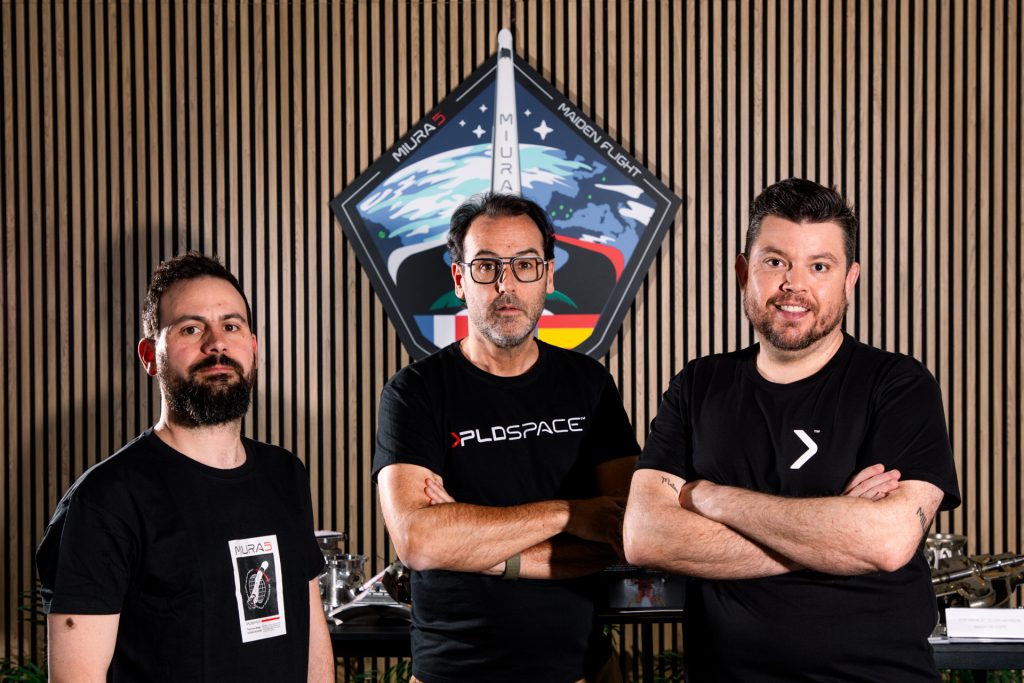
SpaceX lining up a $1.75T IPO. PLD Space raising to build a European launch stack.
The throughline: AI is no longer a discrete “sector.” It’s sitting at the intersection of defense classification, energy volatility, orbital infrastructure, and brittle consumer rails. The constraint set is shifting from “can we build the model?” to “can we secure the inputs and survive the externalities?”
If your plan assumes AI as a software layer you can bolt on top of stable platforms, cheap power, and apolitical vendors, you’re running a 2023 playbook in a 2026 environment. The real game is now: energy, geopolitics, and dependency risk.
BLUF
At Neue Alchemy, we support leaders navigating inflection points, when tech, capital, and policy converge. If your roadmap is already in motion and you're pressure-testing execution, we're open to conversations.
We also reserve capacity for education, SMBs, and mid-market leaders, those starting, mid-flight, or seeking outside perspective before systems harden.
GOVERNANCE / DEFENSE
AI labs are now treated as defense infrastructure, not just vendors
Microsoft says Anthropic's products can stay on its platforms after lawyers "studied" the Pentagon supply chain risk designation, per Business Insider.
Anthropic is simultaneously having "productive conversations" with the Pentagon despite being effectively blacklisted, per Business Insider.
Sam Altman, meanwhile, is on defense over OpenAI’s government and Pentagon posture, with the core issue now framed as political and defense alignment rather than model capability, per Business Insider.
The Bet: Frontier labs are assuming they can operate as quasi-sovereign actors, negotiating with defense, absorbing classification labels, and still serving as neutral platforms for everyone else.
So What? Defense-style risk classification has entered the commercial AI stack. A “supply-chain risk” tag is now something hyperscalers’ legal teams have to clear before they let a model vendor sit on their rails.
For operators, that means your AI vendor choice is no longer just about latency, quality, and price, it’s about how exposed you are to shifting government designations, export controls, and political optics. The lab you build on is now part of your foreign and defense policy footprint, whether you like it or not.
The Risk: If you centralize too much on a single frontier lab, a future designation, export rule, or procurement fight can become an operational outage, not just a PR headache.
There’s also a misalignment risk: your customers, especially outside the US, may not want to be downstream of a vendor perceived as tightly coupled to US defense, or conversely, one seen as adversarial to it.
Action: • Classify your AI vendors by geopolitical and regulatory exposure, US defense ties, export control risk, data residency posture, not just technical metrics. • Build a dual-vendor or abstraction strategy for critical workloads so a single lab’s legal status can’t halt your roadmap. • Update your board and comms playbooks: a “Pentagon controversy” at your upstream lab is now a scenario you should have messaging and contingency plans for, not a surprise.

INFRASTRUCTURE / ENERGY
Power volatility just became an AI constraint, not a background variable
European gas is set for its biggest weekly gain since the energy crisis, driven by Middle East war and supply uncertainty, per Bloomberg.
This is hitting just as European data centers, AI clusters, and semiconductor fabs are ramping power demand on multi‑year buildouts.
The Bet: Operators and investors are assuming they can layer hyperscale compute on top of grids designed for a different era, and that long-term PPAs or “green” branding will smooth over volatility.
So What? Energy is now a first-class input to AI economics, not a pass-through line item. A structurally higher and more volatile gas price in Europe sets a floor under wholesale power costs and complicates every TCO model for training, inference, and fabrication.
If your AI or industrial strategy assumes Europe as a low-friction region for expansion, cheap electrons, stable policy, easy ESG story, you’re underpricing both cost and execution risk. The right comparison set is not “another region” but “another scarce input,” like HBM or advanced packaging.
The Risk: You can get trapped in half-built capacity, committed to sites, permits, and partial infrastructure, only to find the marginal megawatt is uneconomic or politically constrained.
There’s also a reputational risk: as power tightens, AI and data centers become visible political targets for “energy hog” narratives, which can translate into zoning, curtailment, or punitive tariffs.
Action: • Put a real energy model next to your compute model, scenario-test power prices, curtailment, and carbon costs over 5–10 years for each geography you’re betting on. • For European expansion, treat co‑location with renewables, behind‑the‑meter generation, or waste‑heat integration as core design choices, not nice-to-haves. • If you’re a non‑infra company relying on cloud AI in Europe, push your providers this week for transparency on power sourcing and pass-through risk, and bake that into your pricing and SLAs.

DEVTOOLS / AGENTS
Agents just moved from chat toys to event-driven production surfaces
Cursor launched Automations, a tool that lets users automatically launch agents triggered by new code additions, Slack messages, or timers, per TechCrunch.
This turns Cursor from an AI pair programmer in an editor into an orchestration layer that can watch your repos and comms channels and spin up workflows without a human prompt.
The Bet: Development teams will accept autonomous or semi-autonomous agents acting on live systems as long as triggers are clear and results are observable.
So What? The constraint on agentic AI is no longer interface, it’s trust and blast radius. Once agents are wired into Git, CI, and Slack, the default state is “always on” rather than “on demand.” That changes your risk model from “bad suggestion in a chat” to “bad commit in prod” or “silent config drift.”
For operators, this is the moment to decide whether AI is a suggestion engine or an execution engine in your stack. That decision cascades into how you design permissions, logging, and human review, and it’s going to be made by default if you don’t make it explicitly.
The Risk: Without clear guardrails, you can end up with shadow automation, agents triggered by Slack messages or timers making changes nobody fully understands, owned by no one, and hard to roll back.
There’s also a cultural risk: if engineers don’t trust the automations, they’ll route around them, and you’ll get the worst of both worlds, complexity without leverage.
Action: • Inventory where agents already touch production-adjacent systems, repos, CI/CD, infra, and classify each integration by potential blast radius. • For any new event-driven automation, enforce a human-in-the-loop pattern by default: PRs, approvals, and clear ownership, then selectively relax where data supports it. • Stand up basic observability for agents this week, logs, metrics, and alerts specific to AI-driven actions, so you can debug when, not if, something goes sideways.
PLATFORMS / OUTAGES
Platform dependency is now an operational risk, not just a channel choice
Amazon experienced an outage that broke checkout and pricing for tens of thousands of shoppers, per Business Insider.
The failure hit core commerce functions, payments and price display, not just ancillary services.
The Bet: Many brands and sellers are still assuming that hyperscaler retail platforms are effectively “always on” and that their own redundancy planning can be minimal.
So What? This is a reminder that even the most mature consumer platforms have brittle points, especially around complex, real-time systems like pricing and payments. If your revenue is concentrated on a single marketplace or platform, an outage is not a theoretical risk; it’s a direct hit to daily cash flow and customer trust.
For AI-native businesses that sell via these platforms, there’s a second-order effect: your own telemetry and demand signals get scrambled during outages, which can poison your models and forecasting if you don’t treat these as exogenous events.
The Risk: Over-rotation to a single platform can create a silent single point of failure that only shows up when you least want it, peak season, campaign launches, or product drops.
There’s also a brand risk: customers don’t always distinguish between “Amazon is down” and “your product is broken.” You own the experience in their mind, even if you don’t own the rails.
Action: • Quantify your platform concentration: what percentage of daily revenue depends on Amazon, app stores, or a single payment provider, and what a 24‑hour outage would cost. • Implement basic failover: alternative checkout paths, backup payment processors, or secondary channels you can light up quickly, and document the playbook. • Tag and annotate outage windows in your analytics and training data so your models don’t learn from corrupted demand patterns.

SPACE / ORBITAL INFRA
Space is becoming a core compute and connectivity rail
SpaceX is reportedly targeting an IPO at a $1.75T valuation, aiming to raise up to $50B, more than seven times its ~$200B valuation in October 2024, per Techmeme summarizing the Financial Times.
In parallel, PLD Space detailed a €180M growth plan to build out its small-launch and in-space technology stack in Europe, per Sifted.
The Bet: Capital markets are treating launch and satellite networks as durable, utility-like assets, not speculative bets, and Europe is unwilling to rely solely on US capacity for access to orbit.
So What? A $1.75T SpaceX IPO institutionalizes space as a macro asset class. Starlink and Starship become default assumptions in connectivity, remote sensing, and potentially off-planet compute. That shifts bargaining power: if your product depends on spectrum, low-latency global links, or orbital data, you’re building on top of a small number of vertically integrated rails.
PLD Space’s raise shows Europe is building its own on-ramp, not just for sovereignty, but for lead-time and regulatory control. For European operators, that’s an alternative path that can reduce ITAR friction and align better with EU data and security regimes.
The Risk: Concentration risk is real: if a handful of launch and satellite providers dominate, pricing, prioritization, and policy decisions upstream can ripple through your business model.
There’s also execution risk on the regional side, betting on emerging launch providers too early can expose you to schedule slips and capacity constraints just when your own product is scaling.
Action: • Map your current and future dependency on orbital infrastructure, connectivity, imagery, timing, and identify where you’re implicitly assuming “SpaceX will handle it.” • If you’re a European operator, start a vendor comparison that includes regional launch and satellite options, with a focus on regulatory alignment and lead times, not just price per kilogram. • For AI and data products, explore how satellite connectivity and sensing can be part of your distribution or data acquisition strategy, but model in provider concentration as a core risk, not an afterthought.

CAPITAL FLOWS / VENTURE
Venture is consolidating around AI utilities, not broad experimentation
Active investors spent more on fewer deals in February, with a single $110B OpenAI financing defining the month, per Crunchbase News.
The pattern: capital is concentrating into a tiny set of AI platforms that look like future utilities, while the rest of the market sees slower cycles and higher proof thresholds.
The Bet: LPs and major funds are assuming that owning equity in the core AI utilities, the “power plants”, is a better risk-adjusted bet than spreading capital across hundreds of application-layer experiments.
So What? If you’re not building directly on or into those core platforms, you’re now competing for a smaller slice of venture attention and patience. The 2021 assumption, that a good story and early traction can raise a sizable round quickly, is structurally wrong in this environment.
For operators, this means two things: you either align tightly with the utility platforms (distribution, co‑sell, deep integration) or you design your business to be capital efficient and less dependent on large, fast follow-on rounds.
The Risk: Over-concentration on a few platforms can create systemic fragility, if any of them stumble, a large chunk of the ecosystem’s cap table and roadmap gets stressed at once.
At the company level, founders who misread the funding climate and plan for 18‑month runways on 9‑month cash will find themselves forced into reactive pivots or down rounds.
Action: • Reforecast your fundraising assumptions: extend runway where possible, and assume longer cycles and more traction required for each stage. • Tighten your platform strategy: identify 1–2 core AI utilities you’re going to align with and deepen those relationships, technical, commercial, and go‑to‑market. • If you’re an operator inside a larger company, treat “we’ll just raise more” as off the table for your startup partners, diligence their runway and resilience before you build critical dependencies.
IN PRACTICE
When we work with clients on AI and infra strategy, we start with a simple inversion: instead of asking “what can the model do?”, we ask “what can break underneath us?”
The pattern across yesterday’s moves, defense classification, energy volatility, orbital concentration, event-driven agents, platform outages, is that the real leverage is in how you manage dependencies, not how clever your prompt is.
A practical approach we use: build a “stack risk map” that treats labs, clouds, grids, launch providers, and platforms as peers, each with uptime, political, and pricing risk, then design your architecture and contracts to keep any single failure from taking you down.
For the full breakdown, reach out for a Field Report.
CONTRARIAN SIGNAL
AI strategy is now an infra strategy, not a product roadmap
The dominant narrative is still product-first: which model to use, which features to ship, which workflows to automate. The assumption is that if you pick the right lab and build the right UX, the rest is execution.
The reality emerging this week is harsher: your AI “product” is only as durable as your exposure to defense labels, power prices, orbital rails, and platform outages. The winners won’t just be the teams with the best agents, they’ll be the teams that treated AI as an infra problem from day one and designed for hostile conditions.
If you’re still treating energy, geopolitics, and platform risk as “externalities” to be handled by legal or ops later, you’re not running an AI strategy. You’re running a feature roadmap on borrowed infrastructure.
The Takeaway: Reframe your AI initiative as an infra program with product on top, not the other way around, and allocate leadership attention, capital, and risk management accordingly.
THE QUESTION FOR TODAY
Your AI stack now carries defense, energy, and platform risk whether you acknowledge it or not. Your investors are concentrating their bets into a handful of AI utilities. Your customers will blame you, not your upstream platforms, when something breaks. Your competitors are quietly wiring agents into production and negotiating their infra dependencies.
Are you still treating AI as a product feature, or have you actually designed for the infrastructure and geopolitical reality it now lives in?
See exactly how this impacts your specific industry and function. Upgrade to PRO to get bespoke tactical breakdowns generated instantly for your operating model.
Go deeper with the Weekly Signal
This is the daily take. The Weekly goes further — full strategic analysis across 8–10 sections, each with a signal read and operator action items. Source panel included.
Sign up free → then upgrade