

The defense stack just got a $4B validation. The optics stack just got $2B of verticalization. The assistant stack just became an ad network. And the agent stack just got its first real observability tax.
The throughline is simple: AI is no longer a single market. It’s four overlapping theaters, defense, infra, consumer surfaces, and governance, each with its own capital logic and risk profile.
If your roadmap still treats “AI” as one category, you’re mispricing both your upside and your exposure. The right question now isn’t “What’s our AI strategy?” It’s: “Which theater are we actually playing in, and are we staffed, capitalized, and governed for that specific game?”
BLUF
At Neue Alchemy, we support leaders navigating inflection points, when tech, capital, and policy converge. If your roadmap is already in motion and you're pressure-testing execution, we're open to conversations.
We also reserve capacity for education, SMBs, and mid-market leaders, those starting, mid-flight, or seeking outside perspective before systems harden.

CAPITAL FLOWS / DEFENSE
Defense is now a growth-stage asset class, not a procurement niche
Anduril raised $4B at a roughly $60B valuation, co-led by Thrive Capital and Andreessen Horowitz, per TechCrunch.
This is late-stage, hyperscaler-scale capital flowing into a defense and autonomy platform, ISR, counter-UAS, and autonomous systems, not a one-off hardware play. It effectively prices defense as a software-plus-systems growth story with long-duration upside, not a lumpy, contract-driven grind.
The Bet: Defense and dual-use autonomy can compound like cloud, recurring software, data moats, and platform lock-in on top of hardware.
So What? Defense is now a mainstream Sand Hill thesis. That means more capital, more founders, and more competition for the same contracts and talent you thought were niche.
If you’re building dual-use, autonomy, sensing, ISR, command-and-control, your exit path just expanded from “sell to a prime” to “raise like a hyperscaler and stay independent.” That changes how you think about equity, roadmap, and who you hire.
For non-defense operators, this is a demand signal: the most sophisticated capital is underwriting autonomy and AI in contested, regulated environments. If your internal bar for “production-ready” AI is higher than the Pentagon’s, you’re probably overfitting to risk and underfitting to speed.
The Risk: Defense cycles are still political cycles. A change in administration, export controls, or public sentiment can reprice this category faster than a SaaS downturn. If you anchor your valuation story to defense-only revenue, you’re exposed to policy whiplash.
Action: • If you’re dual-use, explicitly map your roadmap into “defense-anchored” vs “commercial-anchored” features this week, and decide which side you’re actually optimizing for. • Revisit your capital plan: if you assumed a strategic sale in 3–5 years, add a scenario where you stay independent and need growth-stage capital, and identify which metrics (ARR, backlog, deployed systems) you must hit in 18 months. • If you’re an enterprise operator, benchmark your AI deployment risk posture against what you know of defense-grade deployments, and ask if your constraints are truly regulatory, or just cultural.
INFRASTRUCTURE / OPTICS
Optics just became part of the GPU moat
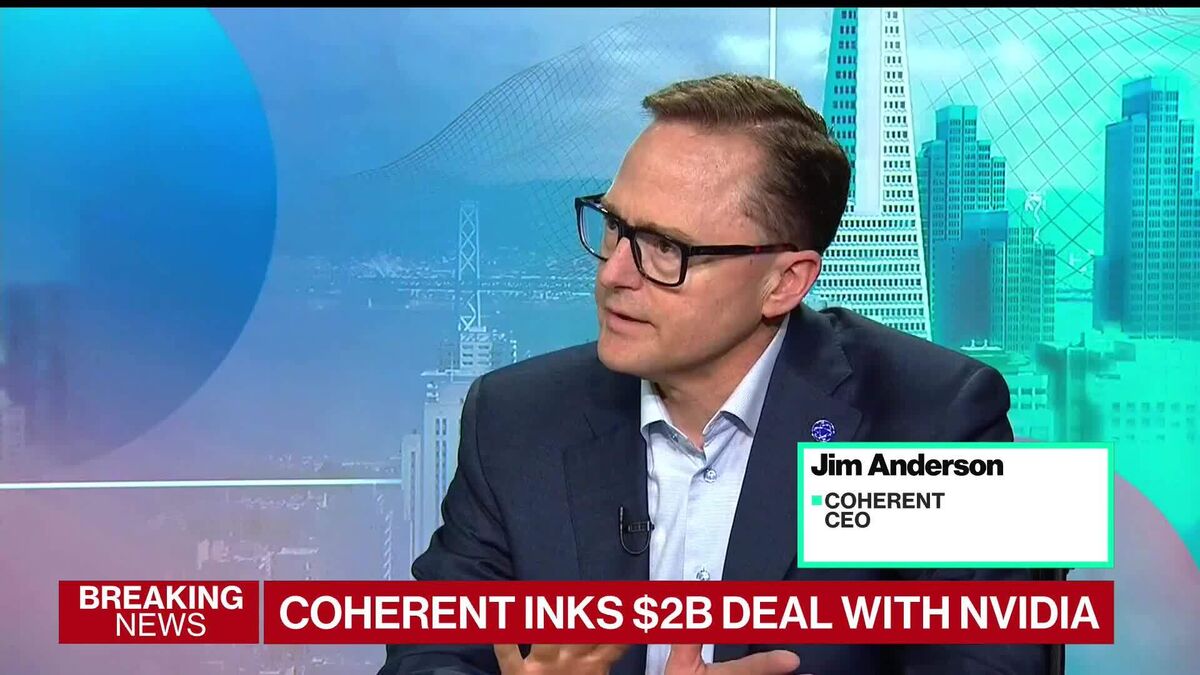
Nvidia is investing $2B into photonics firm Coherent, a major supplier of optical components for data centers and networking, per Bloomberg.
This is not a small strategic stake. It’s a verticalization move on the optics stack that sits between GPUs and the rest of your data center, transceivers, lasers, and high-speed interconnects that determine how well your clusters actually scale.
The Bet: The next performance and cost gains in AI infra come less from raw GPU flops and more from tightly integrated, Nvidia-aligned optical networking.
So What? If you run or plan to run large GPU clusters, your vendor risk is no longer just “which GPU.” It’s “which optics, tuned to which GPU vendor’s roadmap.” Nvidia is effectively telling you that the “standard” optical layer will be optimized around its own network assumptions.
This compresses optionality. The more you lean into Nvidia-aligned optics, the harder it becomes to diversify into alternative accelerators or white-box networking later without a painful retrofit.
For cloud buyers, this also telegraphs future pricing dynamics: if Nvidia can squeeze more performance per watt and per rack via integrated optics, it can sustain premium pricing while still looking “cheaper per token”, but only inside its own ecosystem.
The Risk: You overfit to a single-stack future and discover in 2–3 years that regulatory, geopolitical, or supply constraints force you to diversify away from Nvidia, just as your network is most tightly coupled to their optics. Unwinding that is a multi-quarter, capex-heavy project.
Action: • Ask your cloud and colo providers directly this week: “How exposed is our planned GPU capacity to Nvidia-aligned optics, and what’s our path to a second stack?” Get a written answer. • If you’re building your own clusters, map your networking and optics BOM alongside your GPU roadmap, and flag any components that are effectively single-vendor. Treat those as strategic dependencies, not line items. • In your 2026–2027 infra planning, model a scenario where non-Nvidia accelerators become attractive, and quantify the switching cost given your current and planned optics choices.
SURFACES / MONETIZATION
The assistant is now an ad surface, and Amazon wants to run the auction
Amazon Publisher Services is exploring offering technology to help other apps and sites sell ads inside AI chatbots, per The Information.
This is Amazon’s ad-tech arm, not Alexa, moving to power auctions and delivery in conversational interfaces it doesn’t own. Think: your chatbot, their rails, their demand.
The Bet: Conversational assistants will be high-intent, high-CPM inventory, and most developers won’t build their own ad stack, so they’ll rent Amazon’s.
So What? If you run a consumer-facing AI interface, assistant, vertical copilot, agentic app, you’re now making an explicit choice:
• Build your own monetization and recommendation logic. • Or plug into someone else’s ad economics and accept their incentives.
This is the same fork the open web hit with programmatic display, and most sites handed control to third-party ad stacks, then spent a decade complaining about margins and UX.
The structural shift: the “assistant” is no longer just UX. It’s a distribution and monetization layer that can steer demand, shape discovery, and tax transactions. Whoever runs the auction controls not just revenue, but what your users see and buy.
The Risk: You bolt on third-party chatbot ads to “monetize” and wake up with a degraded experience, misaligned incentives, and a dependency you can’t unwind without blowing up your revenue line. Or worse, your assistant starts recommending competitors’ products because the auction pays better.
Action: • Decide this week whether your assistant is a profit center or a retention feature. If it’s retention, be very cautious about injecting third-party ads. • If you’re a retailer, CPG, or marketplace, start a workstream to instrument SKUs, promos, and attribution for agent-mediated carts, assume assistants will be the front door for a non-trivial share of orders by 2027. • If you’re building an AI product, add “monetization surface and control” as an explicit line in your product spec, who controls the auction, what’s allowed to be promoted, and how you’ll measure trust impact.

ORG DESIGN / TALENT
AI org charts are becoming architecture decisions
Meta is creating a new applied AI engineering organization with an ultra-flat structure, up to 50:1 IC-to-manager ratios, to support its superintelligence efforts, per The Wall Street Journal.
This is a deliberate break from traditional management-heavy structures. The idea: fewer layers, more direct coordination, and faster iteration across a large pool of AI engineers working on applied problems.
The Bet: In AI-heavy work, coordination and communication overhead, not headcount, is the main bottleneck. Flattening the org unlocks speed and cross-pollination.
So What? If you’re scaling AI teams, your org design is now a first-order technical decision. A 50:1 ratio forces you to invest in internal tooling, documentation, and shared context, because you can’t rely on managers to be the glue.
Most enterprises are doing the opposite: small “AI teams” scattered across BUs, each with their own manager chain and backlog. That structure optimizes for local control, not system-level learning. It’s the wrong pattern for a capability that wants to be horizontal.
The Risk: Copying the flat model without the supporting infrastructure, strong technical leads, clear APIs between teams, internal platforms, and ruthless prioritization, just creates chaos. You’ll burn out your few strong managers and stall delivery.
Action: • Map your AI talent this week: who actually writes or ships AI systems vs who manages them. Calculate your real IC-to-manager ratio and compare it to your software org. • Identify 1–2 AI-heavy initiatives and experiment with a flatter structure: fewer managers, more direct collaboration, and shared metrics, but only if you also invest in better internal tooling and documentation. • Stop treating “AI team” as a sidecar. Decide whether AI is a platform (horizontal) or a product (vertical) in your org, and align reporting lines accordingly.

AGENTS / GOVERNANCE
Agent observability just became a funded category, not a side feature
JetStream Security raised a $34M seed round led by Redpoint for its “AI Blueprints” tool, which provides real-time mapping of AI agent activity, per Fortune.
$34M at seed is not a test balloon. It’s a statement that the real enterprise blocker for agentic AI is not capability, it’s being able to prove what your agents did when auditors, regulators, or internal risk teams start asking hard questions.
The Bet: Every serious agent deployment will require an observability and forensics layer, logs, traces, policies, and replay, just like microservices did a decade ago.
So What? If you’re piloting agents in production workflows, customer support, finance ops, supply chain, internal IT, you now have a new non-negotiable: traceability. “The agent did it” is not an acceptable answer when money moves, data leaves, or compliance is on the line.
This also hints at the emerging stack:
• Foundation models and orchestration. • Domain-specific tools and connectors. • An observability and policy layer that can explain and constrain behavior.
If you’re not budgeting for that third layer, your agent roadmap is incomplete.
The Risk: You underinvest in observability, ship agents into sensitive workflows, and then get blindsided by a single high-profile failure, fraud, data leak, or regulatory breach, that forces a top-down moratorium. At that point, you’re negotiating from a position of zero trust.
Action: • Inventory every place an AI agent is making or executing decisions this week, even “small” ones like ticket routing or email drafting, and note where you lack full logs and replay. • Add an explicit “observability and auditability” line item to your 2026 AI budget, whether via vendors like JetStream or internal builds, and tie it to your most critical agent use cases. • Update your AI risk framework so that no new agentic workflow goes live without a clear answer to: “How will we reconstruct what happened if this goes wrong?”

ASSISTANTS / UX
Tone is now a competitive surface, not a cosmetic tweak
OpenAI’s new GPT-5.3 Instant model is tuned so its tone feels less “cringe” and more to-the-point than GPT-5.2 Instant, per Implicator.ai. Tech press is already framing it as “ChatGPT will stop telling you to calm down,” per TechCrunch.
This is not just a style refresh. It’s an explicit move to make assistants feel more like terse, operator-grade tools and less like HR-compliance chatbots.
The Bet: Users will choose assistants based on interaction style and friction, not just raw model quality, and “overly empathetic” is now a bug, not a feature, in many workflows.
So What? If your internal tools still sound like they were written by legal and HR, your users will quietly defect to consumer-grade assistants that feel sharper and more aligned with how they actually work.
Tone is now part of product-market fit. A sales rep, SRE, or trader wants a different assistant persona than a therapist or HR partner. If you ship one generic “friendly helper” voice across all contexts, you’re leaving adoption on the table.
The Risk: You overcorrect on brevity and strip out necessary guardrails or context, especially in high-stakes domains like healthcare, finance, or HR, and create a new class of failure where the assistant is confident, fast, and wrong.
Action: • Audit your top 3 AI touchpoints this week, internal or external, for tone. Ask 5–10 real users: “Does this sound like how you talk when you’re actually working?” • Where appropriate, introduce role-specific personas: an “ops mode” that is terse and action-oriented, and a “coaching mode” that is more explanatory, and make switching explicit in the UI. • If you’re building on third-party models, treat system prompts and tone configuration as first-class product surfaces, not afterthoughts, and version-control them like code.
IN PRACTICE
Most AI roadmaps we see fail in the same place: they treat “AI” as a single initiative instead of a stack of decisions across infra, org, surfaces, and governance.
The operators who are winning are doing something different: they’re building a simple but explicit map of their AI stack, models, orchestration, tools, observability, UX, and assigning ownership for each layer. No orphaned surfaces. No unowned risks.
One practical pattern:
• Name a single owner for “AI surfaces”, every place a user touches AI. • Name a single owner for “AI plumbing”, infra, data, and observability. • Force those two to co-author a quarterly “AI Field Manual” that documents what’s in production, how it behaves, and how it’s governed.
For the full breakdown, reach out for a Field Report.
CONTRARIAN SIGNAL
The real AI bottleneck isn’t GPUs, it’s governance primitives
Everyone is still talking about GPU shortages, photonics, and model benchmarks. The quiet story underneath: capital is now flowing into the layers that make AI legible and governable, agent observability, provenance, and organizational structure.
JetStream’s $34M seed is one data point. Meta’s ultra-flat applied AI org is another. Amazon’s move to run ad auctions inside assistants is a third. These are all governance moves, decisions about who sees what, who controls what, and who can explain what happened after the fact.
The consensus narrative says “scale models, then figure out safety and control.” The emerging pattern says the opposite: without governance primitives, logs, policies, org structures, and economic rails, you can’t safely or profitably scale deployment.
The Takeaway: If your 2026 AI budget is 90% models and infra and 10% governance, observability, and org design, you’re not underinvesting in safety, you’re underinvesting in your ability to ship and keep shipping.
THE QUESTION FOR TODAY
Defense just became a growth-stage AI category with $4B behind it. Optics just became part of the GPU moat you’re quietly locking into. Assistants just became ad surfaces with external incentives baked in. Agents just picked up an observability tax you haven’t budgeted for. Org charts just turned into architecture decisions, not HR diagrams.
Are you still treating “AI” as one initiative, or have you decided, explicitly, which theater you’re playing in and what stack you’re willing to own?
See exactly how this impacts your specific industry and function. Upgrade to PRO to get bespoke tactical breakdowns generated instantly for your operating model.
Go deeper with the Weekly Signal
This is the daily take. The Weekly goes further — full strategic analysis across 8–10 sections, each with a signal read and operator action items. Source panel included.
Sign up free → then upgrade